The peony is the most "regal" of garden flowers: a heavy head of 30–60 petals, a scent that holds a room for 3–4 days, and a bush that lives on the same spot for up to 80 years. This guide breaks down how herbaceous varieties differ from tree peonies and Itoh hybrids, how to care for the bush and cut stems, what a peony means in a bridal bouquet, and why florists love Sarah Bernhardt, Coral Charm, and Bartzella.
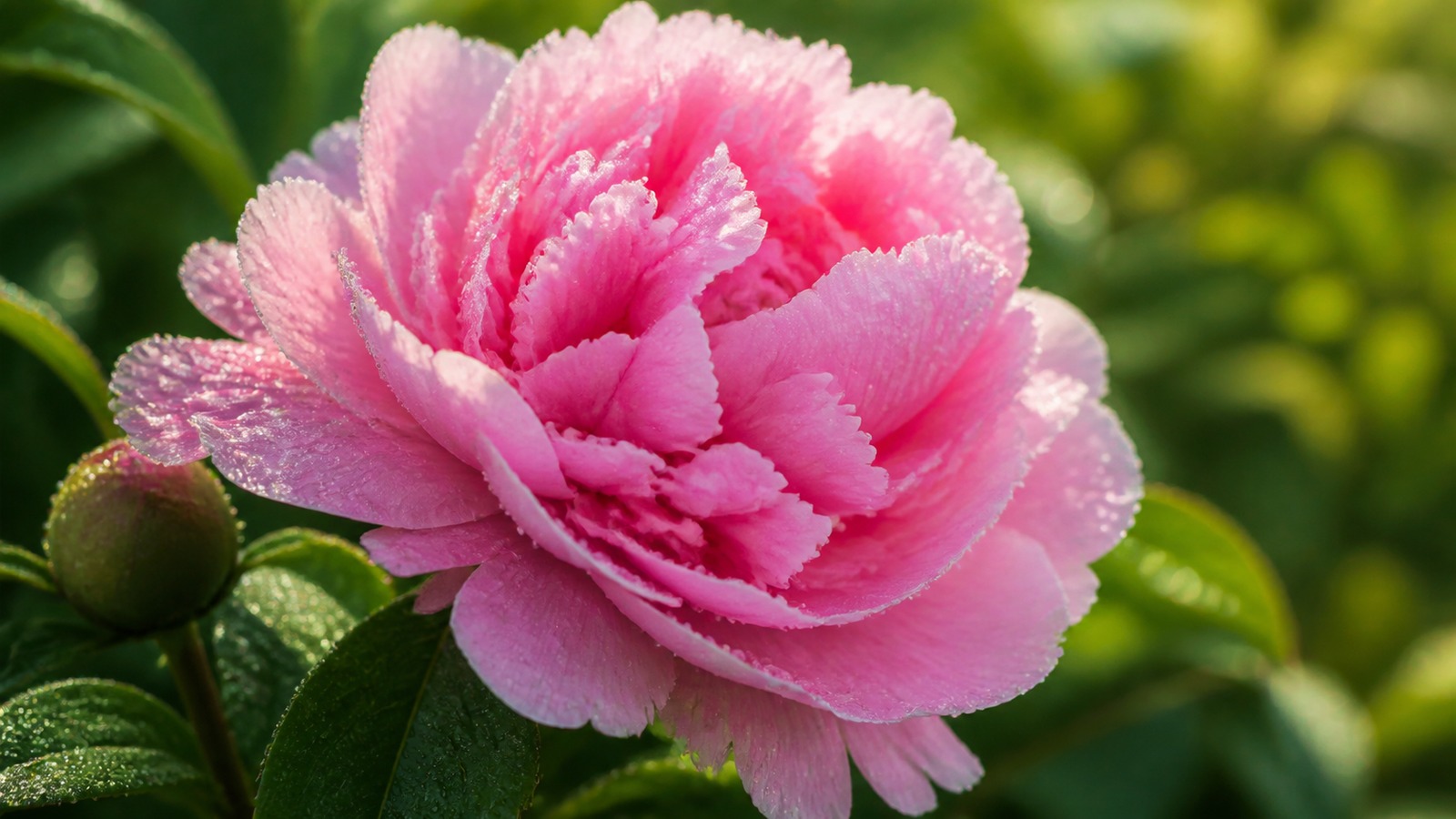
Table of contents
- Botanical description
- Types and cultivars: herbaceous, tree, Itoh
- Popular garden and cut-flower varieties
- Care: planting, watering, feeding
- Diseases and pests
- Peonies in bouquets: what to pair with
- Cutting and storage: extending vase life
- Symbolism and the language of flowers
- Fun facts and history
Botanical description
Peony (Paeonia) is the single genus in the family Paeoniaceae. There are about 36 species: herbaceous perennials, subshrubs, and deciduous shrubs. Native range covers the temperate Northern Hemisphere: China, Japan, the Caucasus, Siberia, Southern Europe, California.
Bush height ranges from 50 cm in dwarf cultivars to 2 m in tree forms. The rhizome is fleshy, with spindle-shaped storage roots 25–40 cm long — that's why the plant tolerates drought and winters under snow without cover in temperate climates. Leaves are dark green, pinnately divided, turning red in autumn.
The flower is large — 14–25 cm across. Petals range from 5 in simple forms to 200+ in Japanese and doubled varieties. Color from pure white through pink, coral, yellow, and lilac to nearly black-burgundy. Bloom lasts 7–14 days from late May to mid-July depending on cultivar.
Peony (Paeonia) A perennial 0.5–2 m tall, blooming once a year for 7–14 days. Lives 50–80 years without transplanting. Vase life up to 10 days with proper prep. USDA zones 3–8.
Scent and its chemistry
The peony doesn't smell "like flowers" — it smells like specific molecules: citronellol gives the rose note, geraniol the lemon freshness, linalool a subtle spice. In 'Festiva Maxima' the aromatic compound concentration is 2–3× that of 'Coral Sunset', so white varieties almost always smell stronger than corals and reds.
The scent peaks 4–5 days after opening and fades as petals drop. In a cool room (+18 °C) the scent lasts longer than at +25 °C — high heat "burns off" the essential oils in a day.
Types and cultivars: herbaceous, tree, Itoh
All garden peonies fall into three big groups. They differ in bush structure, bloom timing, cold-hardiness, and plant cost. Understanding the group makes up 90% of a successful purchase.
Herbaceous peonies
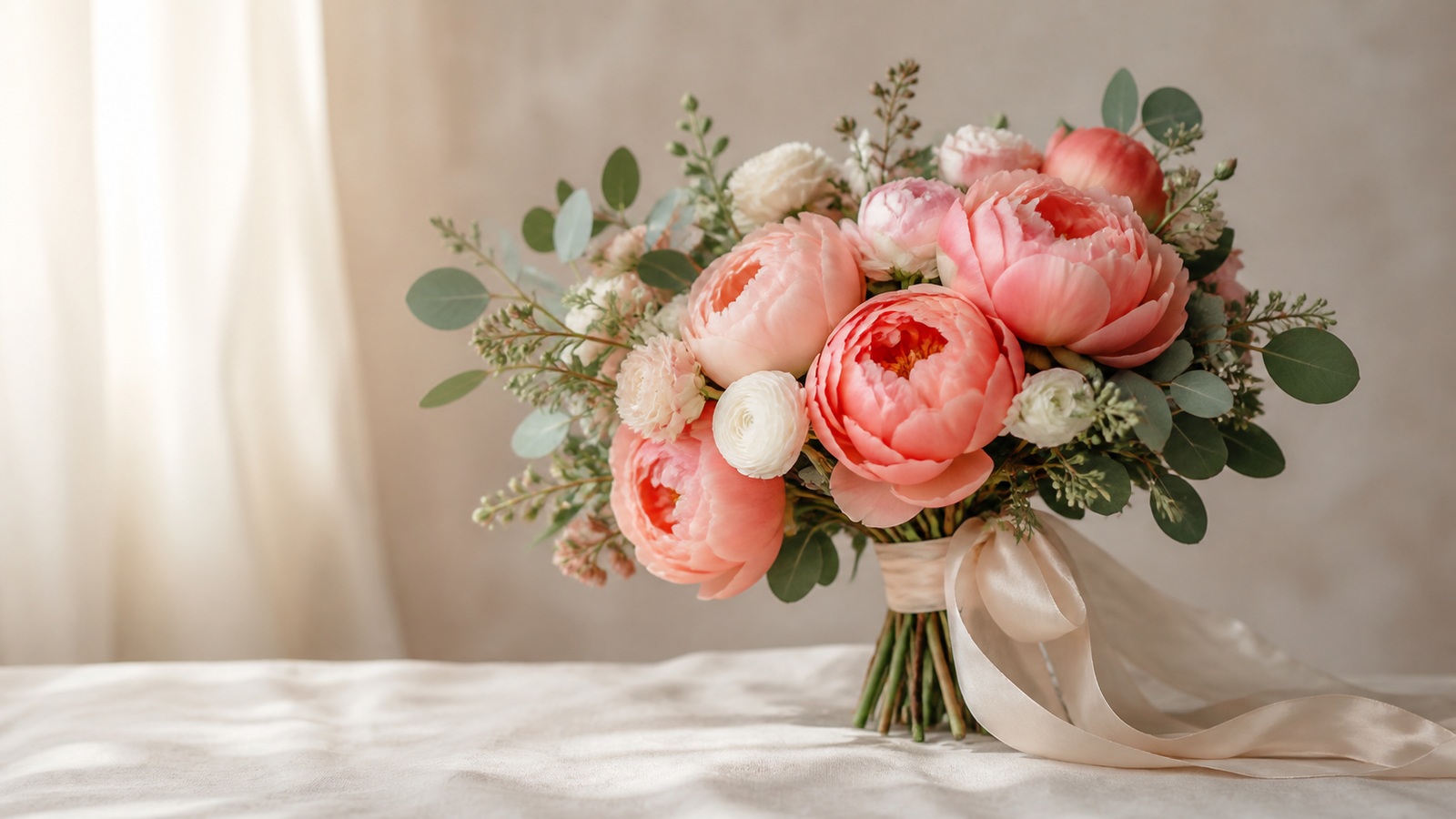
The mass category: 90% of catalog cultivars. The bush dies down to ground level each year and regrows from crown buds in spring. Height 60–120 cm; bloom late May – early July in temperate climates.
Includes hybrids based on Paeonia lactiflora (Chinese peony), P. officinalis (common peony), P. tenuifolia (fernleaf). Cold-hardy to −40 °C without cover. Divide every 8–10 years to prevent bloom shrinkage.
Tree peonies
Perennial shrubs with woody stems. Stems don't die back in winter; the bush lives 30–50 years, reaching 1.5–2 m. Blooms 10–14 days earlier than herbaceous types — from mid-May. Flowers up to 25 cm; the variety 'Hana Kisoi' reaches 30 cm.
Native to mountain regions of China; cultivated since the 8th century. In temperate climates, needs branch cover in the first 3–4 years, then adapts. First blooms in year 4–5 after planting, which is why many gardeners choose Itoh hybrids instead.
Itoh hybrids
The newest and most in-demand group. Bred by Japanese hybridizer Toichi Ito in 1948 by crossing herbaceous P. lactiflora 'Kakoden' with tree P. lemoinei 'Alice Harding'. 26 years passed from the first cross to commercial release — Ito died before seeing the success.
Itohs combine parent virtues: herbaceous growth type (winter under snow without cover), leathery "tree-peony" foliage, yellow and bicolor variations, bloom over 4–6 weeks in waves. One bush yields 30–50 flowers per season vs. 8–12 in an ordinary herbaceous.
Popular garden and cut-flower varieties
Breeders have registered over 7,000 peony cultivars, but real commercial trade rests on 40–50 proven names.
Sarah Bernhardt (Paeonia lactiflora, 1906). The wedding-peony standard. Pink doubled head 20 cm across, strong scent, stem up to 90 cm. Blooms in the third decade of June. Vase life 7–9 days. One of the world's best-selling peonies — over 200 hectares dedicated to it in the Netherlands.
Coral Charm (P. lactiflora, 1964). Semi-double coral that fades to peach and ivory — one flower passes through 4 shades in a week. Height 90 cm, flower 18 cm. Hardy to −34 °C. Won the prestigious APS Gold Medal in 1986.
Bartzella (Itoh, 1986). Lemon-yellow doubled flower 22 cm with a crimson "eye" at the center. Light citrus scent. The bush yields 40–60 buds per season. Nursery price $45–75; pays back in 2 seasons.
Hana Kisoi (tree, Japan). Pink semi-double form, flower up to 30 cm. Blooms May 12–18, two weeks earlier than herbaceous. Bush 1.7 m tall, needs staking.
Group comparison
| Parameter |
Herbaceous |
Tree |
Itoh |
| Bush height |
60–120 cm |
120–200 cm |
80–110 cm |
| Winter |
dies to ground |
keeps woody stems |
dies to ground |
| Flowers per bush |
8–15 |
15–30 |
30–60 |
| Bloom timing |
late May – early July |
mid-May – June |
June – July |
| Nursery price |
$5–15 |
$45–100 |
$32–75 |
| Blooms after planting |
year 2–3 |
year 4–5 |
year 2–3 |
Care: planting, watering, feeding
Peonies are for lazy gardeners. Plant them right once, and the bush lives on its own — attention needed only twice a year: spring feed, autumn cut-back. That's why peony bushes outlive three garden owners.
When and where to plant
Best planting: last decade of August through the first two weeks of September. Roots establish before frost and the bush leaps into growth in spring. Spring planting is possible but there'll be no bloom that year and the bush lags a season.
Choose sun — 6+ hours of direct light. In part shade, peonies grow but produce smaller buds and bloom weaker. Groundwater should be no closer than 70 cm from the surface — roots rot in dampness.
Dig a 60×60×60 cm hole. Bottom — 10 cm drainage of gravel or broken brick, then a mix: a bucket of humus, a bucket of peat, 200 g superphosphate, 100 g potassium sulfate, a liter of wood ash. The crown with buds is buried exactly 3–5 cm deep. Deeper — no bloom; higher — winter kill.
The main beginner mistake. 9 out of 10 non-blooming peonies are the result of planting too deep. If a bush has grown 4 years, produces leaves, but doesn't bloom — dig around the crown and check: top buds should sit 3–5 cm from the surface, no deeper.
Watering and feeding
Peonies tolerate drought, but large blooms need moisture at three critical points: April–May (shoot growth), bud swell (2 weeks before bloom), and August (next-year bud set). Norm — 20–30 liters per adult bush every 7–10 days.
Three feedings per season:
- Early spring, on melting snow — 60 g ammonium nitrate and 40 g potassium sulfate around the bush.
- Bud swell, late May — cow manure tea 1:10 (bucket per bush) or a complete flower fertilizer.
- August, after bloom — 50 g superphosphate and 30 g potassium magnesium, worked into the surface.
Fresh manure is never used — it triggers gray mold and root burn. Compost and humus 2+ years old — OK.
Pruning and winter
For herbaceous types in autumn, after first frost (usually mid-October), cut stems 2–3 cm above the soil. Burn the cut foliage — gray mold spores overwinter on it. Mulch the crown with 5 cm of peat or compost.
Tree peonies aren't cut back — the woody stems must overwinter. In years 1–3, mound the base with 15 cm of dry soil and cover with branches. Established bushes winter without cover in temperate climates.
Diseases and pests
Peonies rarely fall ill, but when they do, treatment is long. Two main threats: gray mold and rust. Pests complain less: ants and rose chafers are irritating rather than harmful.
Gray mold (botrytis)
The most common trouble. Appears in a wet cool spring: young shoots blacken at the base, collapse; buds brown and don't open. Severe damage can cost 70% of flowers.
Prevention: early spring spraying of bush and surrounding soil with 1% Bordeaux mixture or copper sulfate solution (50 g per 10 L). When symptoms appear — fungicides based on benomyl or Switch at 10-day intervals.
Rust
Appears on leaves after bloom, July–August: orange-brown pads on the underside. Doesn't ruin the current year's flowering but weakens the bush and reduces next year's bud set.
Remedy: cut off affected leaves, spray with Topaz or copper oxychloride. Rust's alternate host is pine — so the disease is more common near coniferous plantings.
Ants on the buds
Ants are attracted to sweet nectar from young buds. They don't harm the plant: neither petals nor stamens suffer. If buds are to be cut — rinse the bush with a hose 2 hours ahead; the ants disperse on their own.
Peonies in bouquets
The peony floristry season for local flowers runs mid-May to July 20; year-round from imports (Netherlands, Kenya, Ecuador, Chile — exploiting hemisphere season differences). Wholesale peony prices sit at $1.30–2.90 per stem in season, $5.60–10 out of season.
Wedding bouquets
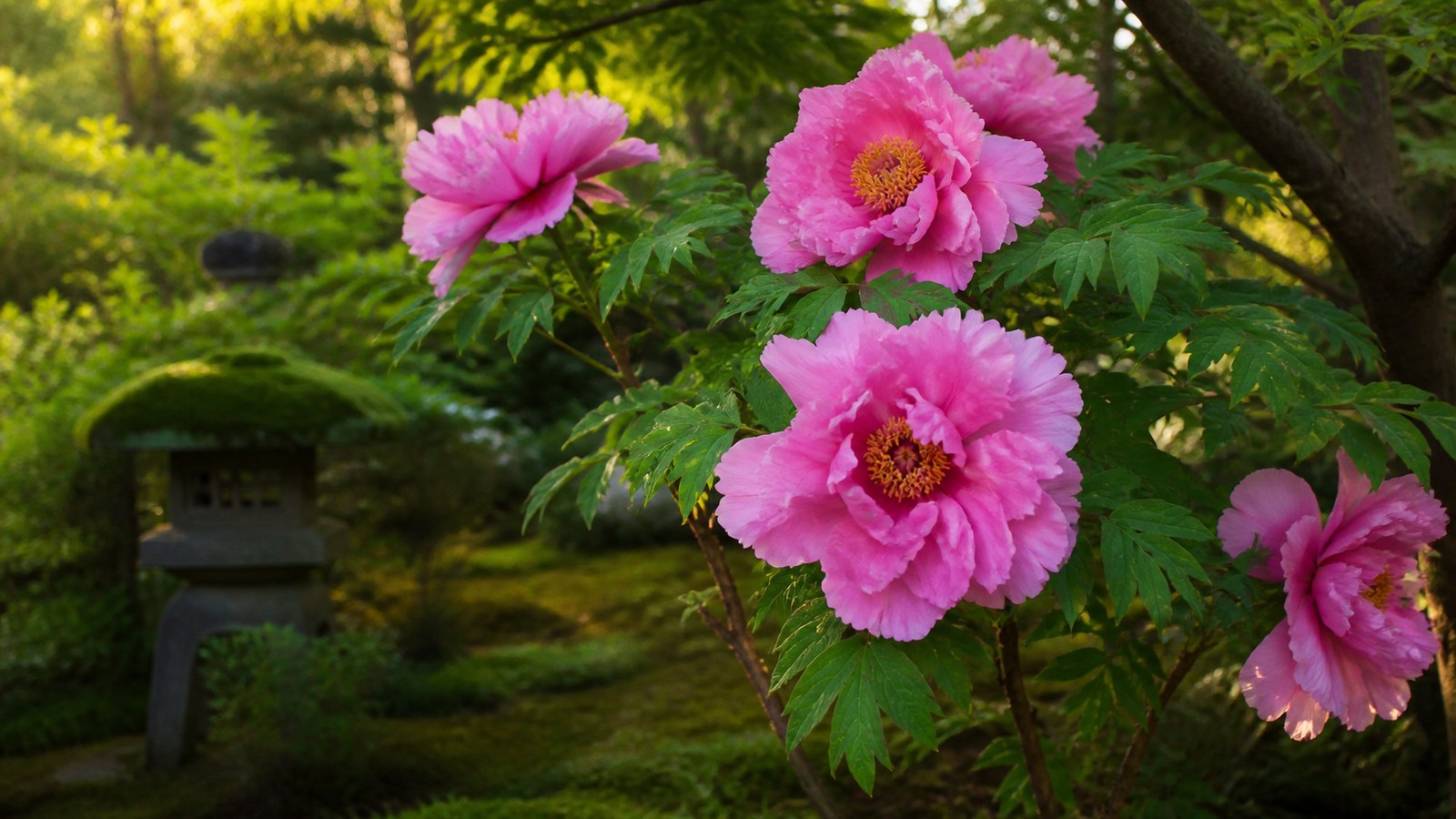
The peony sits in the top 3 requested wedding flowers alongside rose and hydrangea. Brides choose it for volume: 5 Sarah Bernhardt stems produce a 30 cm bouquet — a full composition without needing expensive additional roses.
Classic wedding combinations:
- Peony + ranunculus + lisianthus — delicate pastel palette
- Coral Charm + geranium + eucalyptus — the trending "wild" bouquet of 2026
- White Festiva Maxima + lisianthus + cotton — winter wedding
- Burgundy Karl Rosenfield + dusty rose + black calla — dramatic composition
Mono-bouquets and gift compositions
A mono-bouquet of 7, 11, or 15 peonies is the top-selling format for International Women's Day and birthdays. Psychologically, 15 large heads read as a lavish gesture and cost less than 51 premium-length roses.
For gifts to mom and elder women, florists recommend classic pink and white varieties. Younger friends and partners suit corals, lilacs, and bicolor Itohs.
"The peony is the only flower that keeps opening in the vase. Where a rose is prettier on day one than day three, a peony is the opposite: day four is when it fully arrives, so buy it with tight buds the size of a walnut."
Cutting and storage
With correct prep, a peony holds up to 10 days in a vase — a record among premium flowers. Most buyers toss the bouquet on day 4–5 not because it wilted but because they missed three simple rules.
Cutting from the bush
Cut early morning, before 9 a.m., or evening after 7 p.m. At the moment of cutting the bud should feel like a marshmallow: petals palpable through the sepals but not yet open. An opened peony holds 3 days maximum.
Leave at least 2 lower leaves on each stem — those are the bush's "working" leaves; without them it won't store energy for next year. Never cut more than a third of the bush's flowers at once.
Preparing the bouquet
- Trim stems at 45° with a sharp knife under cold running water — prevents air locks
- Strip lower leaves — everything below the waterline
- For 30 minutes, plunge in a bucket of cold water (+8 to +10 °C) covered with paper — the flowers "drink"
- Refresh the cut before placing in the vase
- Change water every 24 hours, add flower food (Chrysal or equivalent)
Refrigerator storage. Tight "marshmallow" buds keep in a fridge up to 3 weeks. Wrap cut stems in kraft paper and store on the bottom shelf at +2…+4 °C. 12 hours before use, remove paper, refresh cuts, place in warm (+30 °C) water — buds open within 24 hours.
Symbolism and the language of flowers
In China the peony carries the title "king of flowers" (花王, huawang) since the Tang dynasty (7th–9th c.). It symbolizes wealth, aristocratic birth, and a happy marriage. Until 1903 it was the state flower of the Chinese Empire; in 1994 nominated as PRC's national flower, losing to plum blossom.
In Japanese culture botan (牡丹) symbolizes fortune and manly beauty. A peony-with-lion tattoo (irezumi) means protection from evil. Peony petals appear in tea-ceremony spring blends symbolizing arriving warmth.
In Victorian floriography, meanings by color:
- Pink — romantic beginning, luck in love, modesty
- White — purity of thought, apology for awkwardness, quiet admiration
- Red / burgundy — honor, respect, passion
- Yellow — new beginning, renewal (meaning added only in the 20th c. with Itoh hybrids)
- Coral — gratitude for friendship, warm feelings without romantic subtext
In wedding symbolism the peony is a flower of a happy marriage. An old Chinese saying promises: a house with a blooming peony at its gate will know no poverty for 12 years.
Fun facts and history
Peonies are among the oldest ornamental flowers. Grown in Chinese imperial gardens as early as the 2nd century BC under the Han dynasty. The first written treatise, "Luoyang Peony Catalog," describing 35 varieties, was written by Ouyang Xiu in 1034 — six centuries before Europe's first tulip book.
The genus is named for Paeon — the ancient Greek physician, student of Asclepius, god of medicine. In the myth, Paeon healed the god Hades wounded by Heracles using peony root. Envious, Asclepius plotted to kill Paeon, but Zeus turned him into the flower and saved his life.
Five for the notebook
- No peony honey exists: bees don't pollinate peonies — the plant relies on ants and beetles
- In the Netherlands the peony ranks 4th in sales after rose, tulip, and chrysanthemum — 80 million stems/year
- The most expensive peony in history — an 80-year-old tree peony 'Hana Kisoi' sold in Japan in 2018 for 8.2 million yen (~$75,000)
- Peonies don't tolerate walnut trees nearby: juglone released by walnut roots suppresses growth by 40%
- In the U.S. state of Indiana, the peony has been the official state flower since 1957
Want a bouquet of fresh-cut seasonal peonies? Our catalogue offers designer compositions from $50 with delivery. Browse peonies with delivery.
The peony rewards every bit of attention: outliving its gardener in the ground, opening more slowly than a rose in a vase, communicating meanings without words. For a first bush on your plot, start with proven varieties like 'Sarah Bernhardt' or 'Coral Charm' — they forgive beginner errors and bloom in year 3 even with minimal care. Once you build a collection of 5–7 varieties across bloom windows, you'll have two months of continuous flowering from mid-May to mid-July.
— Sofia Bell