Hydrangea is the only mainstream garden flower whose color depends on soil chemistry: the same H. macrophylla blooms pink on alkaline soil and blue on acidic. The head of a large-leaf variety reaches 28 cm; a panicle Limelight — 35 cm and more. As a cut flower the head holds 7–10 days; dried, it stores for years without losing form. Here's every species, variety, cut-and-dried care, garden planting, and bouquet work.
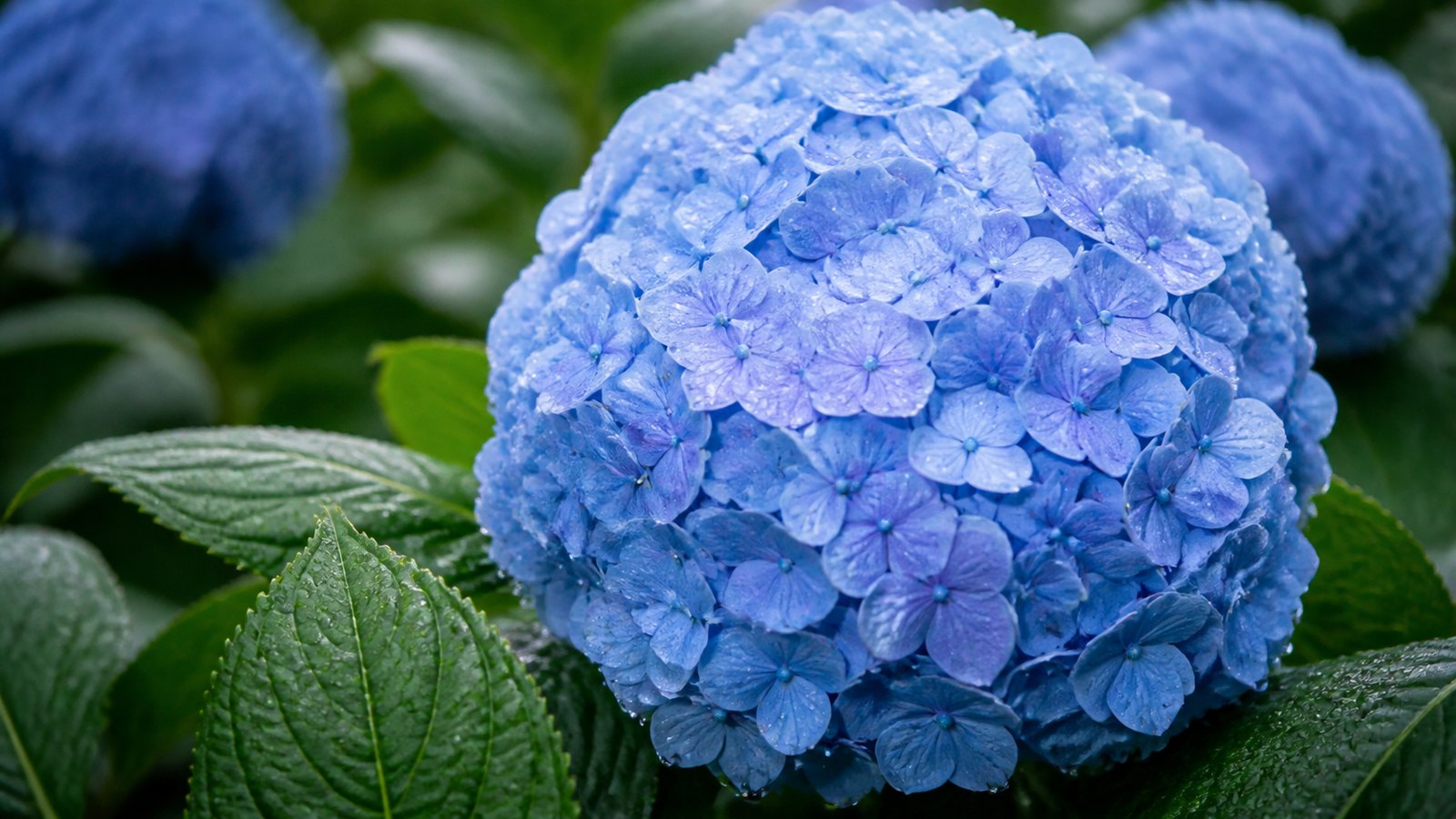
Table of contents
- Botany and species
- Best varieties by type
- How color changes: soil pH
- Hydrangea in bouquets
- Cut care and drying
- Garden planting and care
- Symbolism and the language of flowers
- Facts and FAQ
Botany and species
Hydrangea is a genus in the Hydrangeaceae family — about 70–80 species. The Latin name combines hydor (water) and angeion (vessel), hinting at the shape of the seed capsule and the plant's love of moisture. Most ornamental species are native to East Asia (Japan, China, Korea); a few to North America.
Five species dominate ornamental horticulture:
- Bigleaf hydrangea (H. macrophylla) — "macrophylla," the pink/blue/purple one. Ball-shaped or lacecap head. Needs winter cover in temperate zones.
- Panicle hydrangea (H. paniculata) — white cone-shaped heads reddening in autumn. Hardiest (to −35 °C).
- Smooth hydrangea (H. arborescens) — white, the big-ball 'Annabelle'. Hardy to −30 °C.
- Oakleaf (H. quercifolia) — oak-like leaves, cone-shaped head. Autumn interest with burgundy foliage.
- Climbing (H. petiolaris) — a vine for supports, up to 25 m long.
What we call the "flower" in most species is not a flower but a sterile bract of 4 sepal-petals. Real fertile flowers are small, in the center. In 'Annabelle' and panicle hybrids, fertile flowers are nearly absent — breeding chased maximum head size.
Bigleaf hydrangea (Hydrangea macrophylla) A shrub 80–200 cm tall with spherical or lacecap heads 15–28 cm across. Blooms July to October on previous year's wood. Vase life 7–10 days. Color depends on soil pH. Cold-hardy to −18 °C with cover.
Best varieties by type
Bigleaf (macrophylla)
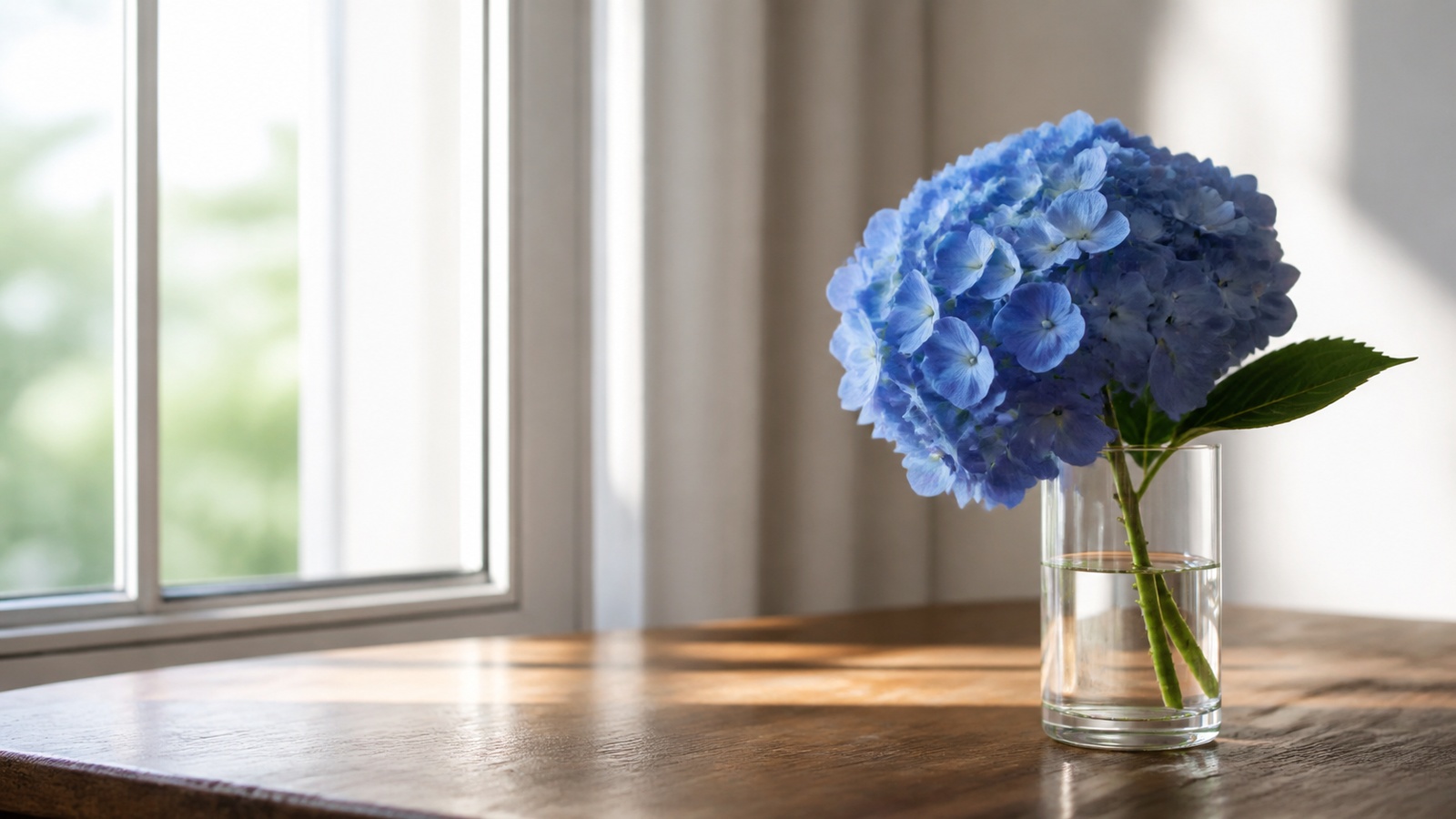
- Endless Summer — blooms on both current-year and previous-year wood (which most macrophyllas can't do). Blue-pink depending on pH.
- Nikko Blue — deep sky-blue at pH 5.0–5.5. Classic bluetone.
- Ayesha — spoon-shaped bracts, glossy. Unusual texture.
- You & Me Together — doubled florets, pink or blue.
Panicle
- Limelight — the flagship. Head starts lime green, turns creamy white, then pink by autumn. Up to 35 cm.
- Vanille Fraise — vanilla-pink gradient. Wedding favorite.
- Grandiflora — the old classic, pure white creamy heads.
- Pinky Winky — bicolor pink-white cone, unique among panicles.
Smooth
- Annabelle — the world's most famous white ball. Head up to 25 cm.
- Incrediball — Annabelle 2.0, stronger stems that don't flop.
- Invincibelle Spirit — pink Annabelle, first pink smooth hydrangea.
Oakleaf
- Ruby Slippers — dwarf 1 m form with white heads turning ruby-red.
- Snow Queen — 1.5 m, large cones, autumn purple foliage.
How color changes: soil pH
The magic of macrophylla — blue-vs-pink is controlled by aluminum availability, which depends on soil pH.
- pH 5.0–5.5 (acidic) — aluminum is bioavailable → blue hydrangeas
- pH 6.0–6.5 (neutral) — mixed, muddy purples
- pH 7.0+ (alkaline) — aluminum locked out → pink hydrangeas
To shift color:
- To blue: water with aluminum sulfate solution (0.5 tbsp per 10 L water) once a month during the growing season
- To pink: add wood ash or lime around the bush, once in spring
Not all bigleaf varieties change color. White cultivars (e.g., 'Madame Emile Mouillere') stay white regardless of pH. Panicle, smooth, and oakleaf species don't change color at all — their natural white-to-pink transition depends on season.
Hydrangea in bouquets
Hydrangea is a florist's workhorse: one head equals 5–7 large-flower stems in visual volume. A single-head bouquet in a hatbox retails at $50–100.
Wedding bouquets
Hydrangea sits in the top 3 wedding flowers alongside rose and peony. Standard combinations:
- White hydrangea + spray Austin + eucalyptus (classic wedding)
- Blue hydrangea + Sweet Avalanche + lisianthus (dusty blue palette)
- Vanille Fraise hydrangea + peach roses + dahlias (autumn wedding)
- Pink hydrangea + burgundy peonies + ranunculus (romantic composition)
Interior bouquets
Hydrangea works especially well in low, wide arrangements — head-diameter bouquets for a table centerpiece. One large head in a ceramic bowl = a full composition.
Combinations that DON'T work
- Hydrangea + gerbera (competing focal points)
- Hydrangea + carnation (visual clash)
- Hydrangea + gladiolus (scale mismatch)
Cut care and drying
Hydrangea is capricious as a cut. Two habits matter:
- Hydrangea drinks through petals. If the head starts drooping, immerse the whole head in cold water for 30 minutes — the plant absorbs moisture directly through the bracts. Works in 90% of cases.
- The stem sap seals fast. Trim at a steep angle, dip the cut end in boiling water for 30 seconds, then transfer to cold vase water. This unlocks the vessels and doubles vase life.
Vase life
- Fresh with proper care: 7–10 days
- In heat (+25 °C+): 4–5 days
- After bath revival: 10–14 days total
Drying
Hydrangea is one of the best flowers to dry:
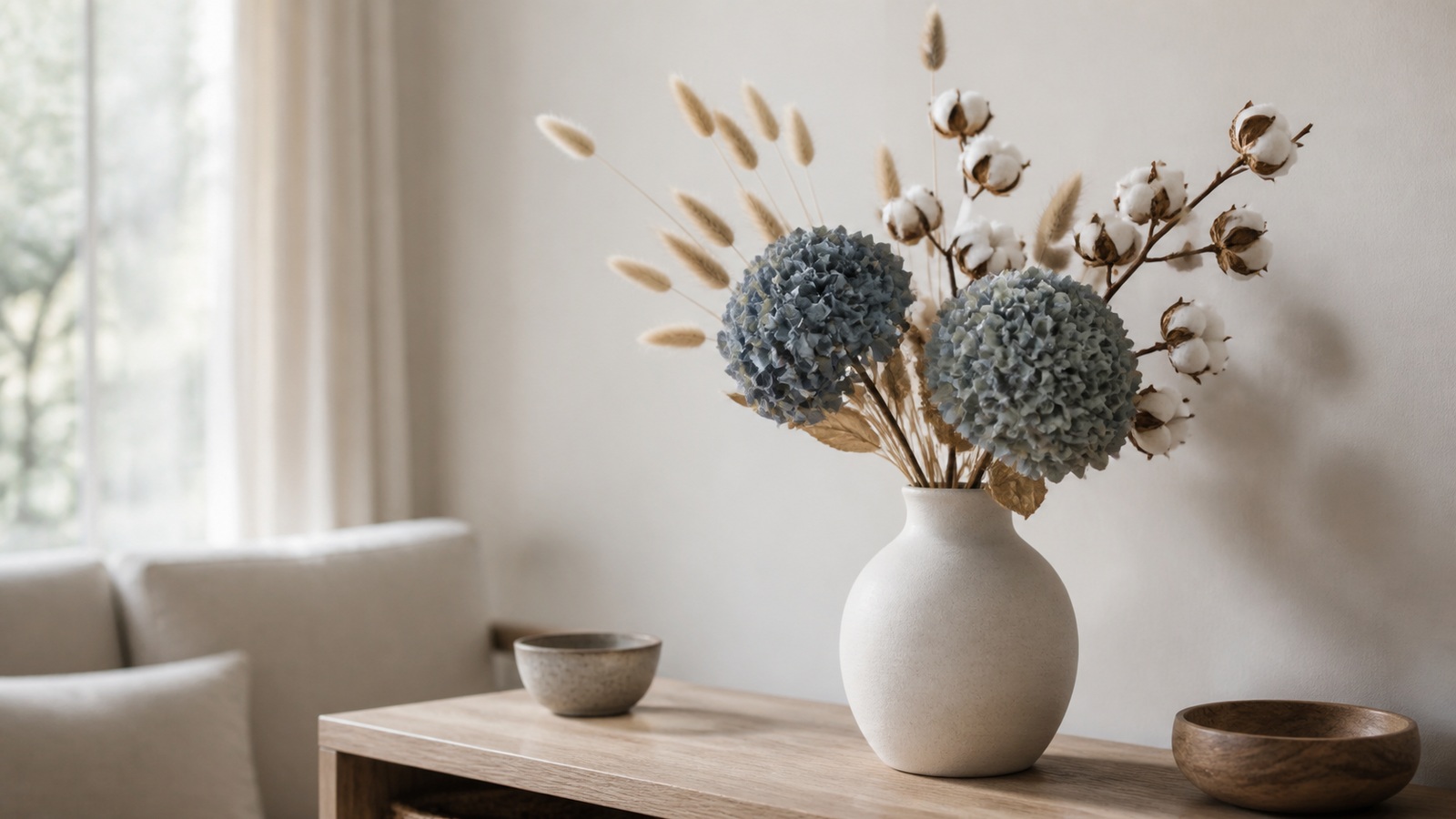
- Air drying: hang heads-down in a dark dry spot for 2 weeks. Green paniculata varieties dry to soft green; blue macrophyllas to dusty gray-blue.
- Silica gel: for maximum color retention (dries in 5–7 days).
- Vase drying: leave the bouquet in a small amount of water and let it evaporate slowly — heads dry in the vase without shape loss.
Dried hydrangeas last 2–3 years in interior compositions.
Garden planting and care
Position: light shade in the south, full sun in the north. Bigleaf varieties need afternoon shade even in temperate zones — direct sun scorches the heads.
Soil: acidic (pH 5.0–6.0) for blue tones, moisture-retentive with organic matter. Panicle and smooth species tolerate a wider range.
- Watering: the name means "water vessel" — hydrangeas want 20–30 L per bush every 7 days in dry weather
- Feeding: spring — nitrogen (fertilizer for acid-loving plants); summer — potassium magnesium; autumn — superphosphate
- Pruning: panicle and smooth species — hard prune in spring (leave 30 cm above ground); bigleaf — light prune only, on last-year's stems that carry the buds
- Winter cover: bigleaf requires straw + spun bond in temperate zones; panicle and smooth need no cover
Symbolism and the language of flowers
In Japan, ajisai (紫陽花) symbolizes the rainy season (June) and heartfelt gratitude. There's a temple tradition of gifting ajisai to those who have shown kindness during difficult times.
In Victorian floriography, hydrangea meant a "cool heart" and was used as a formal cold refusal. In the modern language of flowers this meaning has softened — now hydrangea is a symbol of family well-being, deep friendship, and hospitality.
- White — purity, sincerity, wedding classic
- Blue — trust, calm, dedication (given to a partner on an anniversary)
- Pink — heartfelt feelings, family warmth
- Purple — pride, dignity, adult respect
- Multicolor (bicolor) — the multifacetedness of the recipient
In China, hydrangea traditionally accompanies housewarming gifts as a symbol of prosperity in the new home.
Facts and FAQ
Are hydrangeas poisonous? All hydrangea parts contain cyanogenic glycosides that release cyanide when metabolized. Not lethal to humans in bouquet quantities, but keep pets and children from chewing petals.
Can I gift hydrangeas in a wedding bouquet? Yes, a wedding classic. Head lasts 4–6 hours out of water — enough for the full ceremony.
Why don't my garden hydrangeas bloom? 90% of cases — you pruned last year's stems. Bigleaf hydrangeas set buds on previous year's wood. Prune only dead ends.
Budget for a bouquet with hydrangeas? A hatbox with 1 hydrangea head + peonies + eucalyptus — $80–130. A large composition of 3 hydrangeas + roses — $220–350.
Which color is the most popular in 2026? Blue Nikko Blue for weddings and interiors. Vanille Fraise for autumn compositions. White Annabelle — a year-round classic.
Can I keep hydrangea potted at home? Yes, but macrophylla needs cold winter dormancy (+2…+5 °C for 2–3 months) — otherwise it won't bloom next year. Best to grow in a garden or on a cold balcony in winter.
Want a bouquet with hydrangeas? Browse the catalogue — year-round availability, compositions from $50 to $350.
Summary: hydrangea is a florist's magic wand. One head replaces five focal stems in volume, holds color through drying, and works across every wedding palette. Key rules: cool water, head immersion when drooping, and don't prune bigleaf hard in spring.
— Sofia Bell
Author
Sofia Bell
Florist and blog editor