Clients often come back with the same question: "The bouquet is starting to fade and I can't bring myself to throw it out. Can I preserve it somehow?" Yes. And almost always it's not about expensive equipment — it's about catching the right moment and picking the right method.
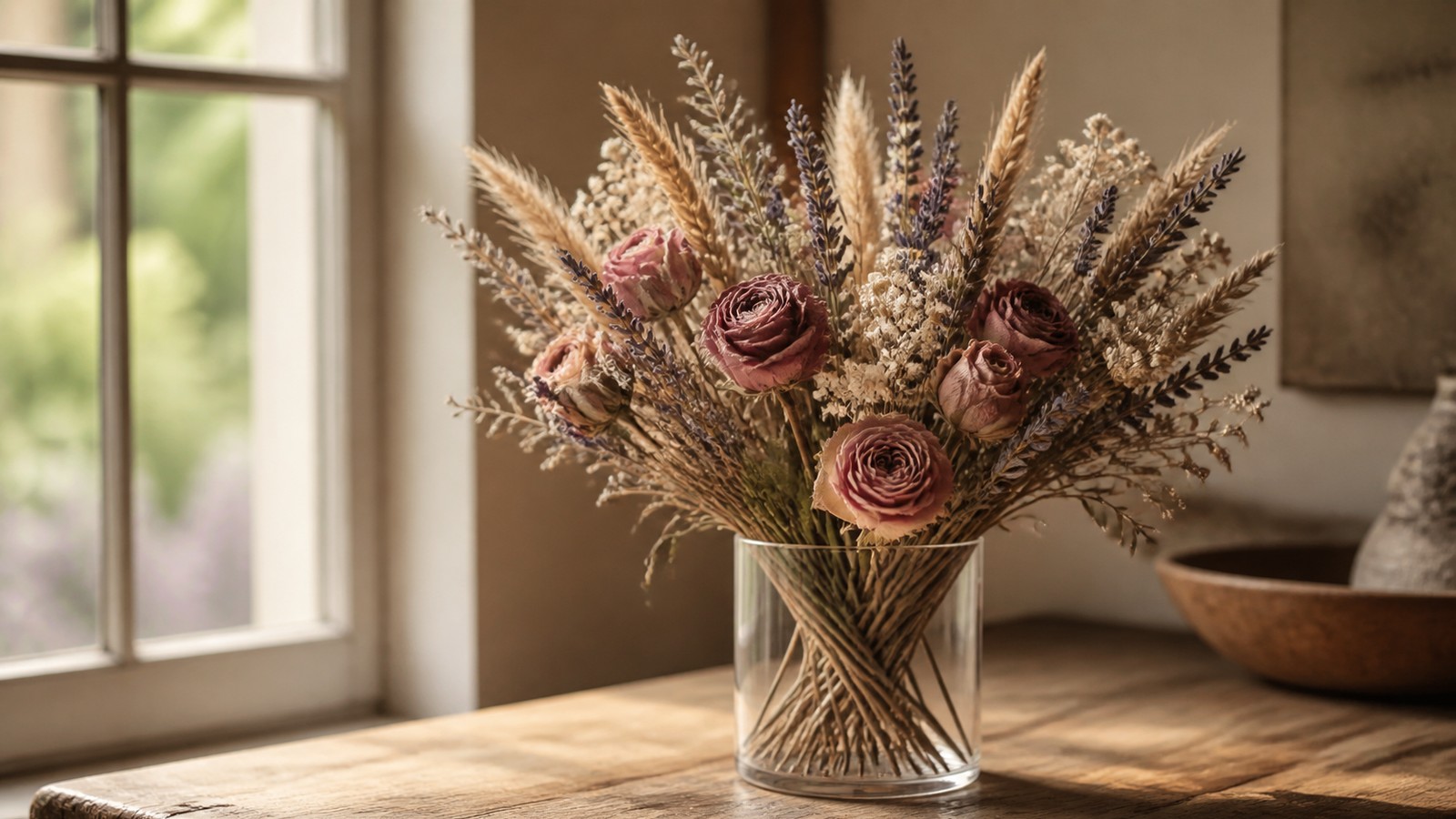
Drying a bouquet is not about "saving" already-dead flowers. It's about moving a beautiful bouquet to a different state: from alive to dry, but still expressive. Here are the three methods we use ourselves — honestly, with each method's weak spot.
When to dry a bouquet at all
The best dried piece comes from a bouquet that's still fresh and firm, not from one that's already dropped its heads. If the flowers have stood a week and started shedding — drying is too late; petals will fall off in the dry version too.
So decide early. If the bouquet is meaningful — wedding, anniversary, first gift — start drying while it's still in good shape, on day three or four. Color and form survive best that way.
Method 1. Air drying
The simplest and oldest. Hang the bouquet with heads down in a dry, dark, ventilated space — a closet, wardrobe, attic, even a corner behind a door.
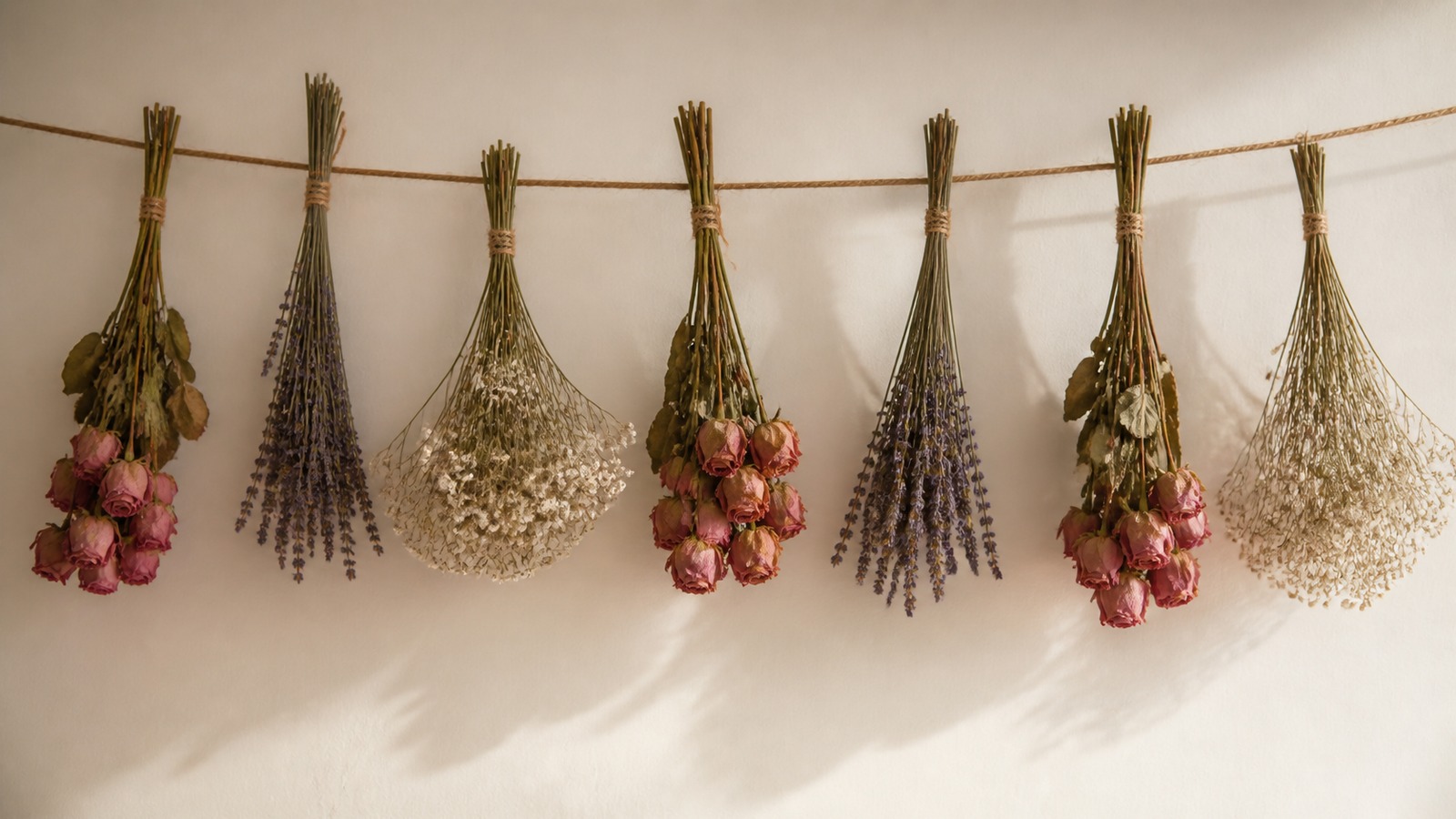
What matters:
- Strip extra leaves — they dry ugly and hold moisture
- Split a large bouquet into small bundles so air moves between stems
- Hang heads down — stems dry straight, not drooping
- Keep away from direct sun; it burns color, and bright roses turn brown
The bouquet dries in one to three weeks. Perfect for roses, lavender, gypsophila, statice, grasses, eucalyptus. Downside — volume "shrinks" slightly, and the most delicate flowers (tulips, gerbera) tolerate air drying poorly.
Method 2. Silica gel
If you want to keep shape and color as close to alive as possible, use silica gel — small granules that pull moisture quickly. Sold at craft stores.
How it works: place the flower in a box or container and gently pour granules around it from all sides so they support the petals. In several days (usually 3–7) the flower is retrieved with a soft brush.
This is our favorite method for peonies, roses, and other large heads — they keep almost live shape and saturated color. Downsides are honest: silica gel costs money, requires care, and suits individual blooms more than a lush whole bouquet.
Method 3. Pressing
The third method — for anyone who likes flat graphics: herbarium, cards, framed pieces, epoxy resin inclusions.
Lay the flower between paper sheets (plain or newspaper works well), place under a press — a stack of books — and leave for 2–3 weeks, changing paper in the first few days. You get elegant flat flowers and leaves with color preserved.
Pressing loves daisies, cornflowers, pansies, leaves, individual rose petals. Volumetric buds lose shape under a press, so peonies and large roses should go into silica gel instead.
Which flowers dry best
Not every flower gets along with drying. Reliably good performers:
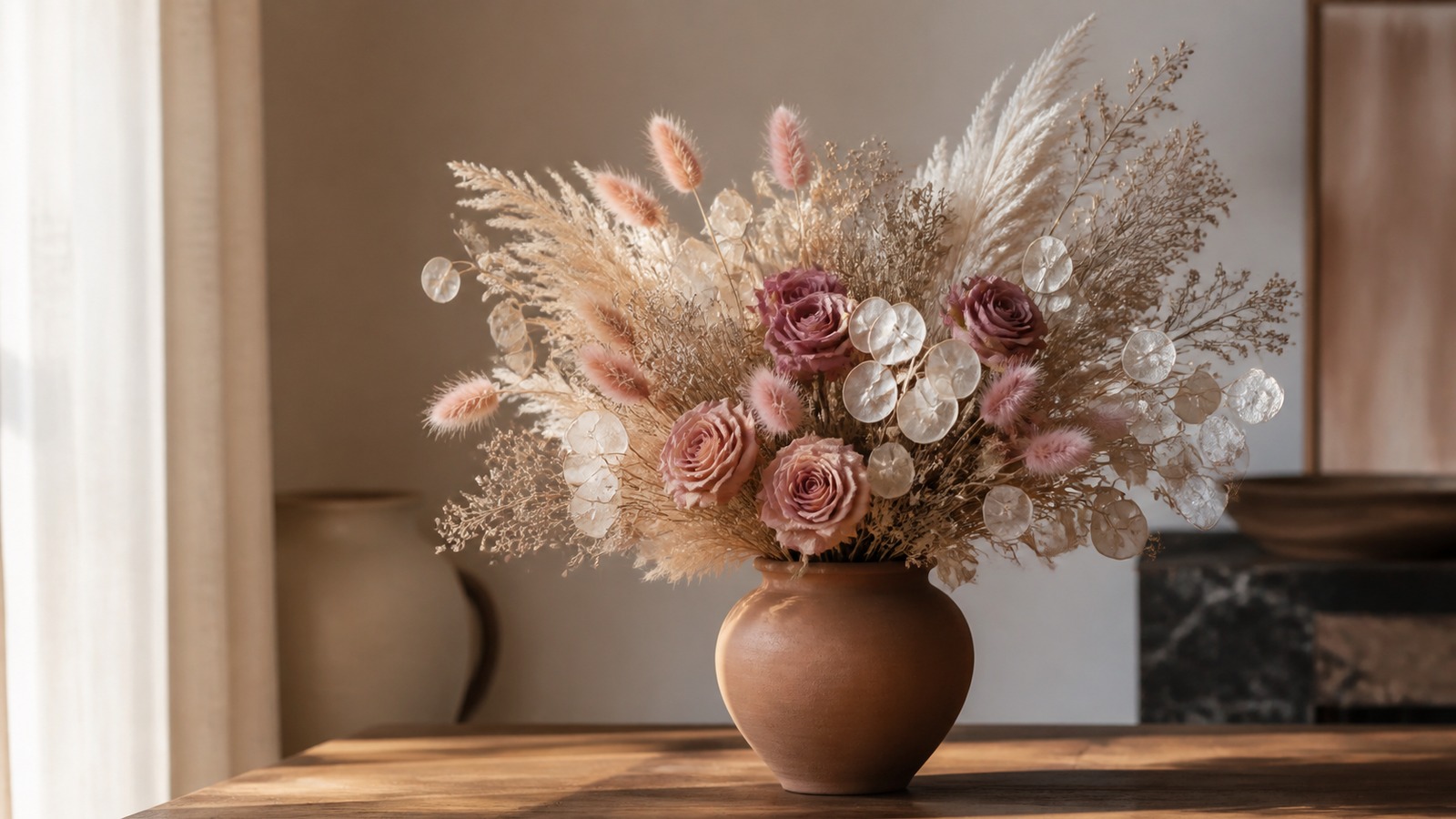
- Roses — nearly universal, fine for all three methods
- Lavender, statice, gypsophila — born to be dried
- Grasses, lagurus, pampas — dry perfectly and hold shape for years
- Eucalyptus, lunaria — add texture and graphic quality
The worst candidates are juicy, water-heavy flowers: tulips, hyacinths, gerberas, lilies. You can press individual petals, but preserving them whole is hard.
How to care for a dried composition
Dried flowers don't like moisture, dust, or direct sun. Don't put them in water, don't place them above a stove or near a radiator. Every couple of weeks, blow the dust off with a hairdryer on cool or with a soft brush. Handled gently, a dried composition lives a year or more.
Short checklist
- Start drying while the bouquet is still fresh, not after it's wilted
- Air drying — for roses, lavender, grasses; hang heads down in shade
- Silica gel — for peonies and roses if shape and color matter
- Press — for flat flowers, leaves, and herbariums
- Protect the finished piece from moisture, dust, and sun
A dried bouquet is a good way to hold onto a piece of an important day. But a beautiful dried piece starts with a fresh, well-cut bouquet: the stronger the flowers, the longer they'll live in dried form.
If you want a bouquet that both delights fresh and dries beautifully, browse fresh bouquets with delivery — we'll recommend varieties that dry well and tell you what to do with them next.
— Sofia Bell
Author
Sofia Bell
Florist and blog editor