
720x720_q85.jpg?v=1787132831)


720x720_q85.jpg?v=1787132831)
720x720_q85.jpg?v=1787132831)
720x720_q85.jpg?v=1787131347)

720x720_q85.jpg?v=1787131348)
720x720_q85.jpg?v=1787132831)


Peony delivery in Bali: imported luxury, resort weddings and the "marshmallow" bud rule
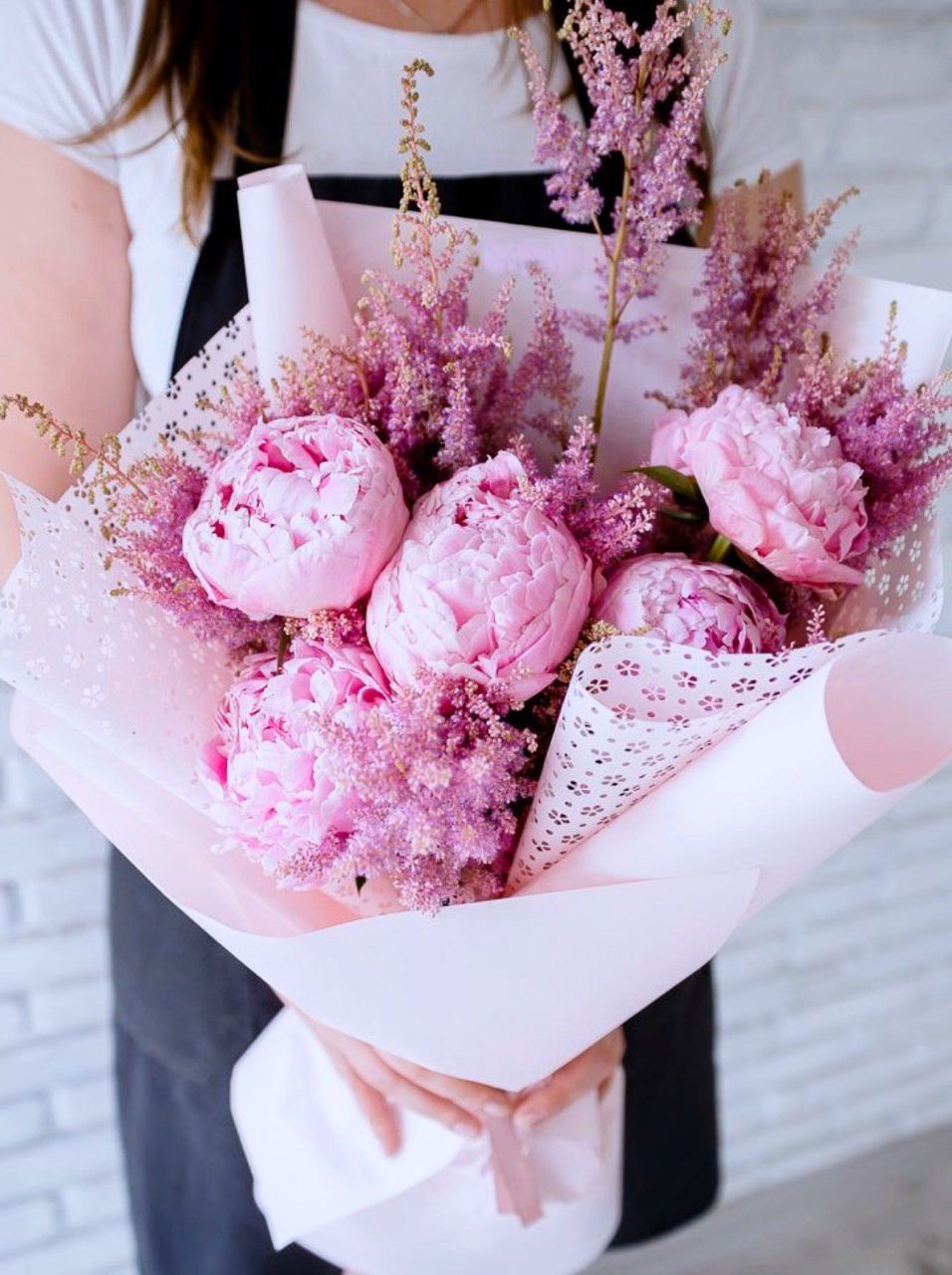
On Bali the peony is a guest, and all the more prized for it. It is not grown in Indonesia: a peony needs a cold winter with a true dormant period, and the island's warm, humid climate makes that impossible even in the mountains. Every peony here is brought in, and it is precisely this rarity that turns it into a statement gift and a favourite of wedding decorators. Full, fragrant, photogenic — it is equally at home at a villa wedding in Seminyak and as a lavish gesture for no particular reason.
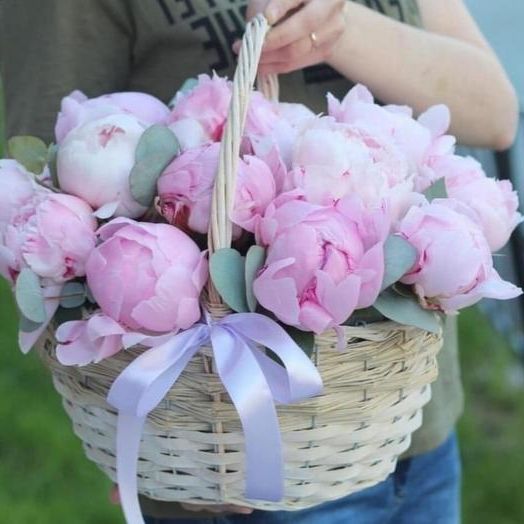
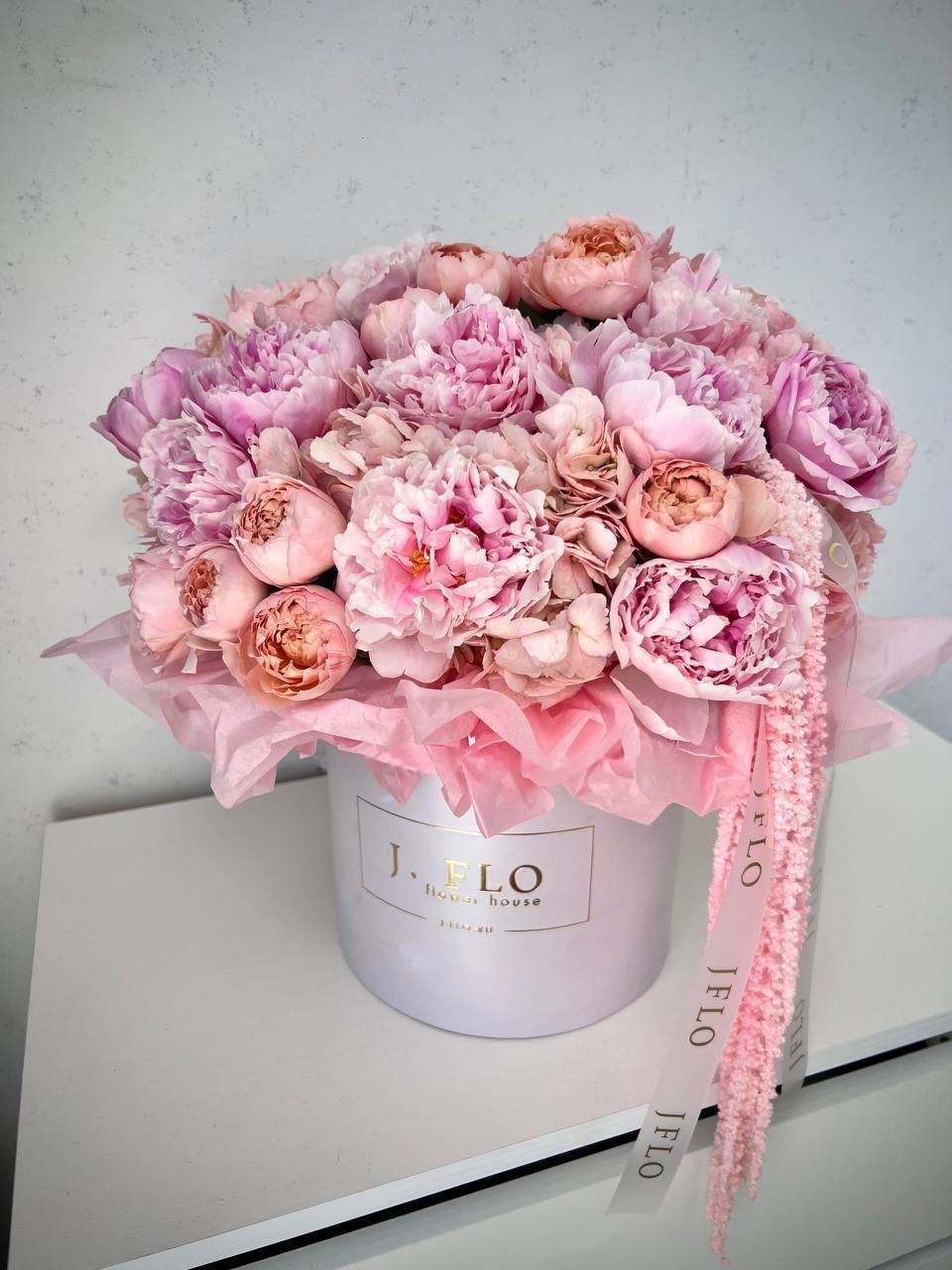
The category covers single-variety bouquets, mixed arrangements with roses and eucalyptus, hat boxes and large baskets for celebrations. Supply comes through the Dutch auction Royal FloraHolland from European glasshouses, and in the off-season from Chilean and New Zealand plantations. That keeps the peony in the catalogue almost year-round, though price and availability shift noticeably with the season.
The main varieties in the catalogue
Each peony variety has its own job — from a wedding arch to an intimate "from the heart". They differ in bud shape, shade, scent and vase life.
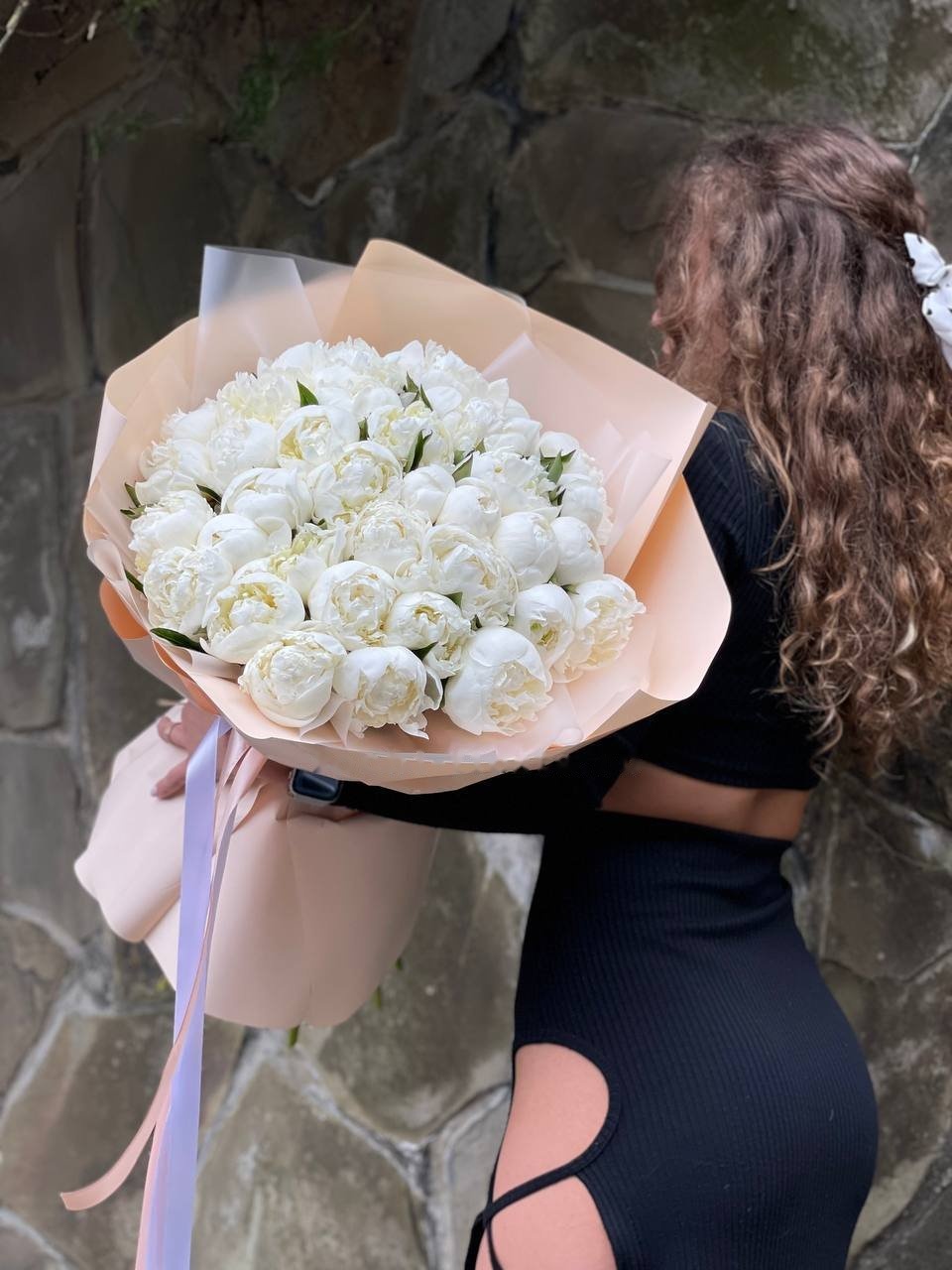
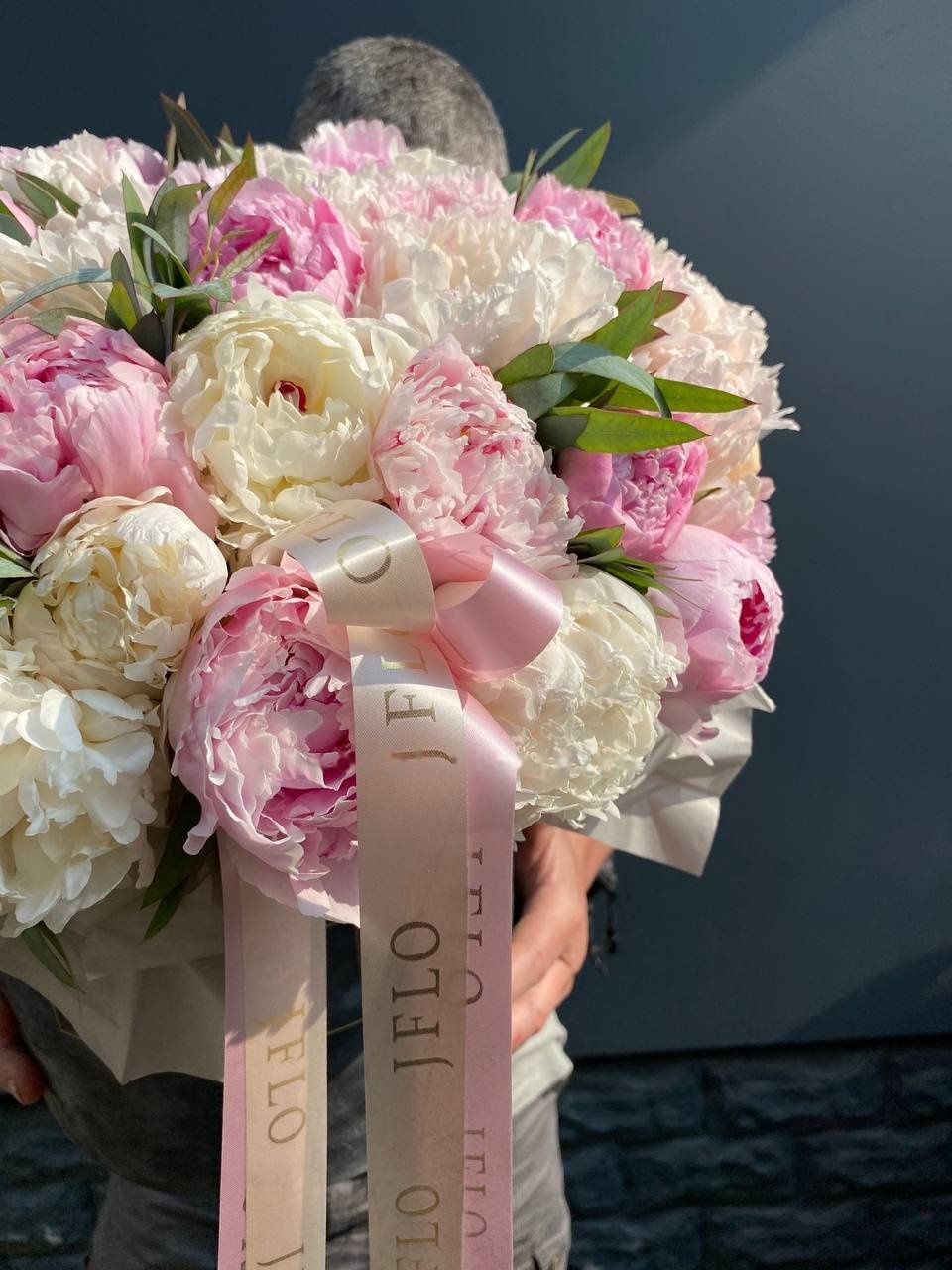
- Sarah Bernhardt — a pastel-pink double bud up to 18 cm, with a honeyed scent and a note of vanilla. A 1906 classic that works in any context: wedding, birthday, corporate gift.
- Karl Rosenfield — a dark-red, dense peony of saturated colour. A striking accent for evening celebrations and a warm palette.
- Festiva Maxima — white with a crimson "drop" at the heart. One of the most photogenic varieties, a favourite of wedding photographers.
- Coral Charm — shifts from coral-orange as it opens to a creamy peach in full bloom. One of the trend varieties of the 2020s.
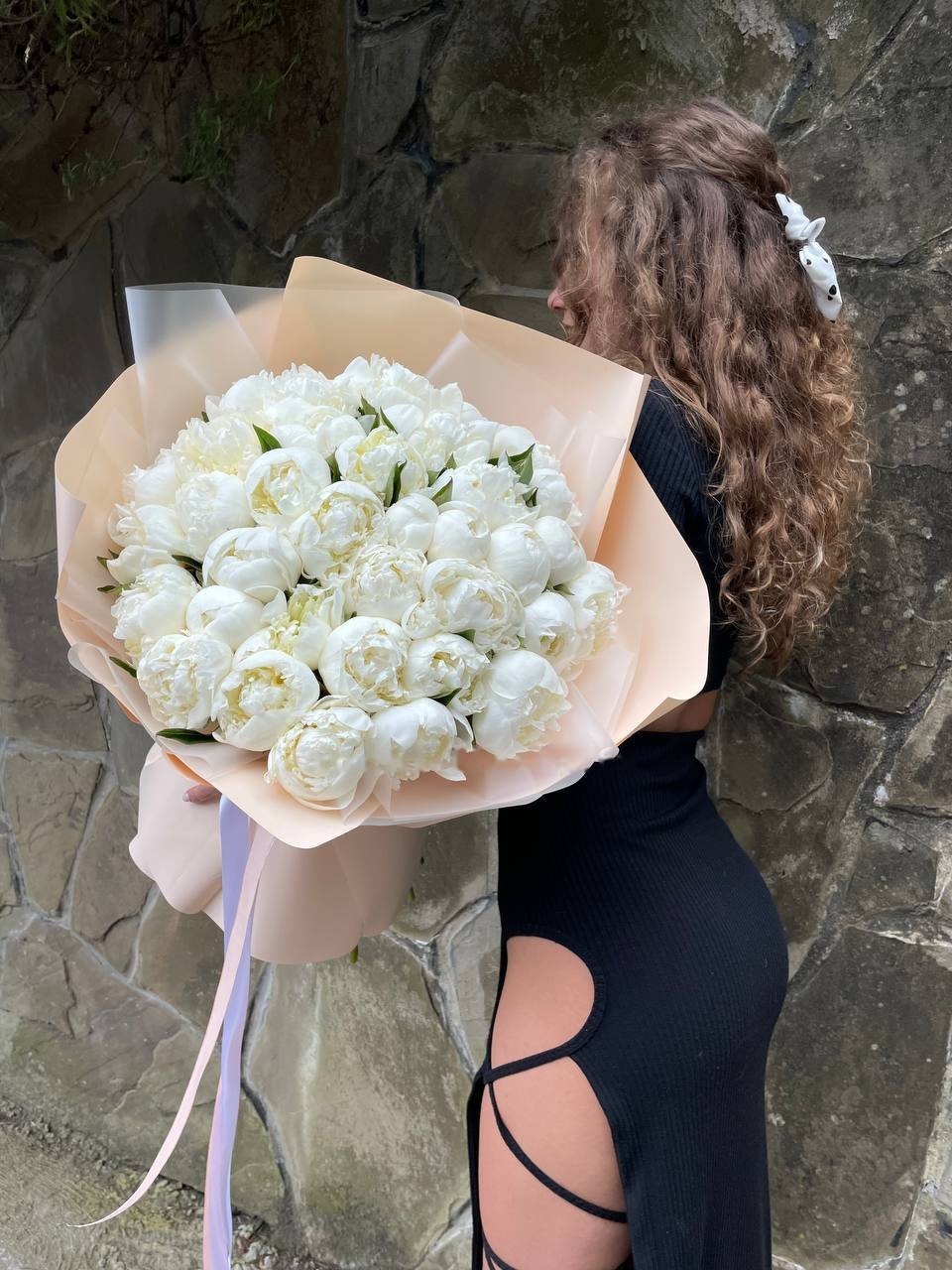
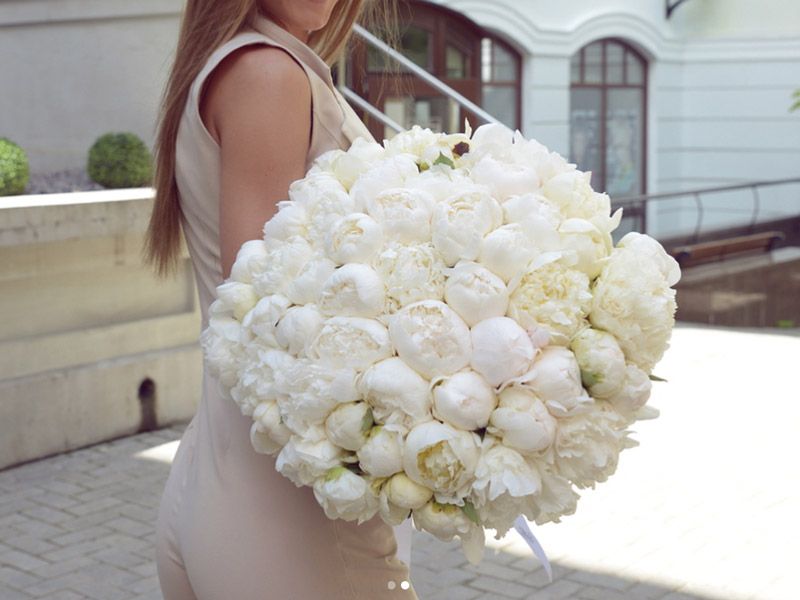
- Duchesse de Nemours — soft white with a cream centre and a light vanilla scent. For refined romance and pale palettes.
- Itoh hybrids (Bartzella, Cora Louise) — a cross of herbaceous and tree peony. Larger, longer in flower, lasting 10–12 days in the vase. For premium gifts and wedding styling.
The cut stage and why it matters
The key rule when buying peonies is the "marshmallow" stage. A coloured bud that is still soft to the touch: squeeze it between your fingers and it springs back like a marshmallow. Such a bud will open in one to two days and last 7–9 days. A hard, green one may not open at all; a fully open one will last two to three days at most.
Every one of our lots is hand-sorted by this criterion: only "marshmallow" buds go into the shipment. For the recipient on Bali this means a full flowering cycle rather than the final fading stage — which matters all the more in a warm, humid climate, where opening happens faster.
Seasonality and logistics
The peony's natural season is April–June. From July to February the supply switches to the southern hemisphere (Chile, New Zealand) — the cost is 1.5 to 2 times higher, but lasting quality does not suffer. This suits Balinese weddings: the peak of resort ceremonies falls in the dry season (May–October), and the imported peony, thanks to the equator, covers demand even outside the European season.
The peony flies into Ngurah Rai International Airport (DPS) on a flight from Europe — the journey with a connection takes about a day, and after customs the lot is with the florists. For weddings and anniversaries we coordinate the delivery date with the expected moment of opening: at a celebration the peony should greet the guests in full bloom, not as a closed bud.
"A peony is not a flower for an impulse buy, all the more so in our climate. If you want a striking peony for a wedding, order it four to five days ahead and let the bud open in the cool, under air conditioning, not in Bali's heat. And keep it from the damp: in humid air the delicate petals spoil fastest of all."
— Putu Darma, wedding florist, Seminyak, 13 years in the trade
Delivery specifics on Bali
Bali is never truly cool, and for the peony that is a challenge. The best window is the dry season (April–October, +26 to +31 °C): less humidity, the bud opens more evenly and lasts longer, and these are the months of the wedding peak. The rainy season (November–March), with humidity near 90 %, is the main threat: the delicate petals are prone to rot. So we move peonies only in refrigerated transport, deliver in the morning or evening and strongly advise keeping the bouquet under air conditioning.
We deliver peonies across all districts of Bali: Denpasar, Ubud, Seminyak, Canggu, Kuta, Legian, Sanur, Nusa Dua, Jimbaran and Uluwatu. Payment is in Indonesian rupiah (Rp, IDR). Peak dates: the wedding season (May–October), 14 February and major family celebrations. Peonies sell out especially fast for weddings — order seven to ten days ahead.
Home care
On arrival, re-cut the stems at 45°, strip any leaves below the waterline and place in a tall vase with cool water. Change the water every two days, more often in damp weather. Keep away from ripe fruit, direct sun and hot air — heat and ethylene halve a peony's life.
In a Balinese flat or villa the cool is easy to create with air conditioning, and the peony welcomes it: moderate cold slows the opening and prolongs flowering. But do not stand the bouquet under the direct draught, and keep it away from a window in full sun. And do not keep the peony in sealed wrapping — in humid air it needs circulation, or the petals turn brown. The fragrant varieties (Sarah Bernhardt, Duchesse de Nemours) open best at +18 to +20 °C — the scent becomes clearer and more lasting.

