


.jpeg)


720x720_q85.jpg?v=1787130511)


720x720_q85.jpg?v=1787130516)
720x720_q85.jpg?v=1787130516)


Roses by type in Bali: the stem tells you before the label does

Every rose here arrives imported, and the sleeve it comes in carries a country name that most buyers glance at once. The flower itself carries the same information in a form you can check with your hands.
That country name is really a summary of a growing regime: day length, the gap between day and night temperature, how often the plant is cut. Everything worth knowing about it is written into the stem and the leaf, so start below the head rather than at the top of it.
What the stem is telling you
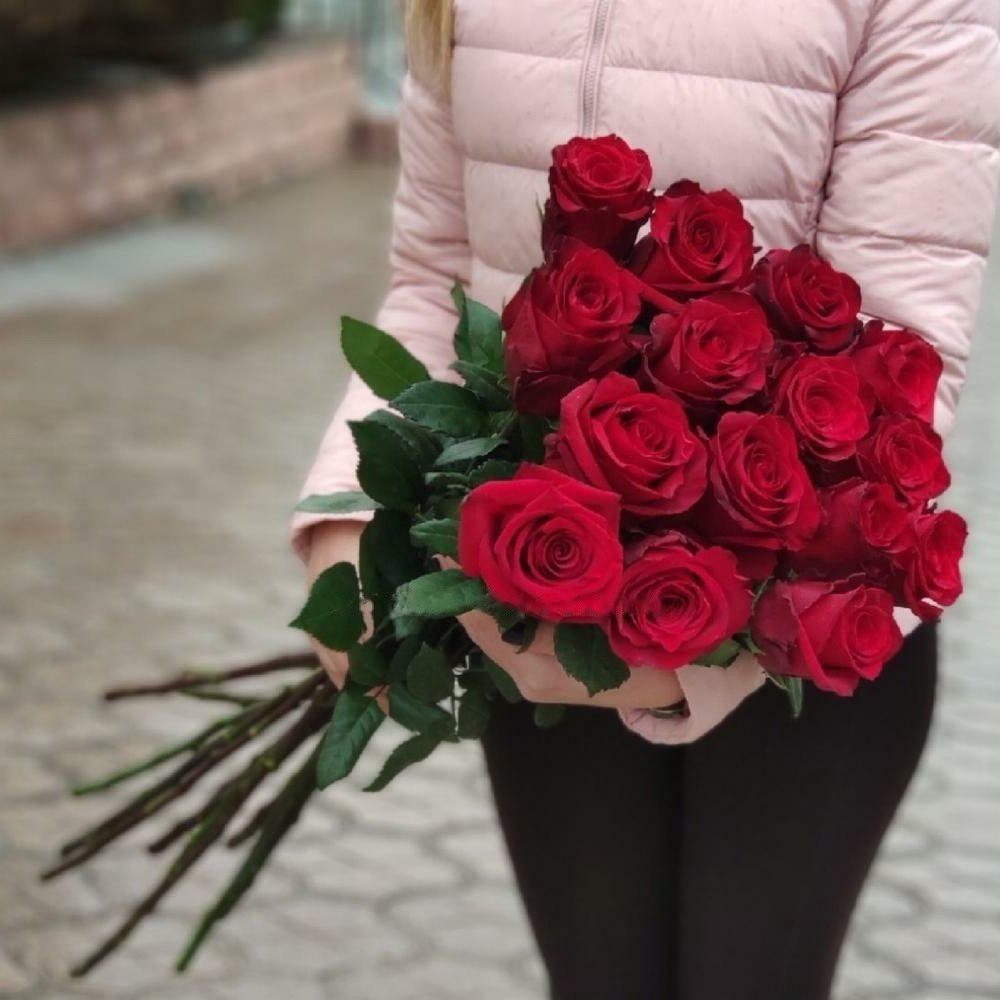
Roll a stem between finger and thumb about a hand's width under the bud. A thick, stiff, faintly woody stem with thorn scars spaced well apart belongs to a plant that grew slowly and was cut long, and it will hold a heavy head upright without help.
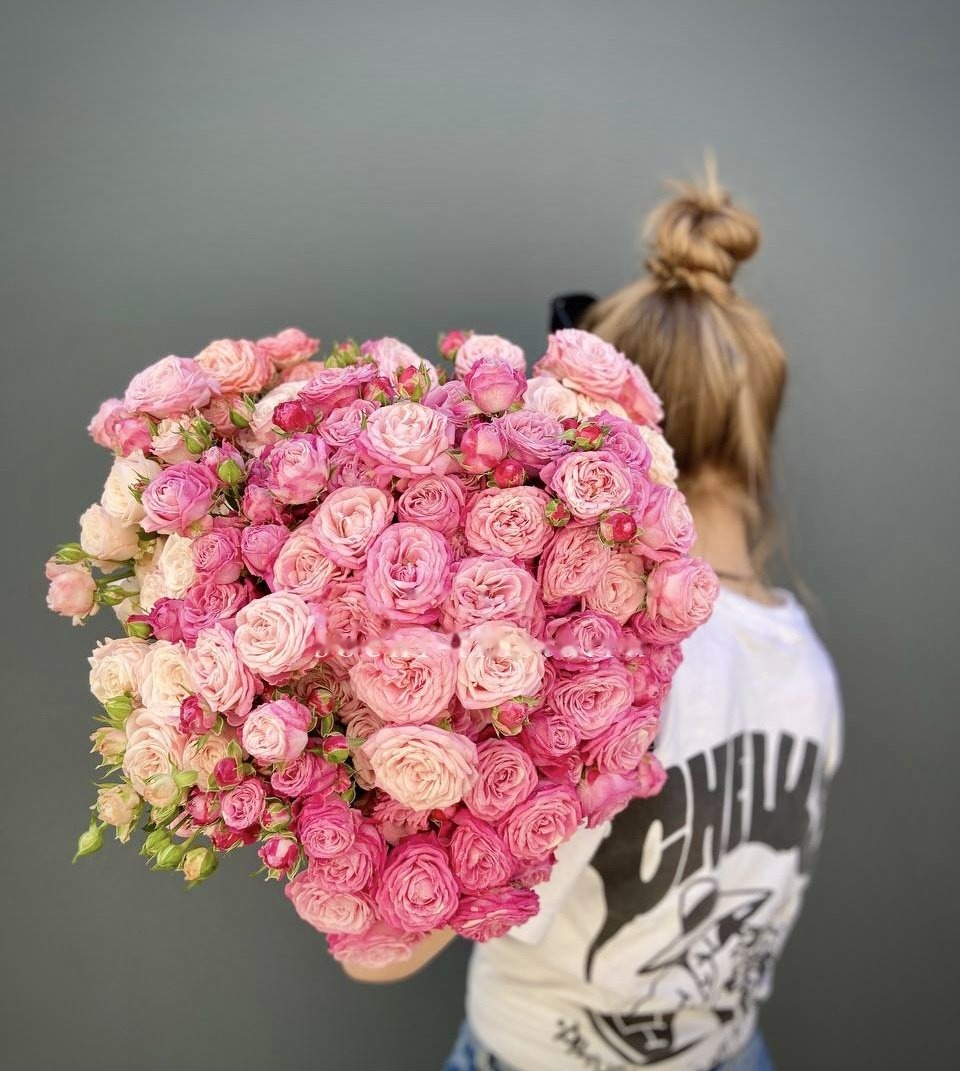
A thinner stem that bows a little under its own bud is not a defect. It comes from a lighter flower on a faster cycle, and in a hand-tied bunch it sits closer to its neighbours, which is exactly what a dense build needs. Florists reach for those stems on purpose when the brief asks for width.
Leaves repeat the story. Large, leathery, dark foliage with a matte surface grows on the same slow schedule as the heavy heads, while thin, glossy leaves belong to quicker plants. Petal layers are the easiest check of all. Ease one outer petal aside and count what stands behind it, because a slow-grown rose keeps its centre hidden for days and a fast-grown one gives it up almost at once.
"Guests hand me a photograph and ask for that exact rose. I hand them two stems from the bucket and ask which one feels heavier, and the conversation gets much shorter."
— JFLOO florist
The three groups you will meet
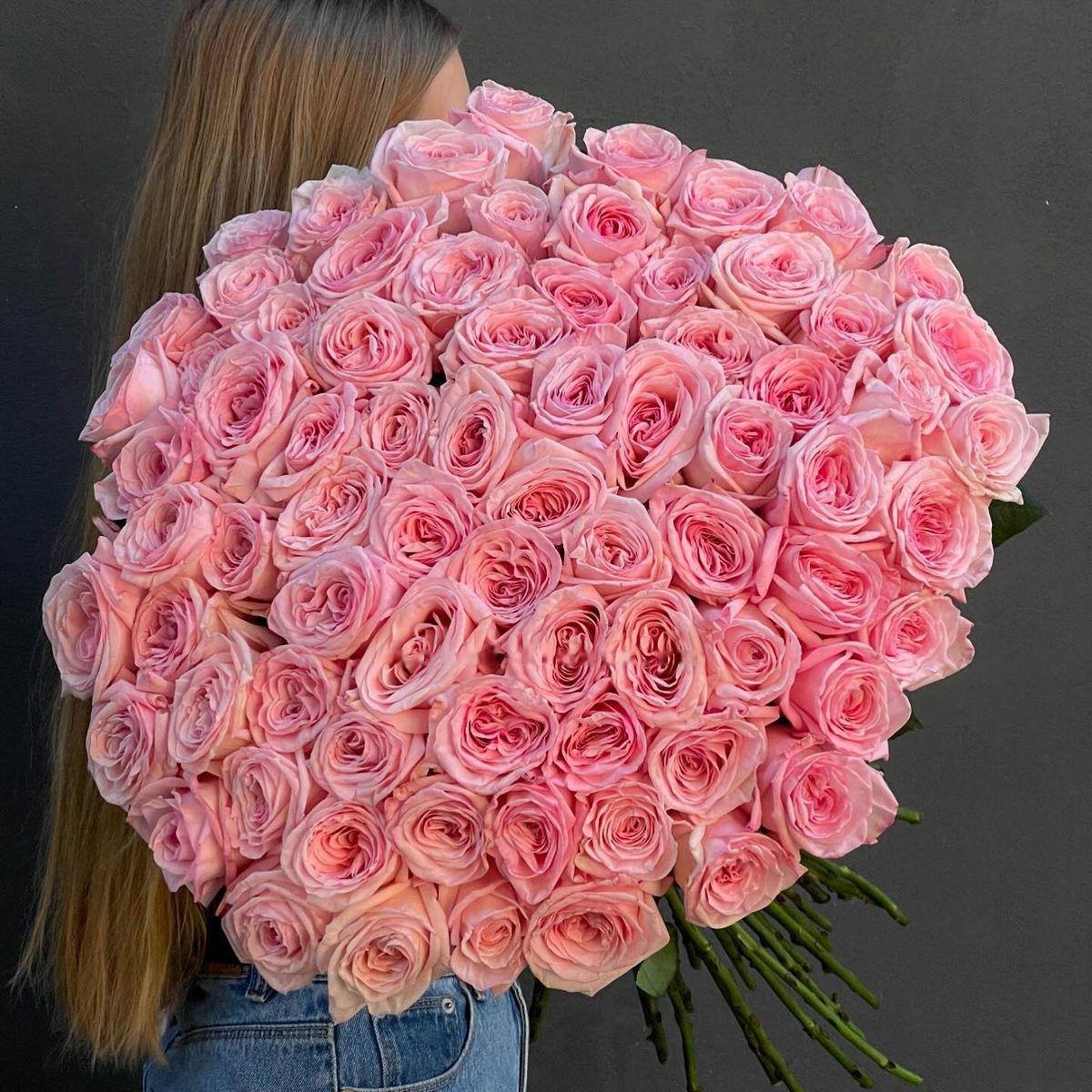
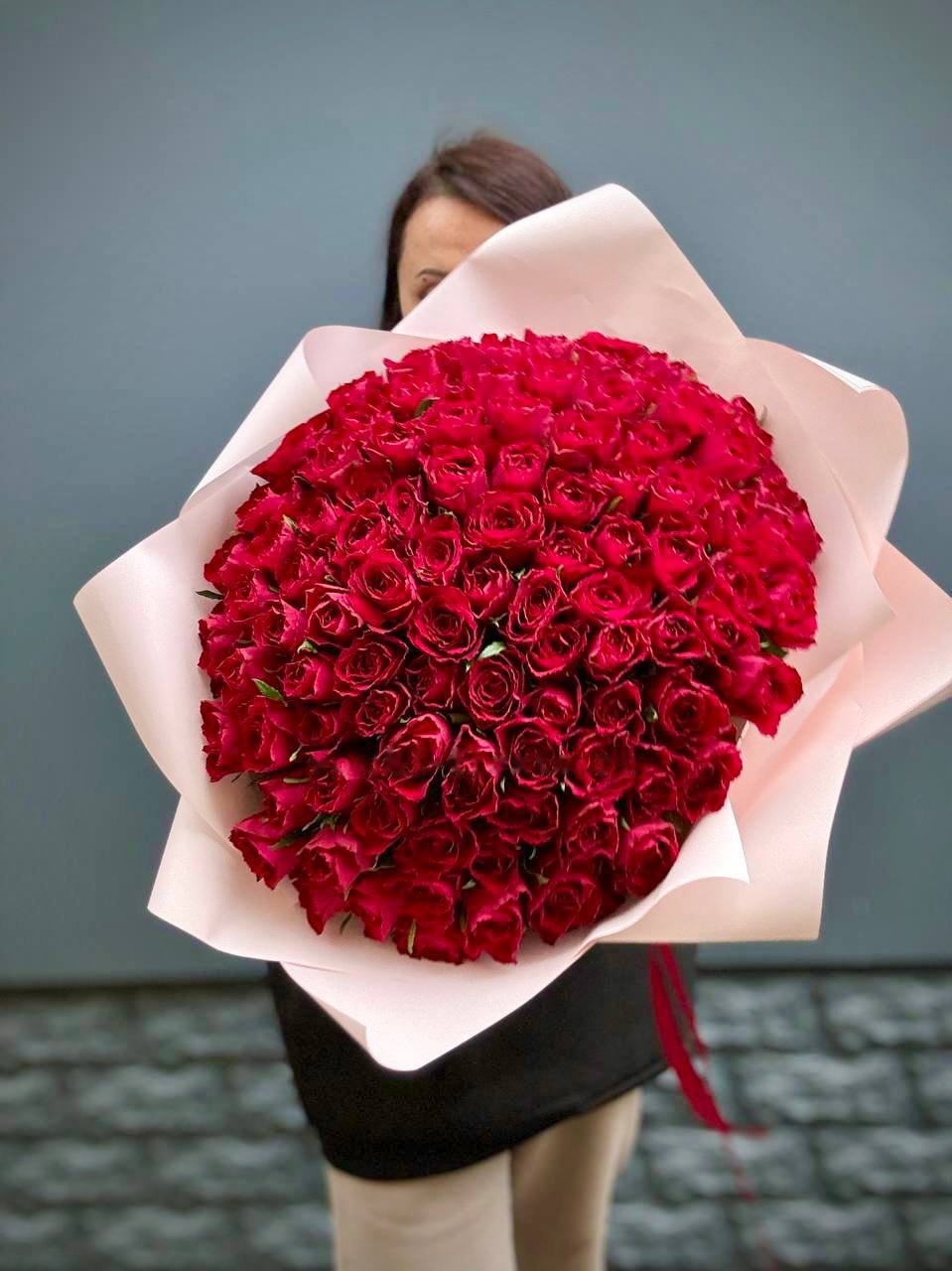
Ecuadorian roses are the large-headed, long-stemmed ones, built up over a slow cycle high near the equator. They open reluctantly, which is why they look reserved on day one and reach full width around the middle of their time in the vase. On the island they are the line that runs up to 120 cm.
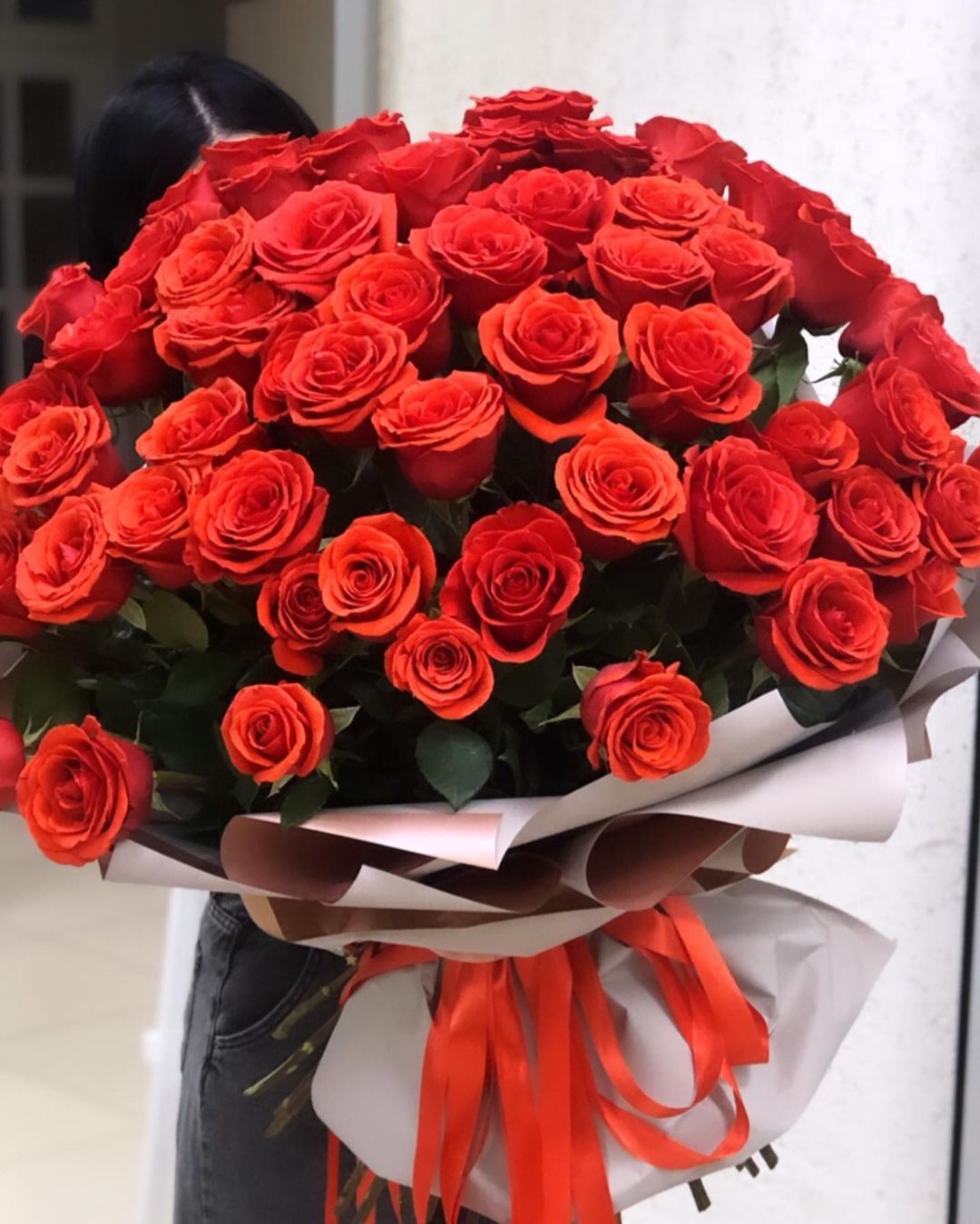
Kenyan roses grow at altitude as well, but the plants are managed for steady volume rather than for size, so the head is medium and the petal firm. A bunch of them looks fuller than the same money spent on fewer large blooms.
Dutch roses are the specialists of the group. Small-lot auction trade and a long breeding tradition put garden-shaped varieties, sprays with several buds on a branch, and colours from smoky lilac to something close to brown into that column of the catalogue. Size is rarely the reason anyone picks one.
What that means for an order here

Imported roses reach us at 60 to 90 cm, with the Ecuadorian line above that, and the rest of the bench is what gets built around them: seasonal peonies, ranunculus, lisianthus, macrophylla hydrangea, orchids and tropical foliage. A medium head disappears next to a large hydrangea and holds its own next to orchids, so what the rose stands with often decides the group.
Payment is settled before any of that matters. Orders start from 650000 IDR and go through QRIS, GoPay, OVO, DANA or cash to the courier at the door.
Then the road takes over.
We deliver from 9 AM to 10 PM, and distance decides the rest. Seminyak, Canggu and Sanur sit in a 90 to 150 minute window, while Uluwatu, Tabanan and remote villas take up to 3 to 4 hours, and a long-stemmed box spends that whole time lying flat and closed. Above 30 °C and in the humidity that comes with it we wrap firmly and add a cooling element, which is another argument for the stiffer stem on a long run.
The drier months from April to October are the easy half of the year for a rose. From November to March the air works against an open bud, and we cut a stage tighter for anything travelling far, so a bouquet delivered in the rainy season should be given a day at the villa before anyone judges it.
Send the address and the hour first, then choose the group. A rose picked for a Nusa Dua hotel room and a rose picked for a Jimbaran ceremony are rarely the same flower, and the difference is decided at the bench rather than at checkout.

