In our previous piece we talked about white roses and how they are underrated. With red roses, the situation is exactly the opposite — they are overrated. It is the most mass-marketed flower in the world, and over years of practice we have seen hundreds of cases where red roses were sent to the wrong person, in the wrong context, at the wrong time.
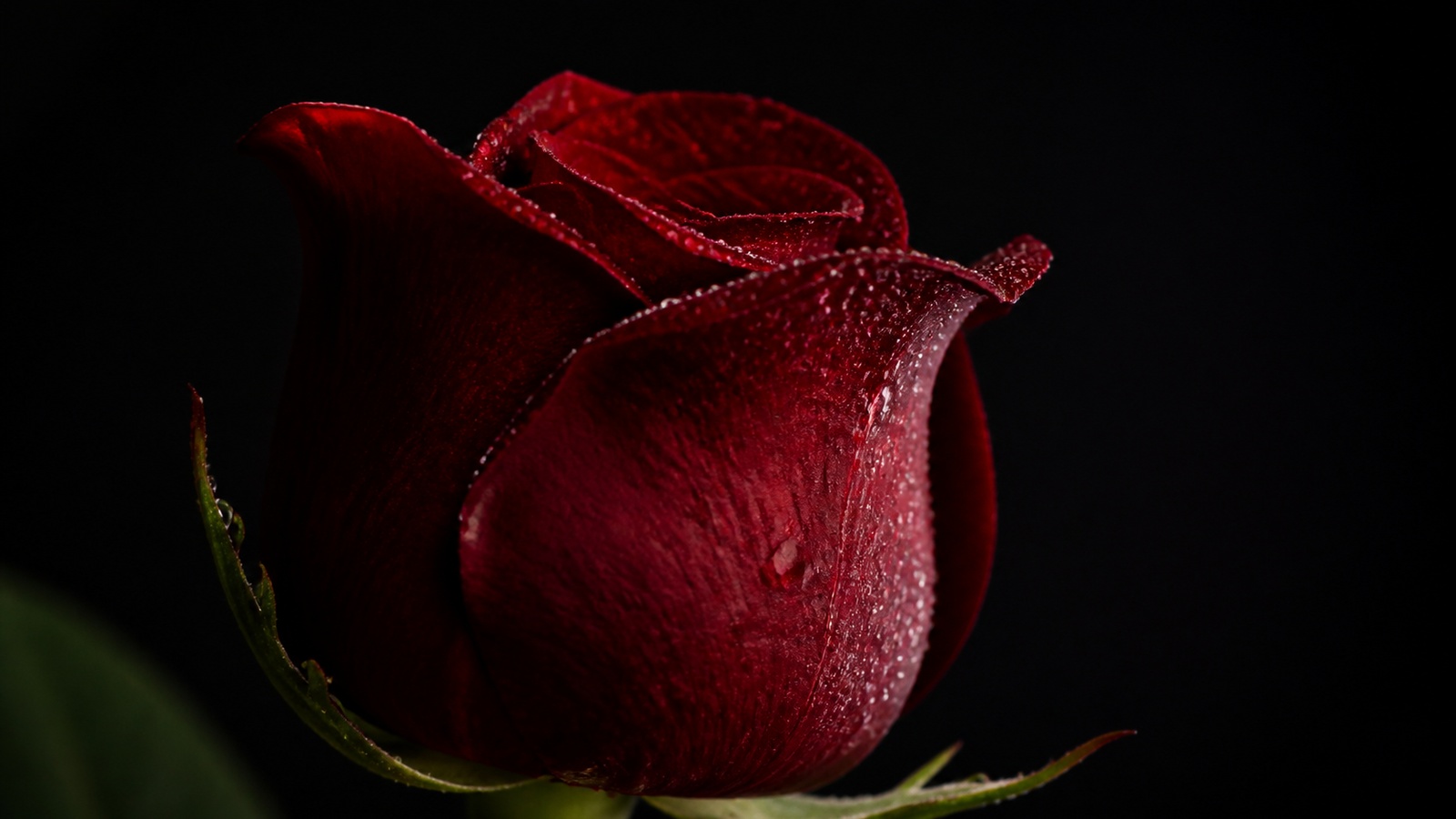
Let's break it down — what they actually mean, which shades work for what, how many are appropriate, and why 51 roses is not always "better" than 11.
The core meaning — red roses are about eros
Strip everything else away, and a red rose is the symbol of romantic love. Not friendship, not respect, not gratitude. Specifically — love between partners with erotic undertones.
It's an ancient symbol. Greek mythology tied the red rose to Aphrodite, goddess of love and beauty. Christian tradition connected it to the blood of Christ and to passion. In the Middle Ages, troubadours used the red rose as the canonical image of love poetry. In the 19th century, Victorians cemented it: red rose = "I love you." The cultural code is universal: in London, Istanbul, New York or Tokyo, red roses will be read the same way.
And that is exactly why they often work incorrectly. When you give red roses to your mother for her birthday, to a teacher, or to a female colleague at the office, the symbol stays the same as it always was. Only in those contexts, it creates awkwardness.
Where red roses work strongly
Declaring love
This is their primary scenario. If you want to say "I love you" through flowers for the first time — red roses are the only unambiguous choice. Every other flower leaves room for interpretation. Red roses do not.
Valentine's Day and other romantic dates
February 14 is the day of red roses. If you are in a romantic relationship and you did not give red roses on Valentine's Day, that is read as a gesture of "I do not want to play along with conventions." That's a defensible position, but you need to voice it, otherwise it reads as forgetfulness.
Long anniversaries
5, 10, 15, 25 years together — red roses. The longer the timeframe, the stronger it works. Twenty-five red roses for a twenty-fifth anniversary is right, it's classic, and it lands.
Recovering after a serious conflict
If you have seriously messed up in a romantic relationship — red roses say "I love you, and that hasn't changed." Not "forgive me" (for apology, a pastel peony works better) but an affirmation of feelings against the backdrop of a crisis.
Weddings — with caution
Red roses are rare in bridal bouquets. Usually they are used as an accent (one or two red among a mostly-white arrangement) or for themed color weddings. A fully red bridal bouquet is an "we know exactly what we're doing" statement — it works only when the entire wedding aesthetic is built around it.
Shades of red — what each nuance means
Not all red roses are the same. Broadly — four main shades:

- Scarlet / classic red (Freedom, Red Naomi) — the most "canonical," for dates and romance
- Dark red / wine / burgundy (Black Baccara, Black Magic) — more mature, passionate, with a mystical undertone. Great for long anniversaries and winter weddings
- Raspberry-red (Hot Lady, Magnum) — a modern, slightly playful version. Works with younger partners
- Carmine / warm red (Rhodos, Verdi) — softer, closer to coral. Good when you want red but not aggressive
If you don't know what to choose — take the classic scarlet. That's the safe base interpretation.
How many roses to give
There is a lot of mythology around numbers. Here's how it works in practice.
Cultural note. In Eastern European and post-Soviet cultures, odd numbers of flowers are the norm — even numbers are associated with funerals. In most of Western Europe, North America and Asia, either count works. When in doubt about the recipient's cultural background, stick to odd numbers — they are safe globally, while even numbers can be misread in some regions.
Semantics of quantity (globally recognized):
- 1 rose — "you are the only one" (poetic, though visually it looks sparse)
- 3 roses — "I love you" (a classic compact declaration bouquet)
- 5 roses — a small, neutral bouquet
- 7 roses — "I want to be with you" (symbol of union)
- 11 roses — "you are the other half of my life" — the most popular working number
- 21 roses — "I devote myself to you fully"
- 25 roses — a serious anniversary
- 51 roses — "you are the one"
- 101 roses — "will you marry me" (proposal number)
In real florist work, the most requested counts are 11, 15 and 21. 51 is chosen for genuinely major events (proposals, milestone anniversaries). 101 is almost exclusively for proposals. Fewer than five looks sparse in any context.
What to pair red roses with
Red roses are a strong flower. They dominate the arrangement and don't play well with equals.
What works well:
- Silver eucalyptus — softens the aggression of red, adds texture
- Gypsophila — creates a "mist" around the roses, softens the composition
- Ruscus and pittosporum branches — structural foundation
- White lisianthus — a delicate second layer (only in compositions, not as the base)
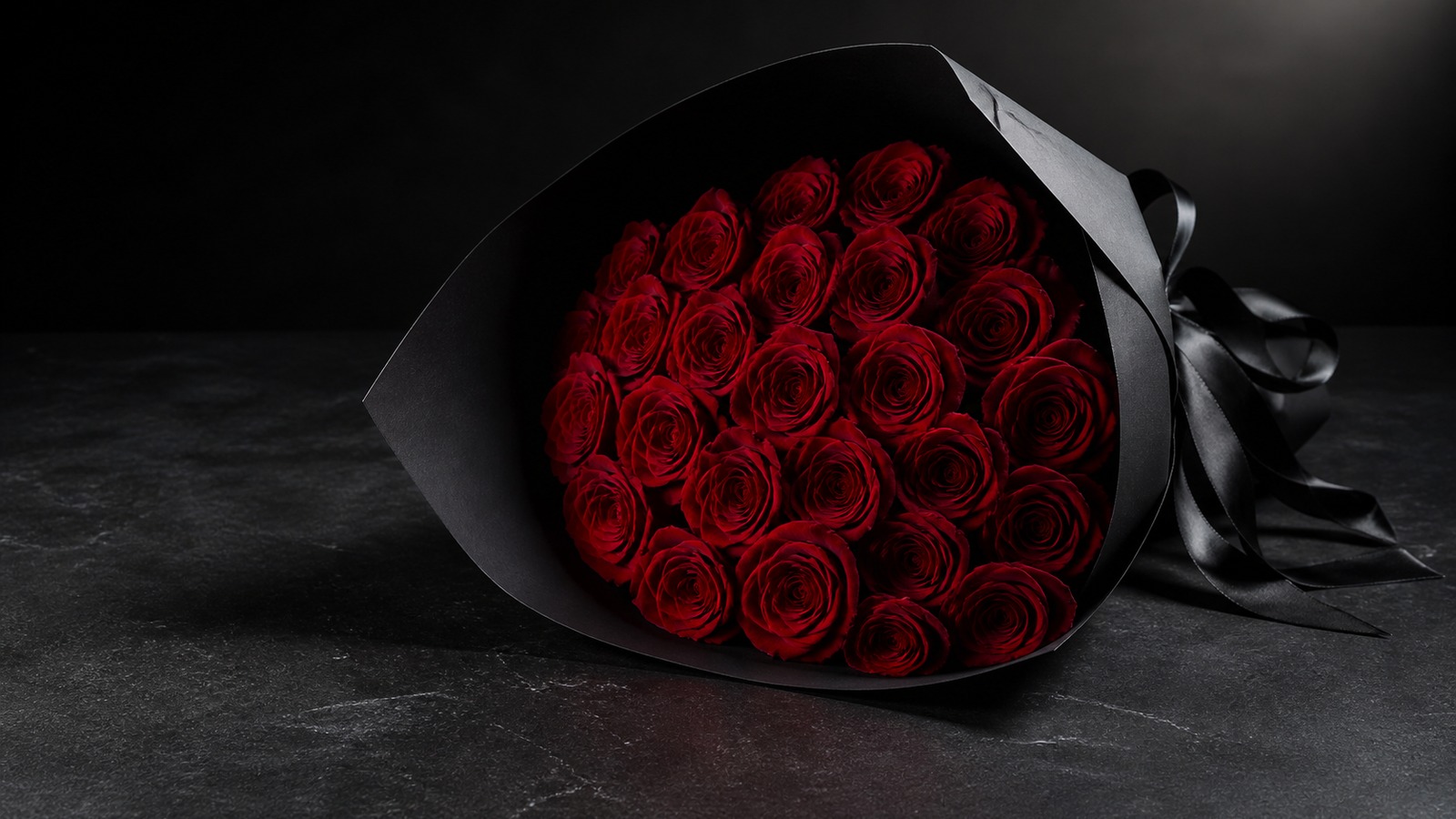
- Black or dark gray wrapping paper — modern, premium
What works poorly:
- Tulips — compete for attention, both strong flowers, the bouquet becomes muddy
- Chrysanthemums or gladiolus — dated aesthetic, reads as provincial
- Yellow accents — dissonant, two strong emotions at war
Caring for red roses
Red roses are the hardiest of roses. Thick petals, dense stems, strong immunity. Standard care:
- Diagonal cut under water with a sharp knife, every two days, trim 2–3 cm
- Remove leaves that would sit below the waterline
- Change water every two days
- Keep away from direct sunlight
- Do not place near fruit (ethylene)
With proper care, classic border varieties like Freedom or Red Naomi live 8–12 days. Black Baccara lasts a bit less — 7–9 days — but is more dramatic visually.
When NOT to give red roses
Based on years of practice — situations where red roses create awkwardness or work against you:
- Mother, mother-in-law, grandmother — the symbolism of romantic love does not overlap with mothers. Use pink or white.
- Teacher, doctor, female boss — ambiguous. Especially if you are a man.
- Corporate gifts — red roses cross the professional line here.
- Female friends, sister — may be read as a love confession.
- A young woman on a first date — too strong a signal. Use pink or neutral shades.
- When several men are giving flowers to one woman jointly (for instance, a workplace congratulation) — it becomes strange that "everyone is declaring love."
When to choose another color
If you want to show feeling but not romantic passion, there are better options:
- Pink roses — tenderness, gratitude, admiration
- White roses — purity, new beginnings, respect
- Yellow roses — friendship, joy, gratitude
- Cream / peach — cozy love, long relationships
- Burgundy with white edges — a modern, nuanced choice
Summary — who and when red roses suit
In short:
- Romantic partner — yes, especially on dates
- Love declaration — yes, the only unambiguous flower
- Long anniversaries — yes, the symbol of "time together"
- Recovery after conflict — yes, at serious stages
- Mother, teacher, colleague — no, take another color
- A young woman for flirtation — no, too serious
Red roses are not the "universal safe choice" many people think they are. They are a precise instrument that works powerfully in a few scenarios and poorly in all others.
If you want to choose a bouquet of red roses — we have ready options from 11 to 101 stems, with different wrappings and pairings. Order red roses with delivery — pick by occasion, and we'll deliver on the day of the order.
In the next articles we'll break down pink and yellow roses — each color has its own subtext.
— Sofia Bell