






720x720_q85.jpg?v=1787130511)


_e58557720x720_q85.jpg?v=1787130512)


720x720_q85.jpg?v=1787130516)
720x720_q85.jpg?v=1787130516)
_0406c4720x720_q85.jpg?v=1787130516)
Roses delivered in Antwerp: varieties, Aalsmeer freshness, and packaging for a maritime climate
The rose stays the backbone of floristry in Antwerp. Behind that simple cupped shape sits a chain of decisions: which variety for the occasion, how to hold the cold from the Dutch auction to a recipient in Het Zuid, what to wrap the bouquet in against the damp wind off the Scheldt.
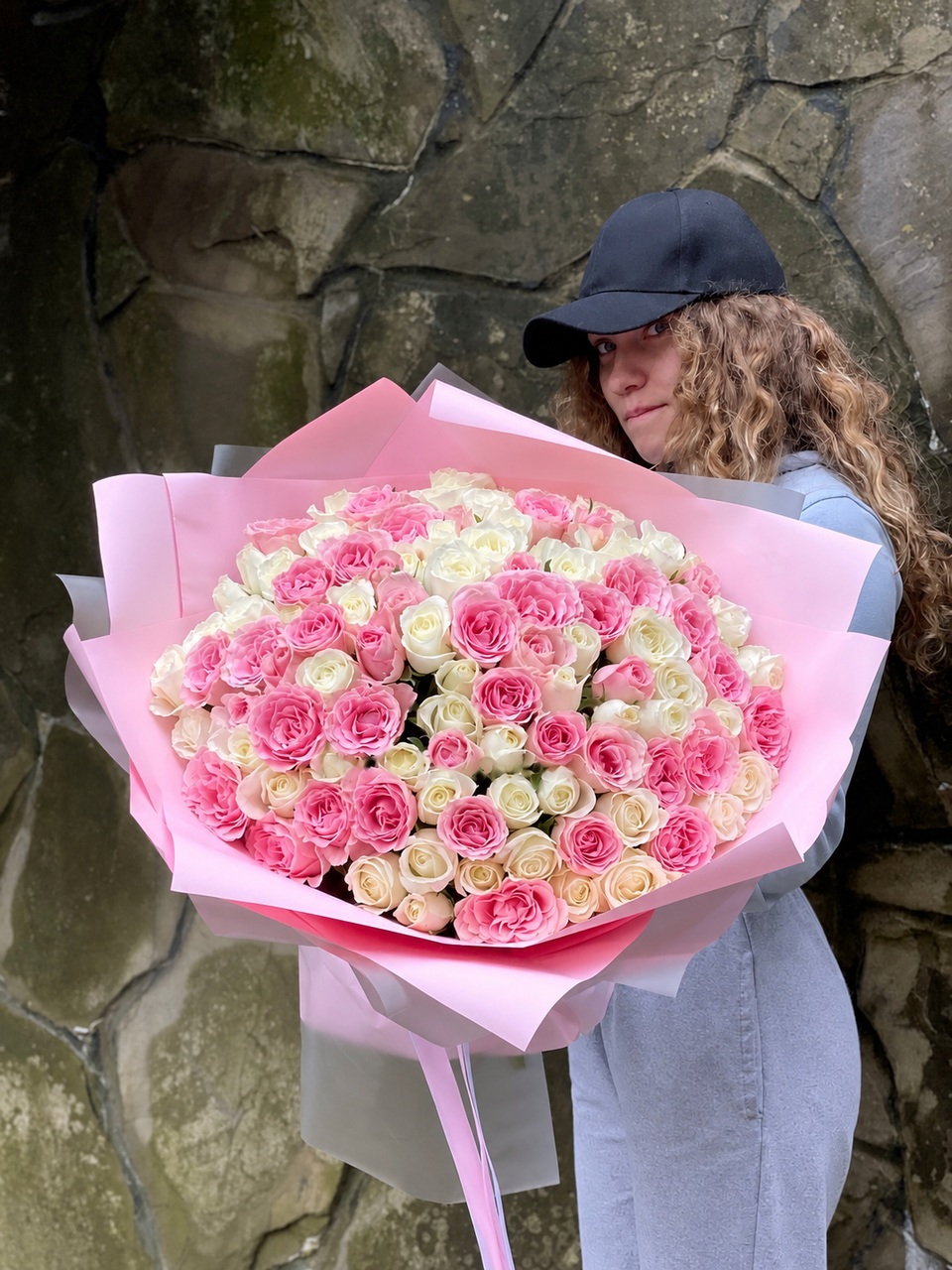
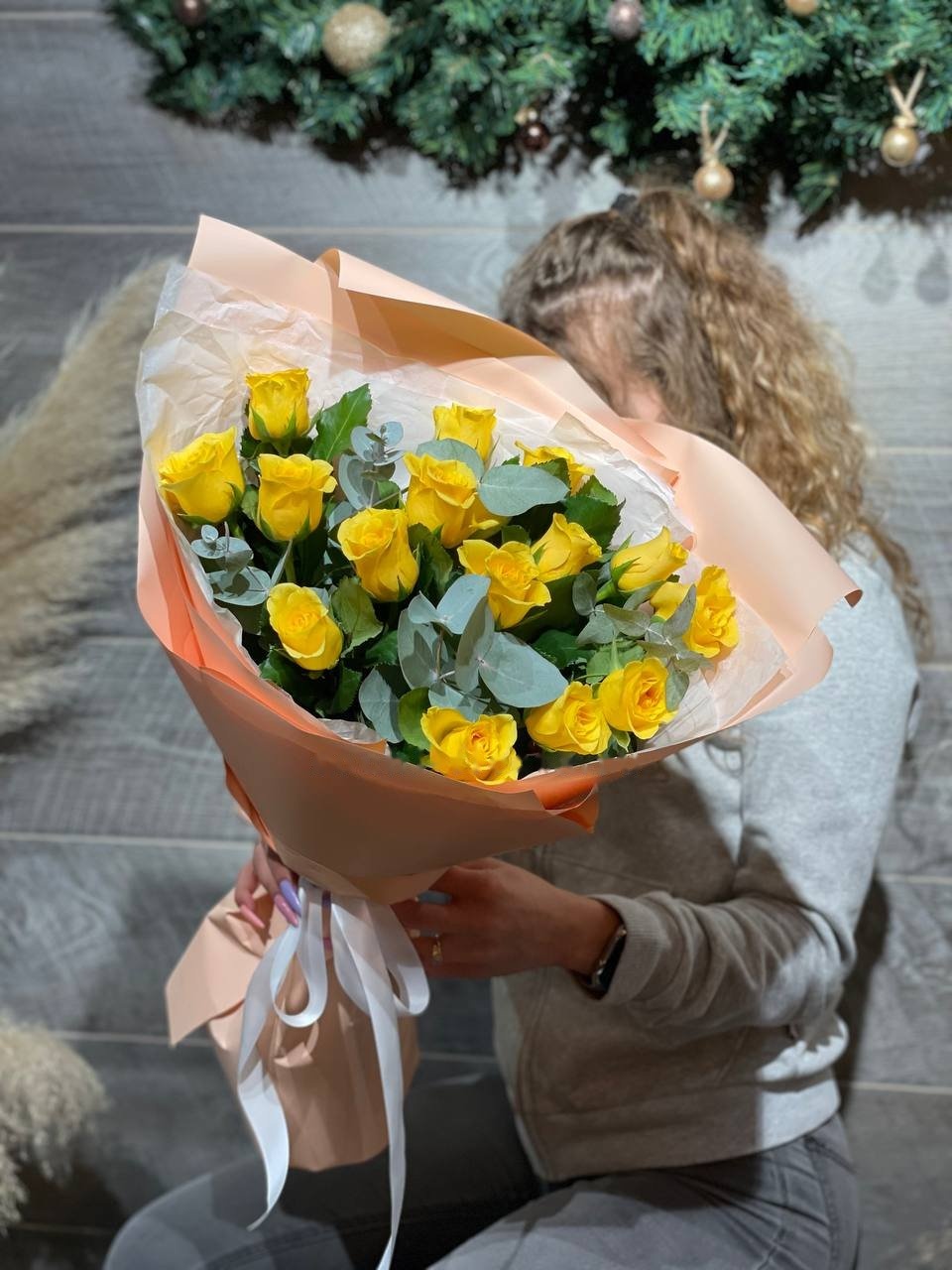
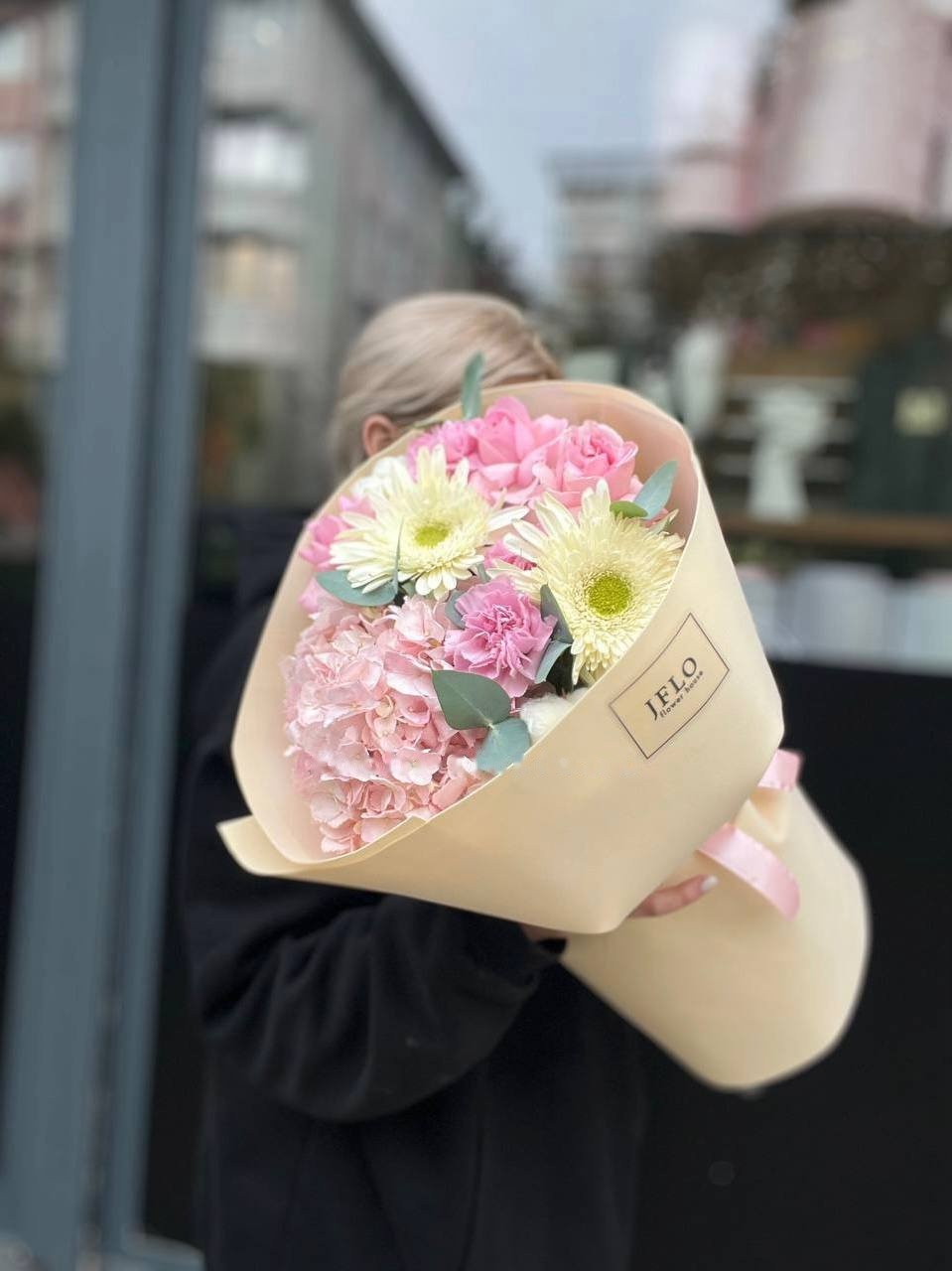
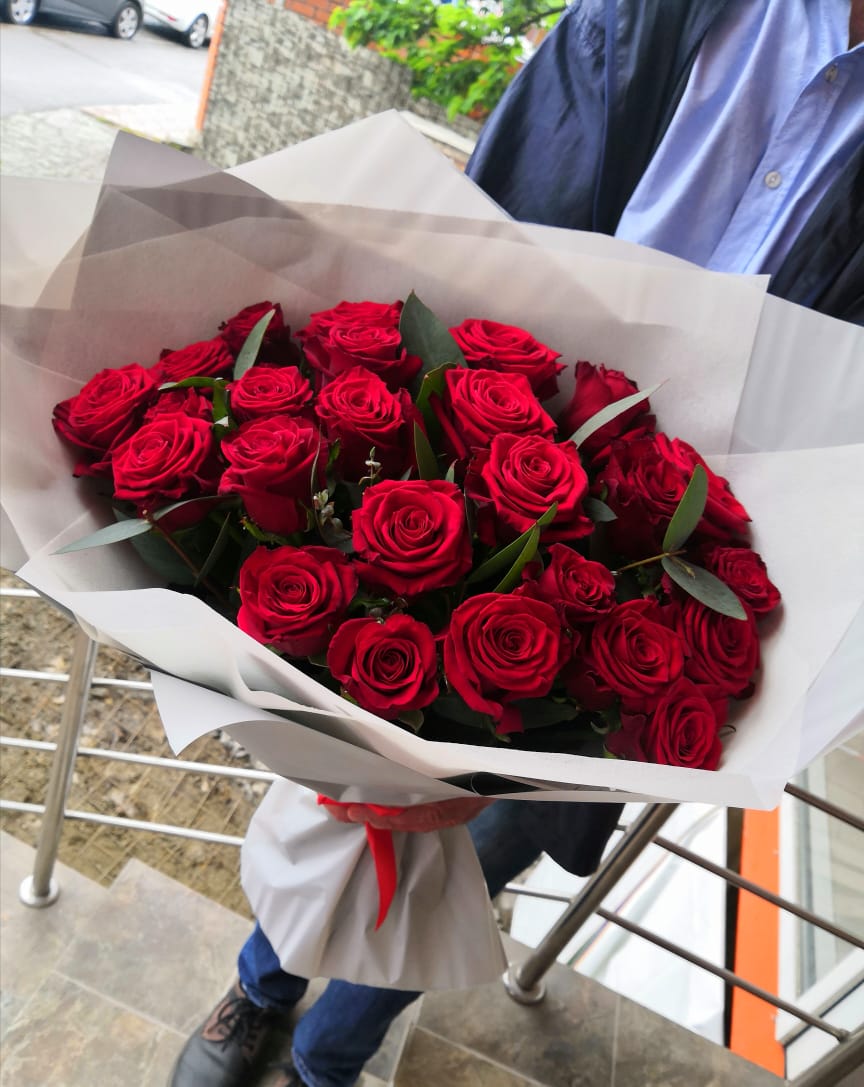
This category covers single-variety bouquets, mixed compositions, and individual stems for a no-occasion gift. It also includes boxes, baskets, and large bunches of 25, 51, and 101 stems — a format that often matters to the recipient as much as the variety itself.
Which varieties we keep in stock
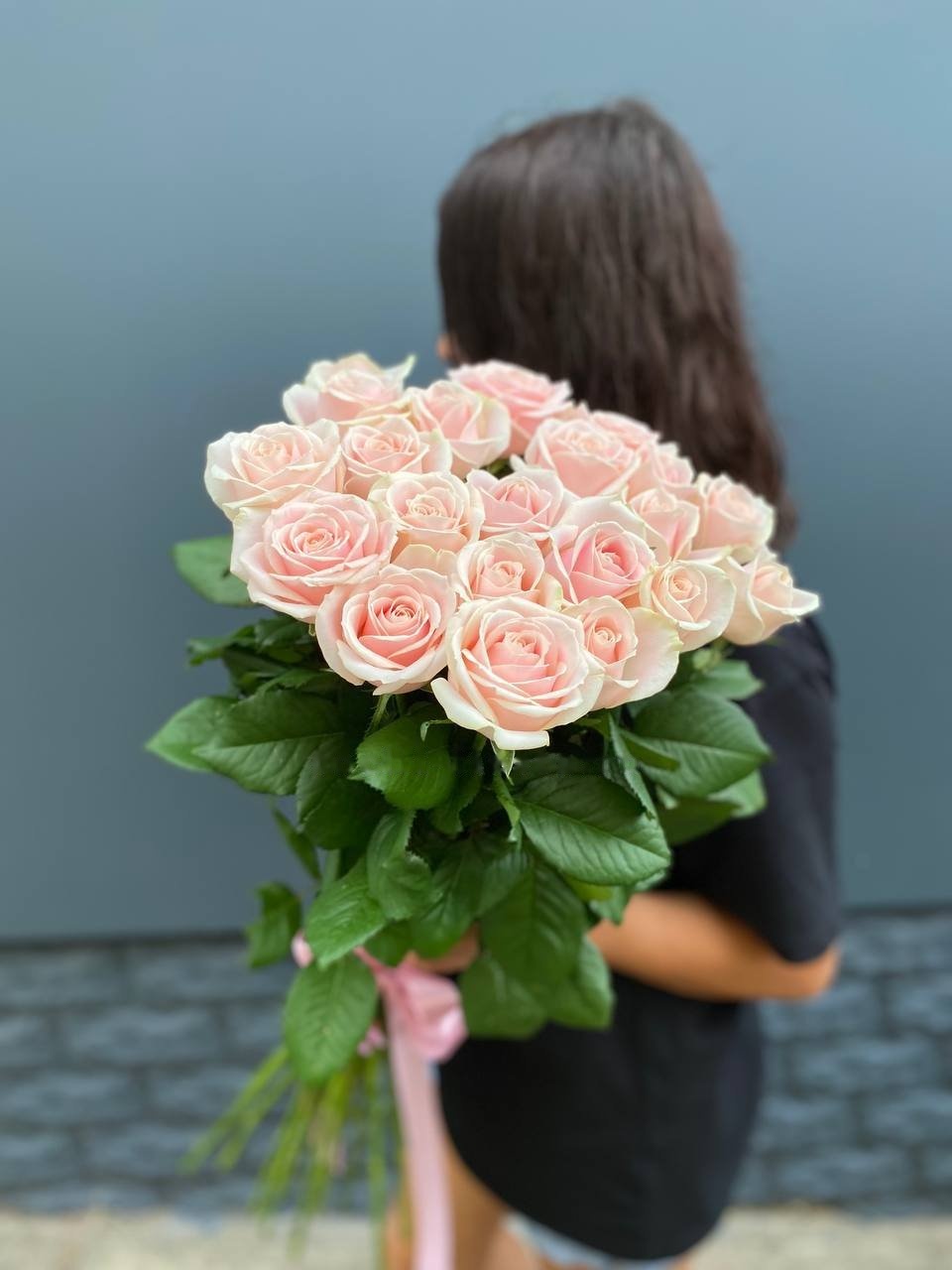
Three working groups sit on the shelves: Dutch classics, large-headed Ecuadorian roses, and English David Austin garden roses. Each solves its own task — from a statement piece for an anniversary to a quiet bouquet for an apartment near the Meir.
- Avalanche+, Red Naomi, Vendela — Dutch classics. Medium 5–7 cm buds, a rich palette, the reliable workhorse for any brief. The short hop from Aalsmeer is the freshness argument here.
- Freedom, Explorer, Mondial — the Ecuadorian flagships. Long 70–90 cm stems, dense buds, a vase life of 10–14 days with proper care.
- Juliet, Patience, Constance — English David Austin roses. Cupped double form, subtle fragrance. The first pick for a bridal bouquet.
- Spray roses — several blooms on a single stem, for airy compositions and smaller gifts.
- Quicksand, Cappuccino, Sahara — nude and dusty tones, in demand with wedding designers in recent years.
Occasions and stem count
One stem is a soft note of attention. Three is a friendly thank-you. Seven and nine make a romantic gesture for a date. Twenty-five reads as a serious declaration; 51 and 101 mark anniversaries, engagements, and milestone birthdays.
Belgium keeps its own flower calendar. The main peaks are Valentine's Day on 14 February and Mother's Day, which in most of the country falls on the second Sunday of May. Antwerp has its own twist — the city traditionally celebrates Mother's Day on 15 August. Order ahead for these dates.
Freshness and logistics
Antwerp is lucky with geography. The Royal FloraHolland auctions in Aalsmeer and Naaldwijk are about 150 km away — a couple of hours by refrigerated truck. Cut stems reach the florist almost straight after the auction, the shortest route in the catalogue.
Ecuadorian and Kenyan large-headed roses fly in through the cargo terminals at Liège and Brussels, then come the last leg by road. The chain runs longer — 4–7 days from the farm — but with unbroken cold the bud still lives 10–14 days in the vase. Until assembly the roses are held at +4…+6 °C.
"The Antwerp buyer looks at the detail — they ask the batch date and where the rose is from. Being close to the Dutch auctions genuinely counts here: yesterday's fresh cut beats a week-old batch every time, however loud the label."
— Lena Vermeulen, florist with 13 years of experience
Delivery specifics
Antwerp has a temperate maritime climate. Winters run +2…+7 °C with rain and damp wind; summers sit at +17…+23 °C with short heat spells up to +30 °C. Humidity stays high year-round — good for cut flowers, less kind to kraft paper. In spring and summer the bouquet gets an extra water-resistant outer layer.
We deliver across the whole city: Centrum and the old town around the cathedral and Grote Markt, Het Zuid, Het Eilandje by the MAS museum, Borgerhout, Berchem, Deurne, Wilrijk, Merksem, Ekeren, Hoboken. We also serve the Diamond District by Central Station. Catalogue prices are in euros (€), payment by card online. For Valentine's and Mother's Day we run an extended schedule — order 3–5 days ahead.
Care at home
After delivery, recut the stems at a 45° angle, strip leaves below the water line, place in a clean vase with cool water. Change the water every two days, add Chrysal or a pinch of sugar. Keep the bouquet away from ripe fruit — ethylene shortens vase life by a third.
In winter the main enemy of a bouquet in Antwerp is the hot radiator under the window: dry heat dehydrates the petals within a couple of days. Don't set the vase right against it. On the rare +30 °C summer day, move the roses to the coolest room overnight — that metabolic pause adds 3–5 days with no additives.
Roses adapt to almost any task: a colleague's birthday, a wedding anniversary, a bridal bouquet, a hospital welcome for a newborn. We match the variety, colour, and format to the occasion — write to a manager and we'll build a composition that fits the budget and the address.

