



720x720_q85.jpg?v=1787130498)
720x720_q85.jpg?v=1787130774)


720x720_q85.jpg?v=1787130511)


720x720_q85.jpg?v=1787130774)


Bouquets: the first hour decides the second week

Cut flowers are already dying when they reach you. Everything a florist does after the harvest, and everything you do in the first hour at home, is an argument with that fact, and most of the argument is won or lost before the wrapping comes off.
A stem drinks through the open capillaries at its cut end. Leave it out of water for a couple of hours and those capillaries seal themselves with air and dried sap, so the flower can sit in a full vase and still wilt. That is why the cut is made again under running water or straight into the vase, at an angle, and why a florist who hands you a bouquet also tells you not to leave it in the car.
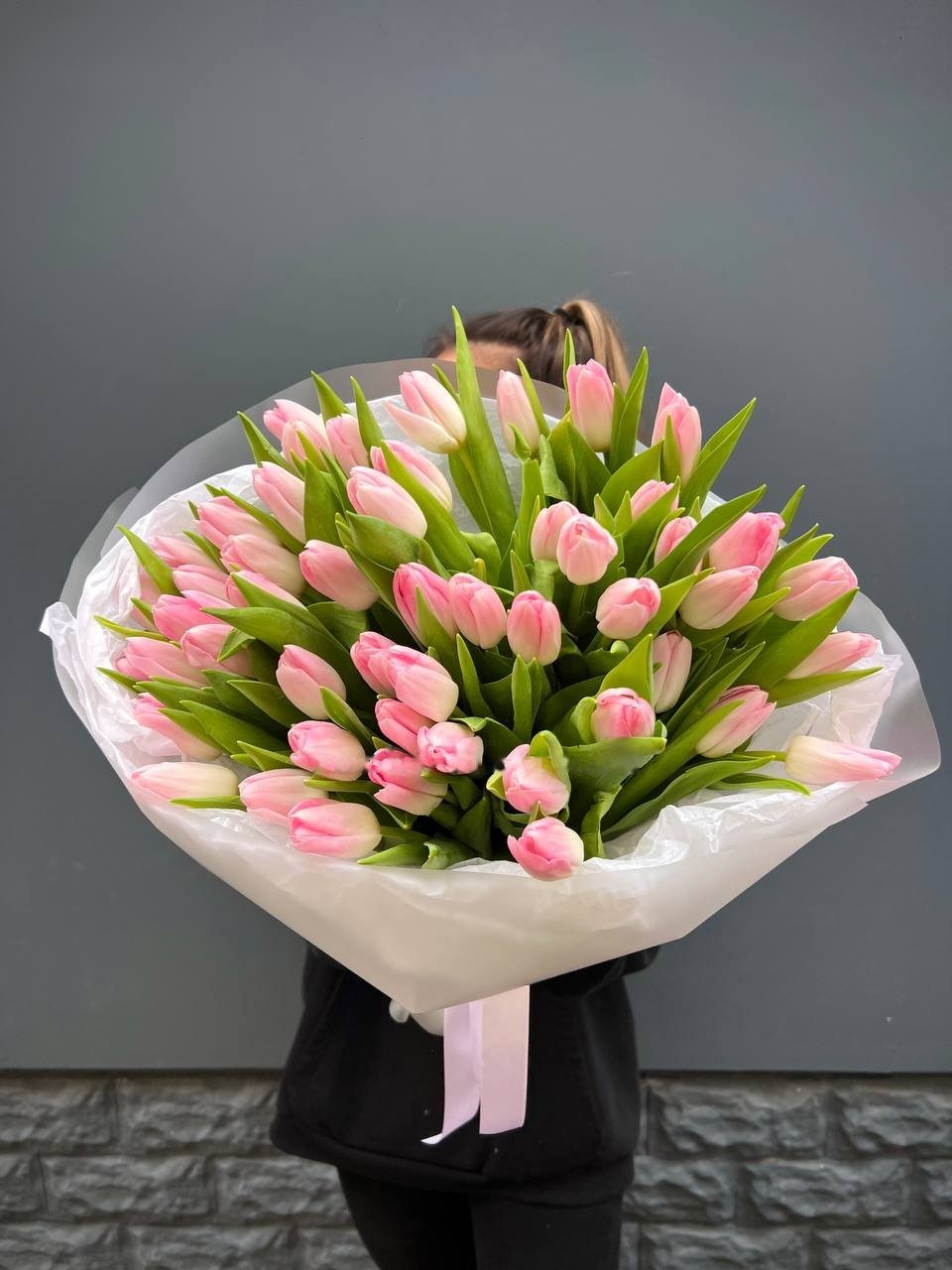
Water temperature matters more than people expect. Cool water for most things, tepid for tulips and anything that has travelled far and needs to drink quickly.
Then strip every leaf that would sit below the waterline. Submerged foliage rots within a day, clouds the water and feeds the bacteria that block the stem ends from the inside. Change the water every second day, recut a centimetre off the stems while you are there, and rinse the vase properly rather than topping it up.
What the florist did before you got it
Underneath the paper there is usually a spiral. Stems are laid into the hand at an angle, each one crossing the last in the same direction, so they meet at a single point and fan out below it. A bouquet built that way stands unsupported on a table and settles evenly into a vase.
A bundle held parallel and tied tight does the opposite. The stems compress, water reaches only the outer cuts, and heads press against each other until the petal edges bruise.
Focal flowers, and everything that surrounds them
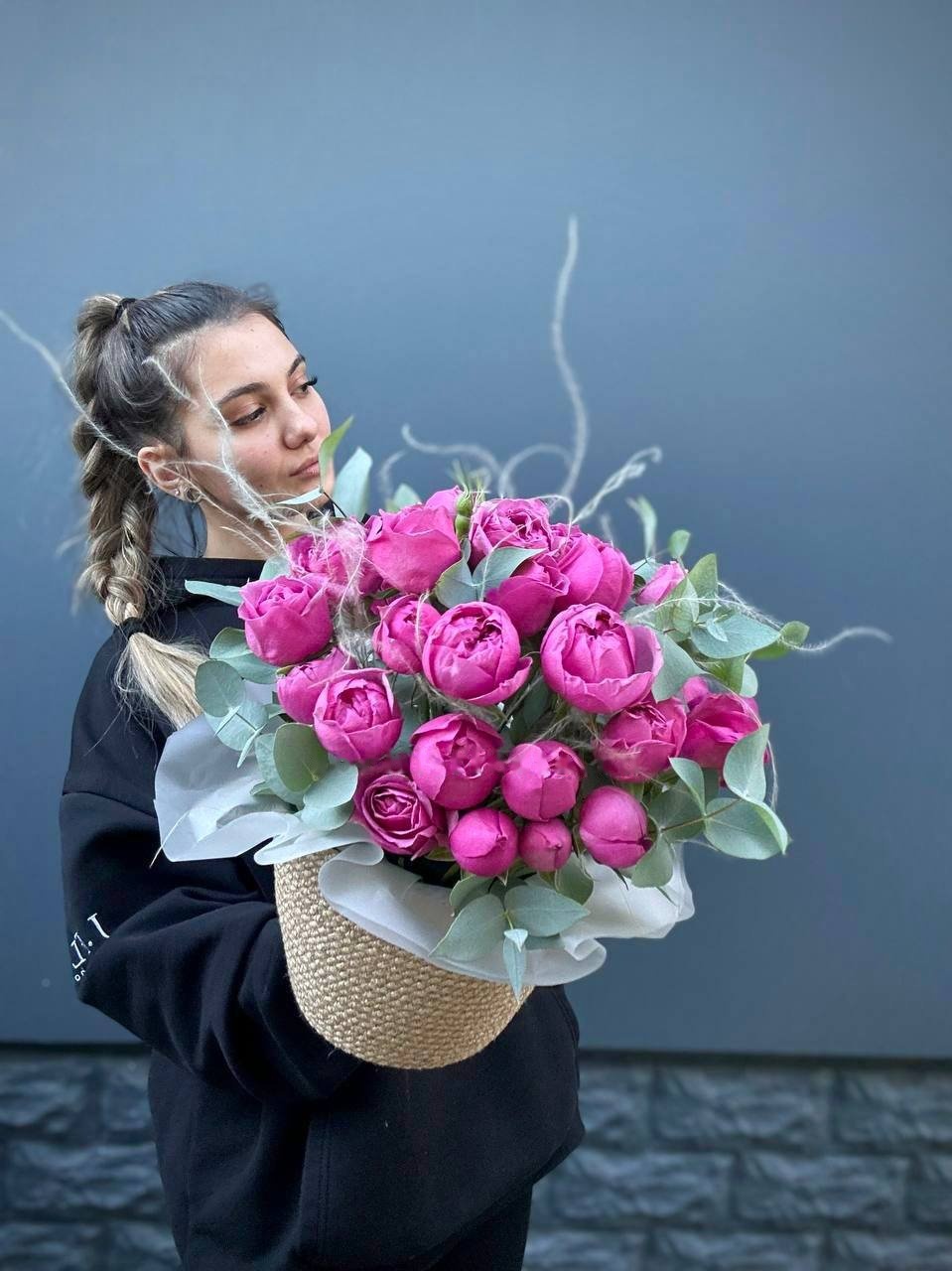
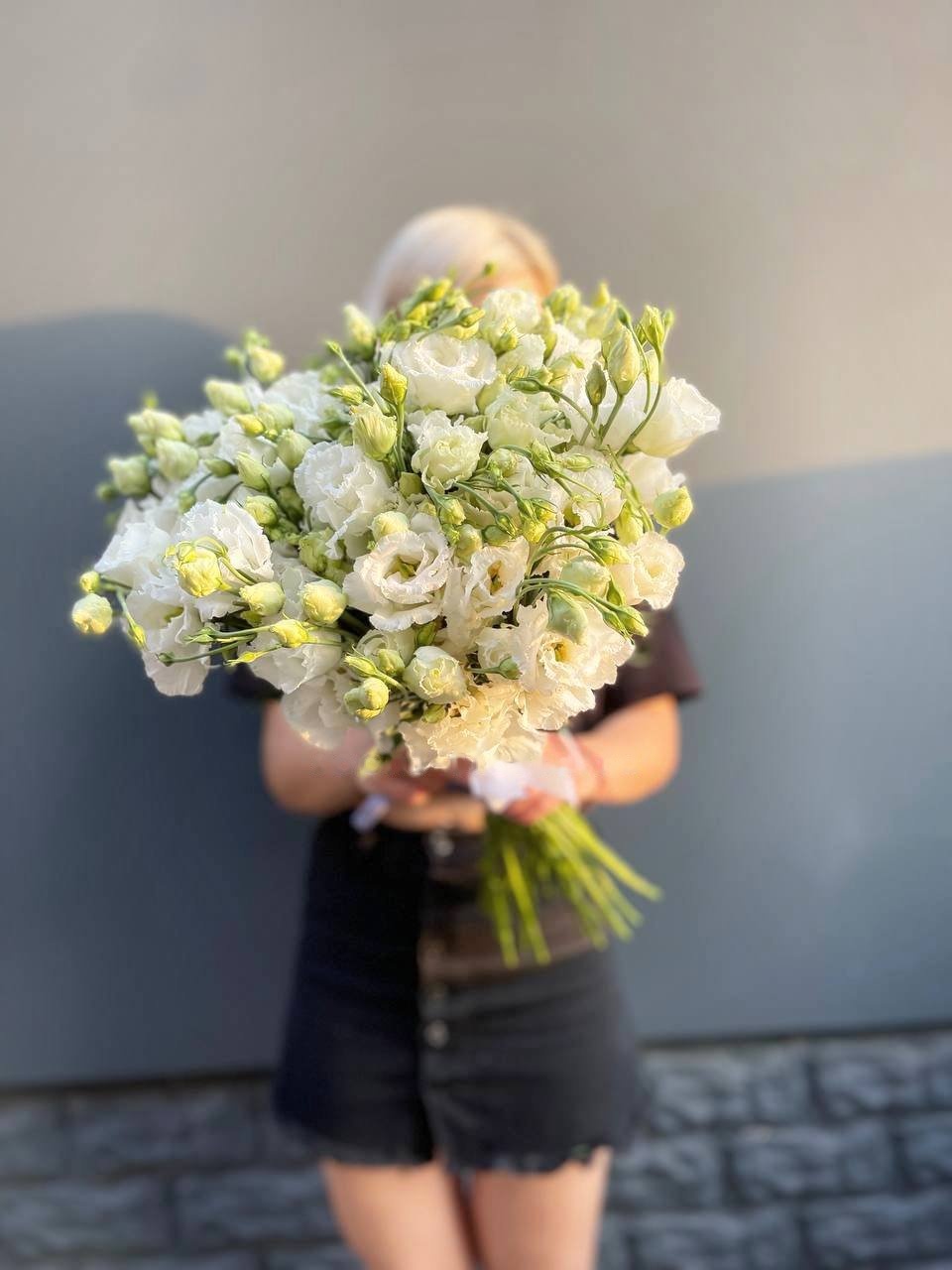
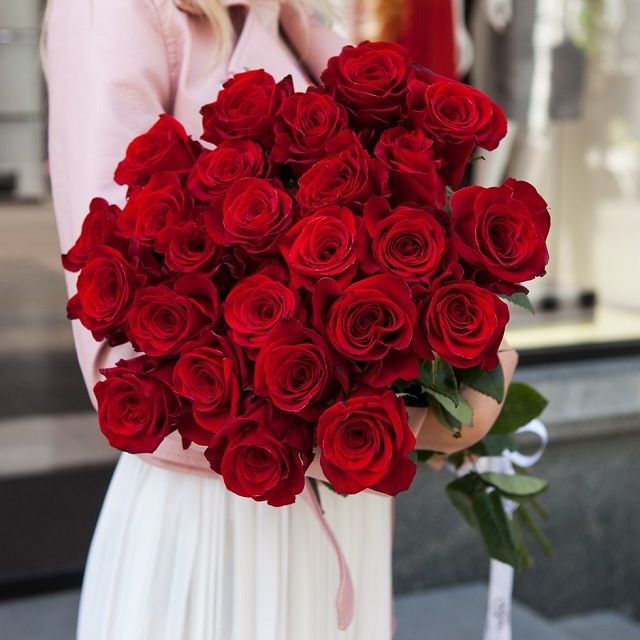
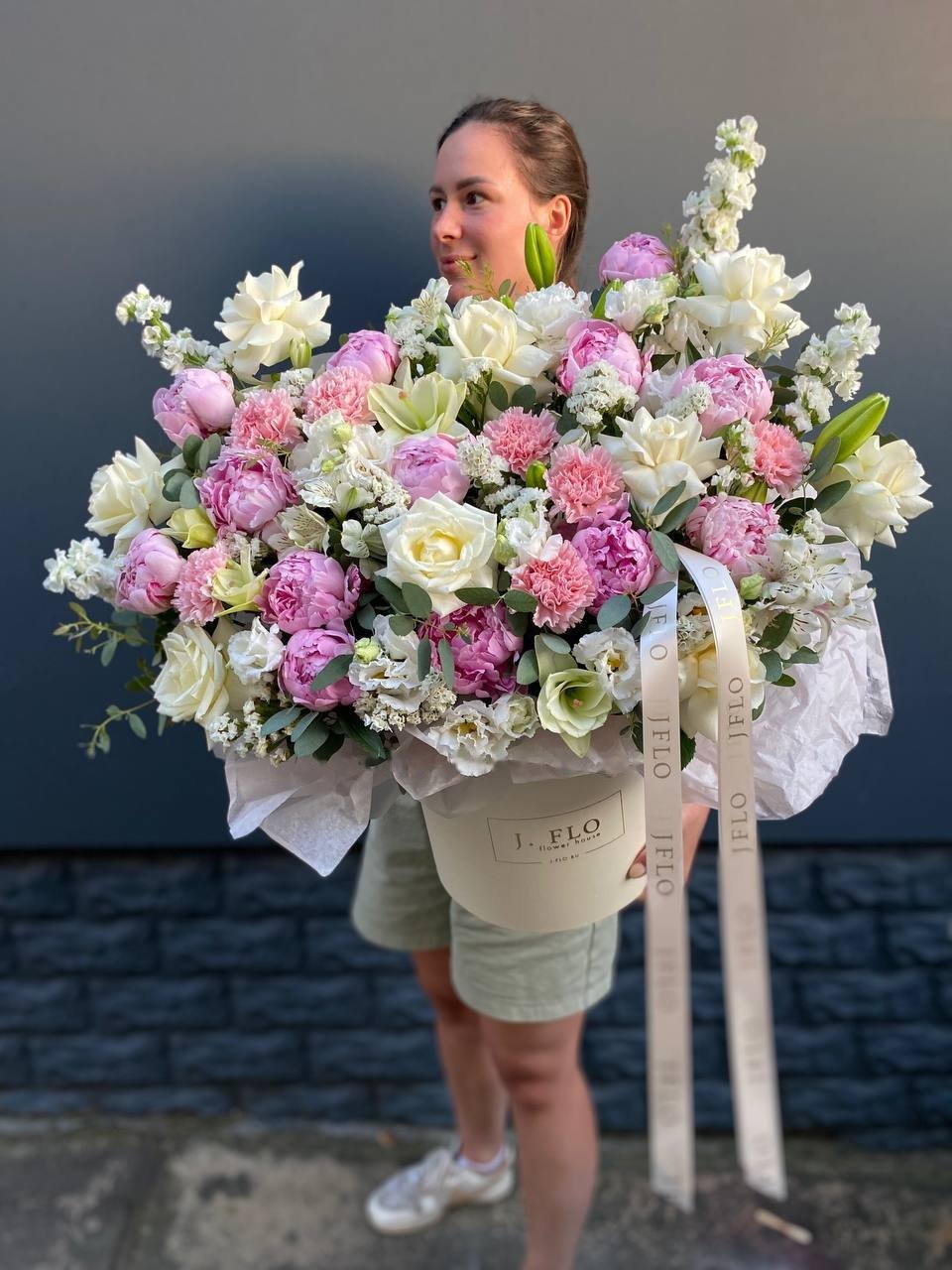
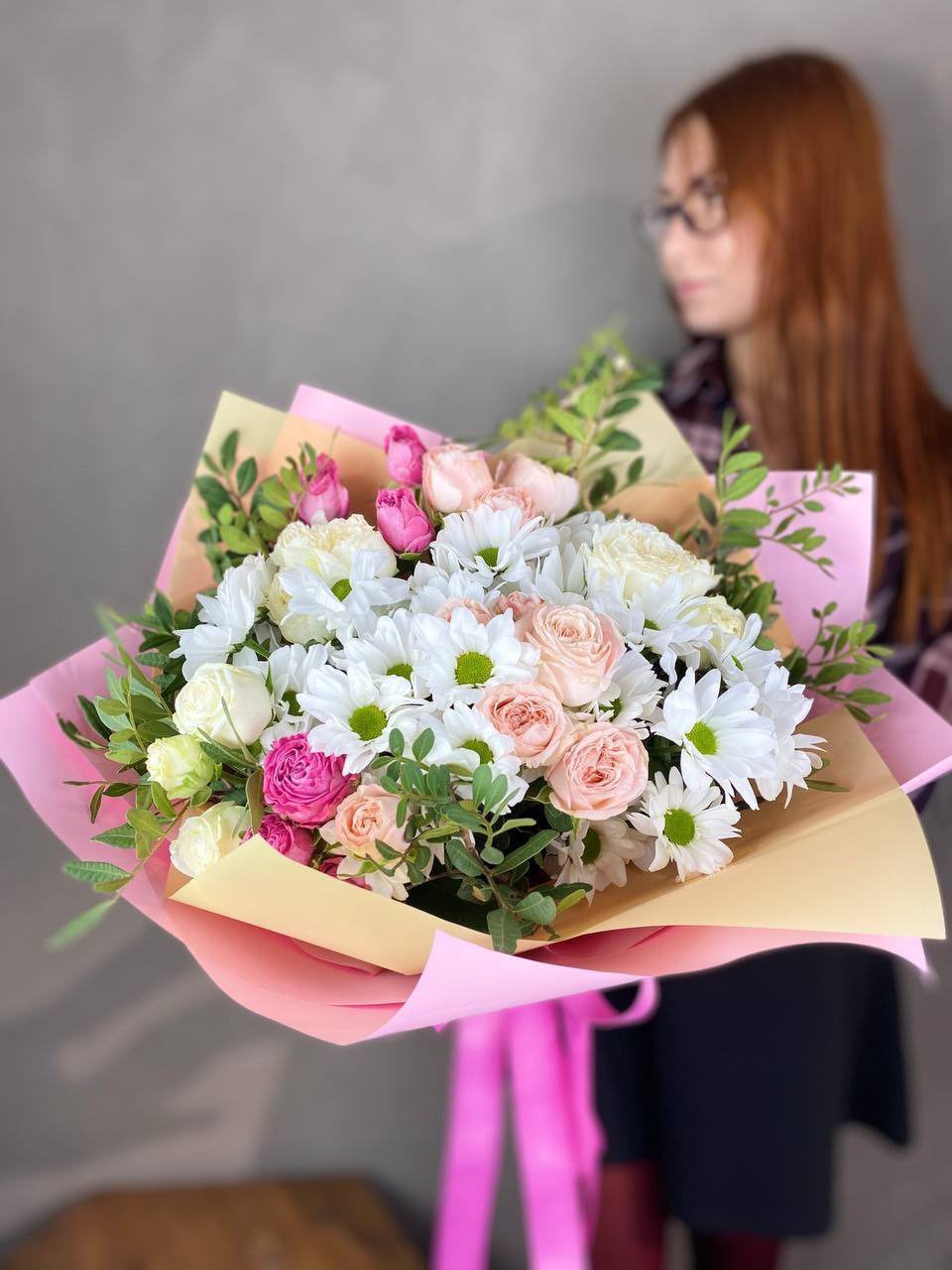
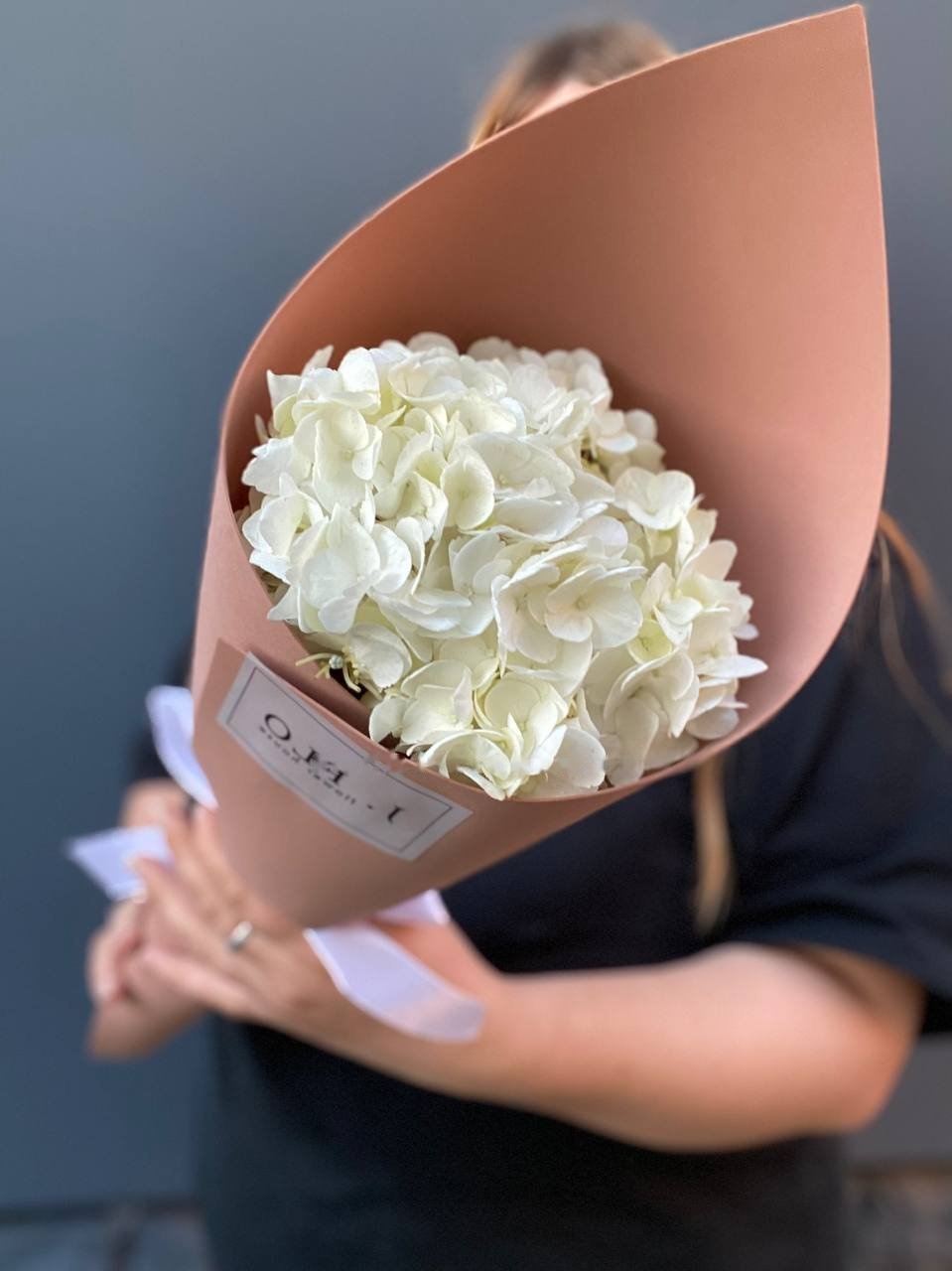
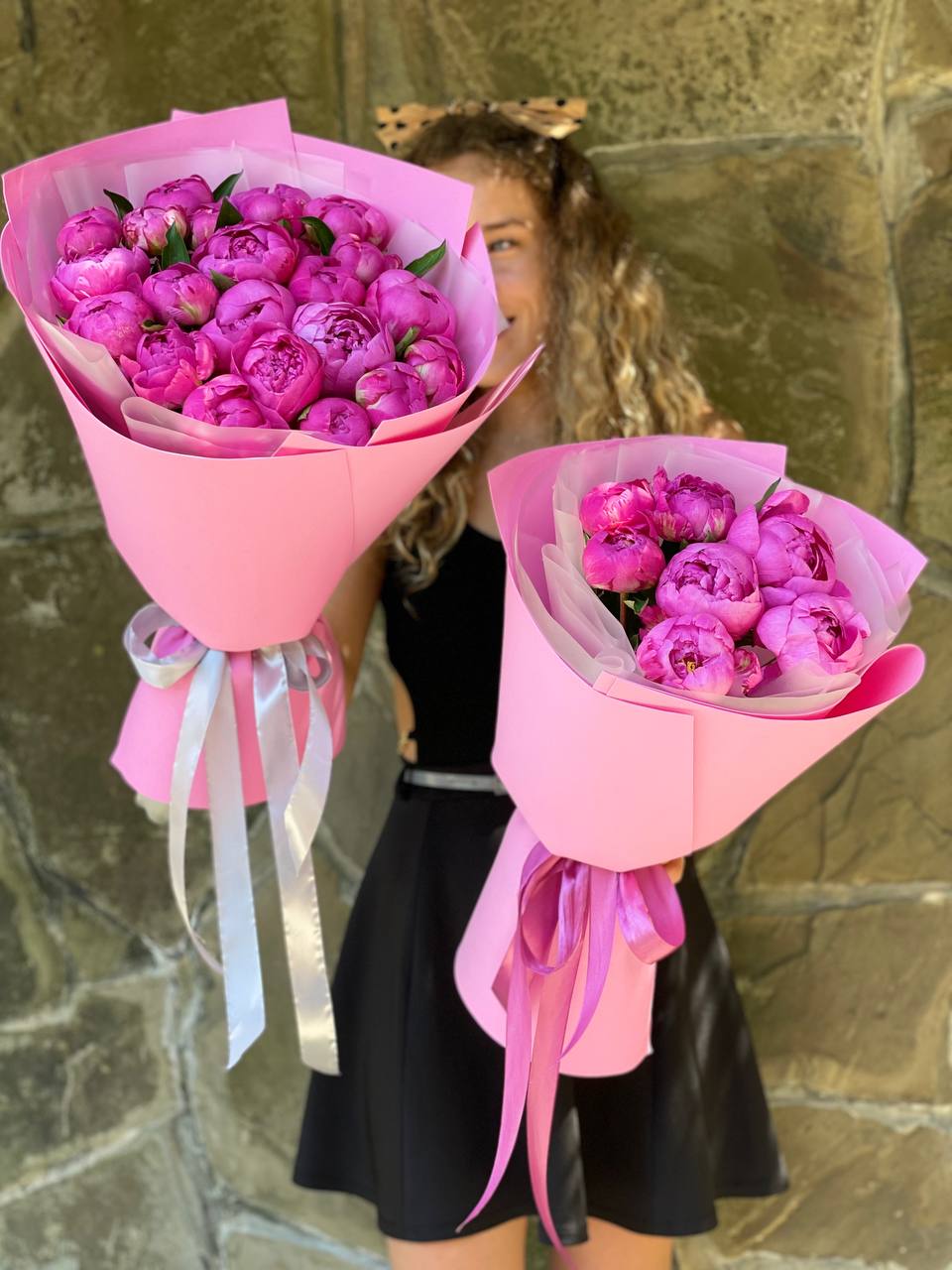
The focal flowers are the ones the bouquet exists for: a large rose, a peony, a hydrangea head, a lily. There are never many of them, and they sit higher or slightly forward so the eye finds them first.
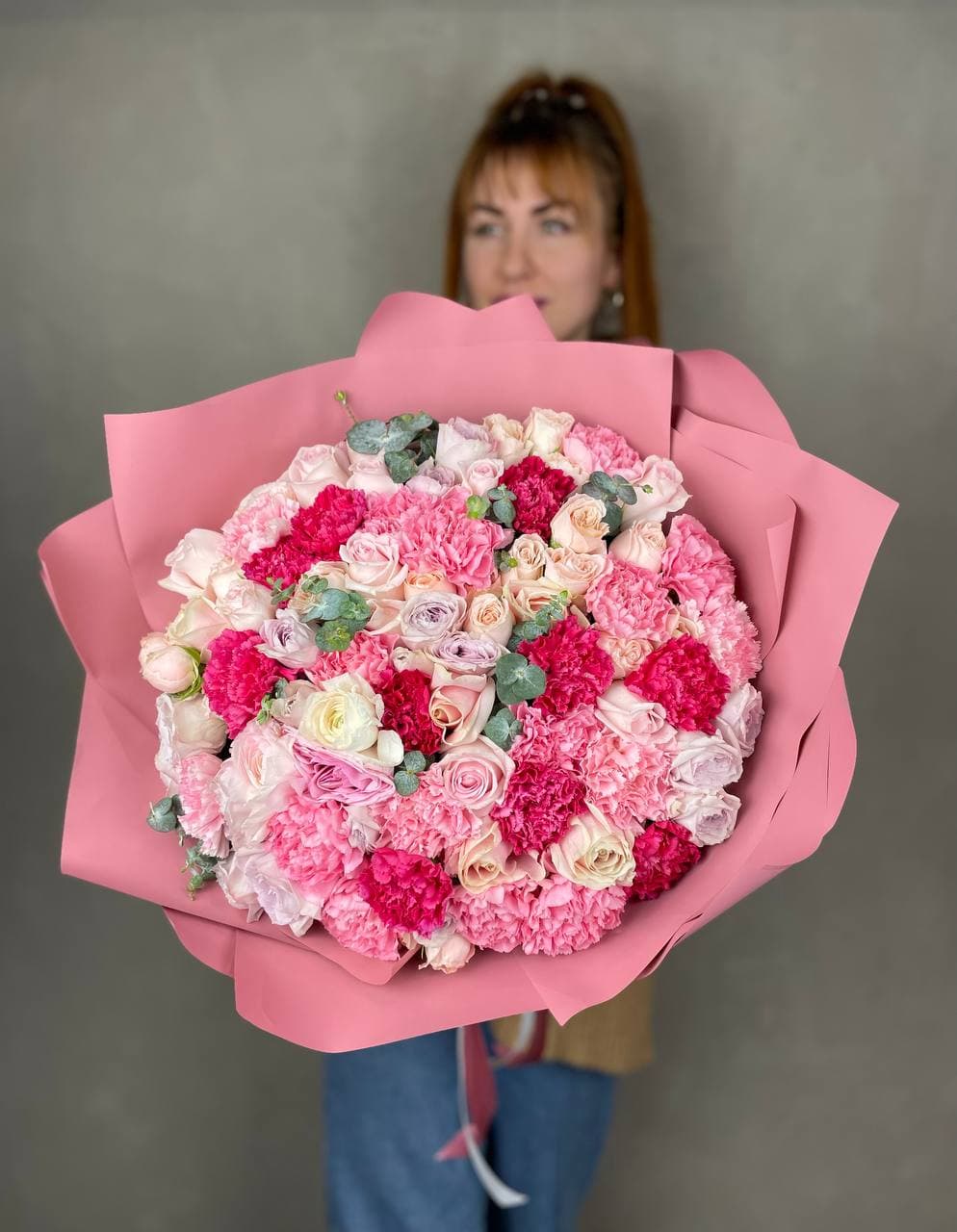
Around them sits a middle layer of smaller blooms in the same or an adjacent shade, closing the gaps so the arrangement reads as one object rather than several bright spots.
The filler does something less obvious. Fine branching stems, foliage and grasses are not there to add bulk; they hold the focal heads apart at a distance where each one can still be seen on its own.

Change the ratio and you change the bouquet entirely. Heavy on focal flowers and light on greenery gives a dense, formal shape that photographs well and reads as a serious gesture. The reverse, five or seven large heads carried by texture, looks looser and usually lasts longer, because foliage outlives a peony by a comfortable margin.
How long it should last
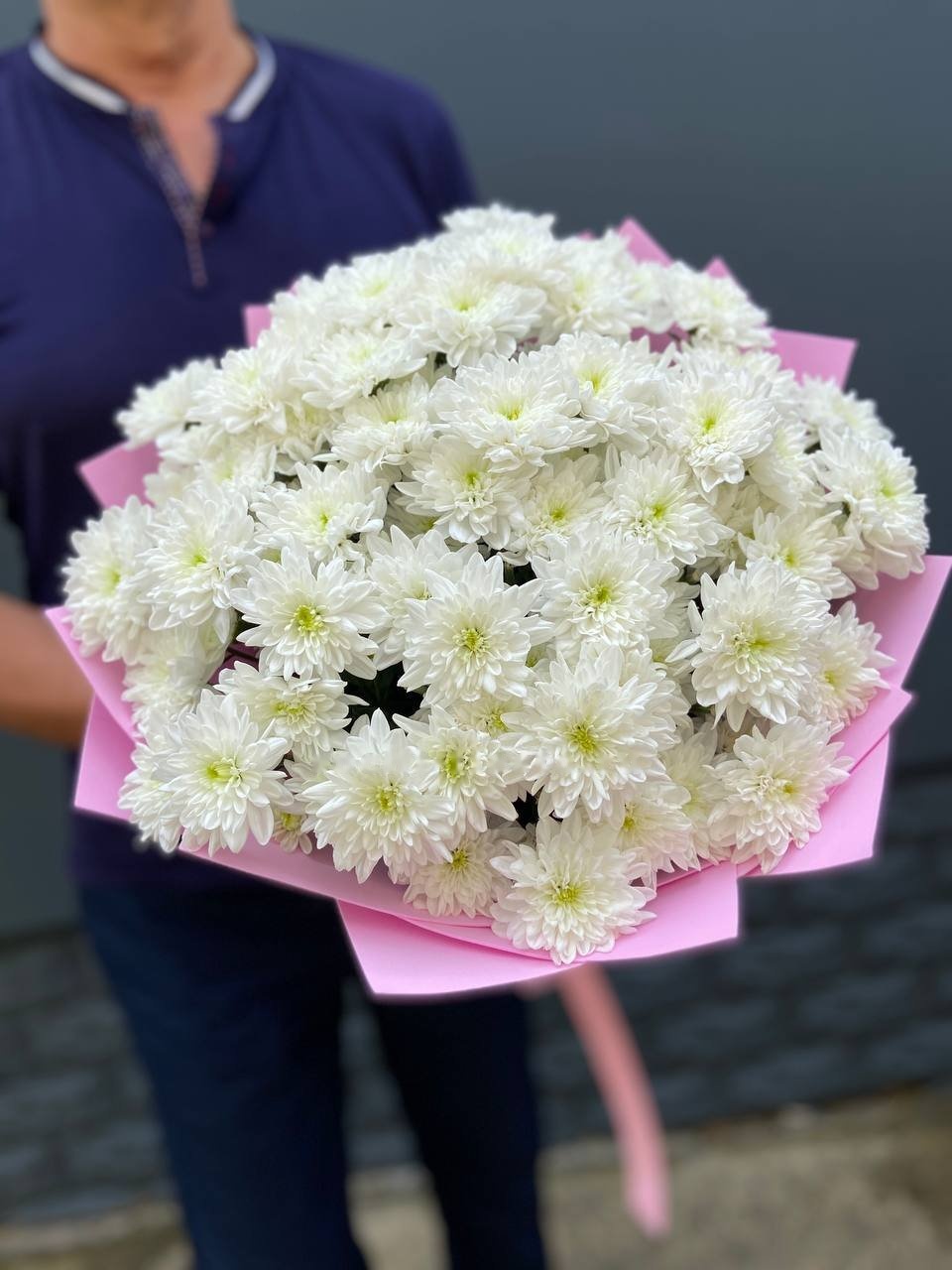
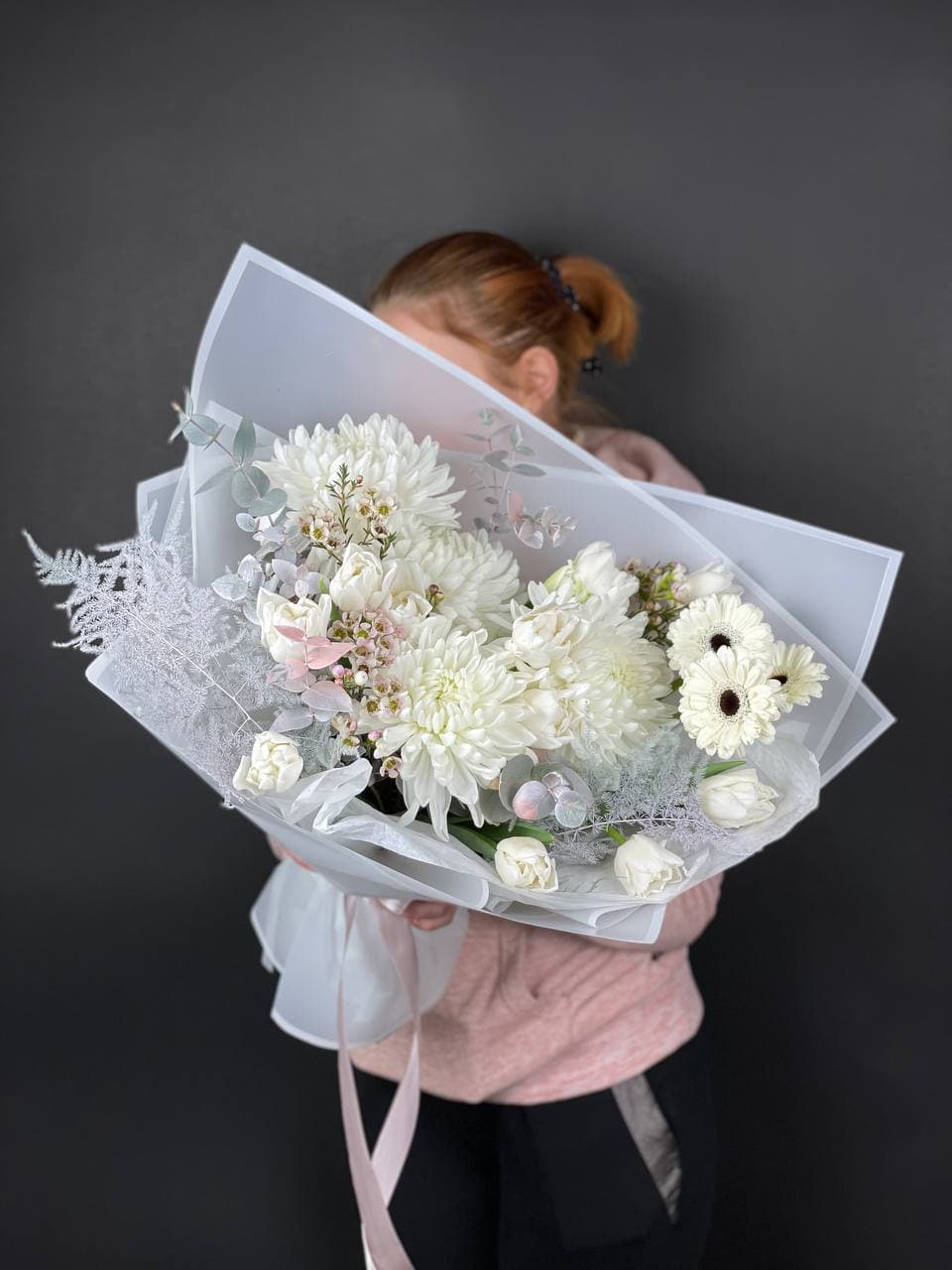
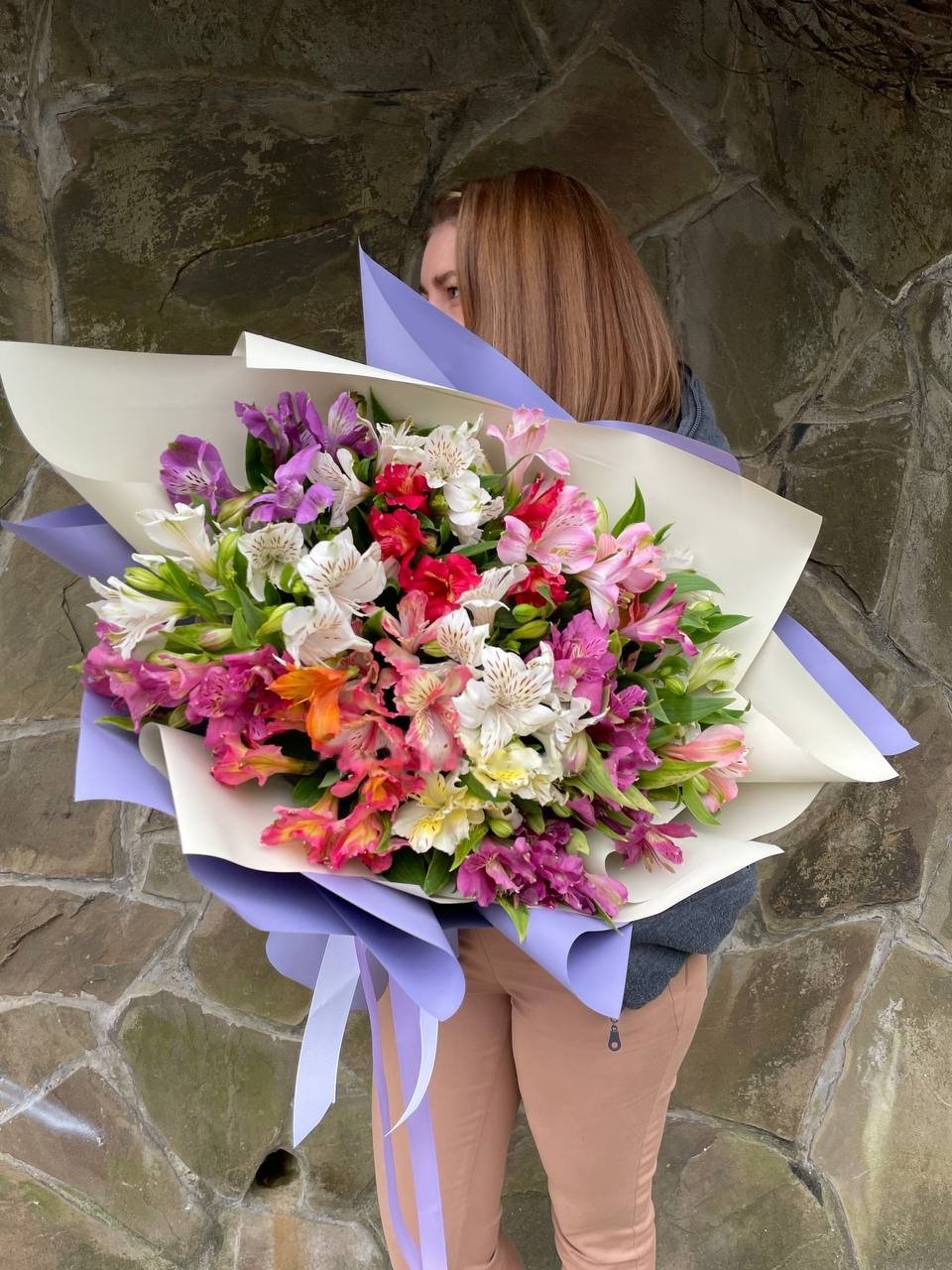
Seven to fourteen days is the honest range for fresh cut stems, and a mixed bouquet lives by its most delicate member rather than its toughest. Chrysanthemums, carnations and alstroemeria forgive almost everything. Peonies, ranunculus and sweet peas do not.
Heat shortens the whole range. A radiator, a sunny windowsill or a warm room opens buds days early and takes the far end of the vase life away.
Ripe fruit in the same room does the same thing more quietly, because apples and bananas give off ethylene, and ethylene ages flowers. A draught from an air conditioner dries the petal edges until they brown.
If the recipient in Monterrey is at work when the bouquet arrives, ask for it in a hat box or a water tube rather than plain paper. Nobody keeps a vase at a desk, and eight hours dry on a reception counter costs more days than any care routine can give back.

