


_8c5da0720x720_q85.jpg?v=1787130505)


_076f68720x720_q85.jpg?v=1787130506)


720x720_q85.jpg?v=1787131310)
720x720_q85.jpg?v=1787131310)


720x720_q85.jpg?v=1787211168)


Roses by bouquet shape: every shape has its own tell

A photograph shows you the flattering angle of whatever it is selling. Each shape, though, has one place where a rushed build always shows itself, and once you know where to look the picture stops mattering very much.
Below is where to look, shape by shape.
The round hand-tied bouquet
Turn it and watch the outline. A spiral build should read as a slightly domed circle from any side, with the centre a little higher than the rim, and the heads should sit at staggered depths rather than in one flat plane. Flatness means the stems were bundled straight instead of crossed, and a straight bundle loosens in the vase within a day.
Then look at the binding point, low down where the string or tape sits. Stems there should fan outwards evenly like the base of a broom. If they leave the tie in a tight parallel column, nothing is holding the shape except the wrapping paper.
The one-sided or fan shape
This one is built to be seen from the front and carried against the body, which suits a stage, a lectern or a hand-over in front of an audience. The tell is the back. Turn it round and you should still find greenery and finished stem ends, not a slab of paper hiding an unmade rear.
It reads best held. Set flat on a table it collapses into a wedge.
Boxes and baskets
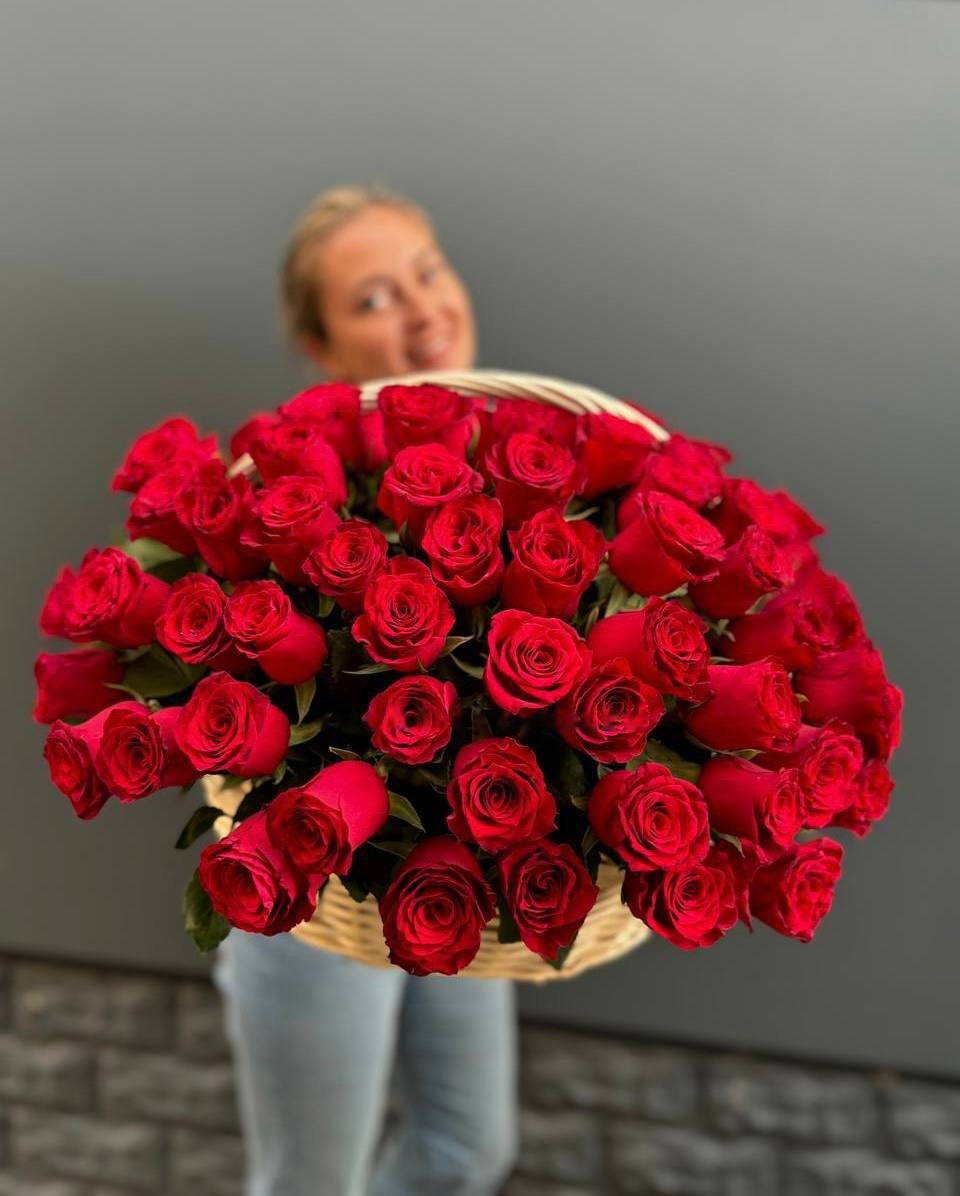
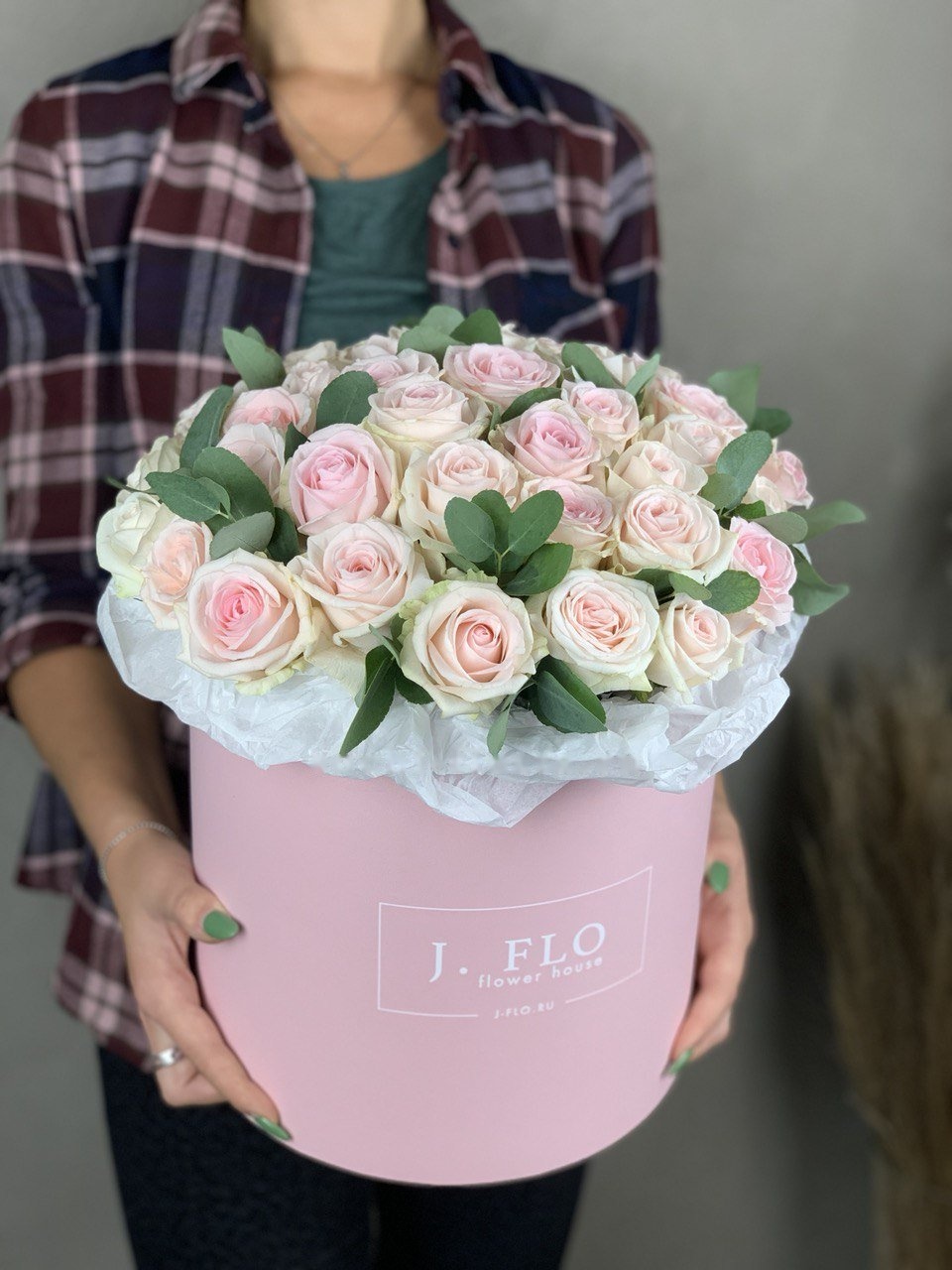
Both are built on wet floral foam rather than on the stems themselves, so the tells move to the edges. Look at the rim from a low angle: the outer heads should reach the wall with no ring of bare foam showing, and no stem should be visible bridging the gap. In a basket, check the back and the underside as well, since an open weave gives away everything a card wall hides.
Press a finger into the foam at the edge. Wet foam springs back and leaves your fingertip damp, dry foam crumbles, and a rose sitting in dry foam has already lost time nobody can give back.
Weight tells the same story from the other direction. A properly soaked base is heavy for its size.
Contour shapes

Hearts and other outlines are the hardest of the group, because the eye reads a broken line instantly and forgives nothing. The problem areas are the two upper lobes, the dip between them and the point at the bottom. Smaller heads belong at the point, larger ones on the lobes, and a build that ignores that comes out as a rounded blob with a squared-off base.
Look at the profile rather than the front view. A good heart is gently domed across the lobes and slopes down towards the point, while a flat slab means the foam was cut to shape and the roses were simply pushed in wherever they fitted.
Choosing between them
Shape follows the handover more than it follows taste. Something carried through a crowd wants a one-sided build. Something set down and left wants foam under it. Something the recipient in Yerevan will want to keep, split between rooms and rearrange wants long stems and no foam at all, since roses cut short for a box cannot be moved into a vase afterwards.
Roses by bouquet shape are worth deciding before colour and count, because those two can be adjusted on the day and the shape cannot be changed once the stems are cut.

