





720x720_q85.jpg?v=1787130511)


_e58557720x720_q85.jpg?v=1787130512)


Roses with delivery in Yerevan: varieties, local greenhouses, and freshness from the cut
In Yerevan, the rose rests on two sources at once. Part of the cut is grown by Armenian greenhouses in the Ararat valley — a short haul and a fresh bud almost all year round. The rest arrives by air from Ecuador, Colombia, and the Netherlands; the lots clear customs at Zvartnots airport and move through the city flower market to the florists. The combination keeps the range even in any season.
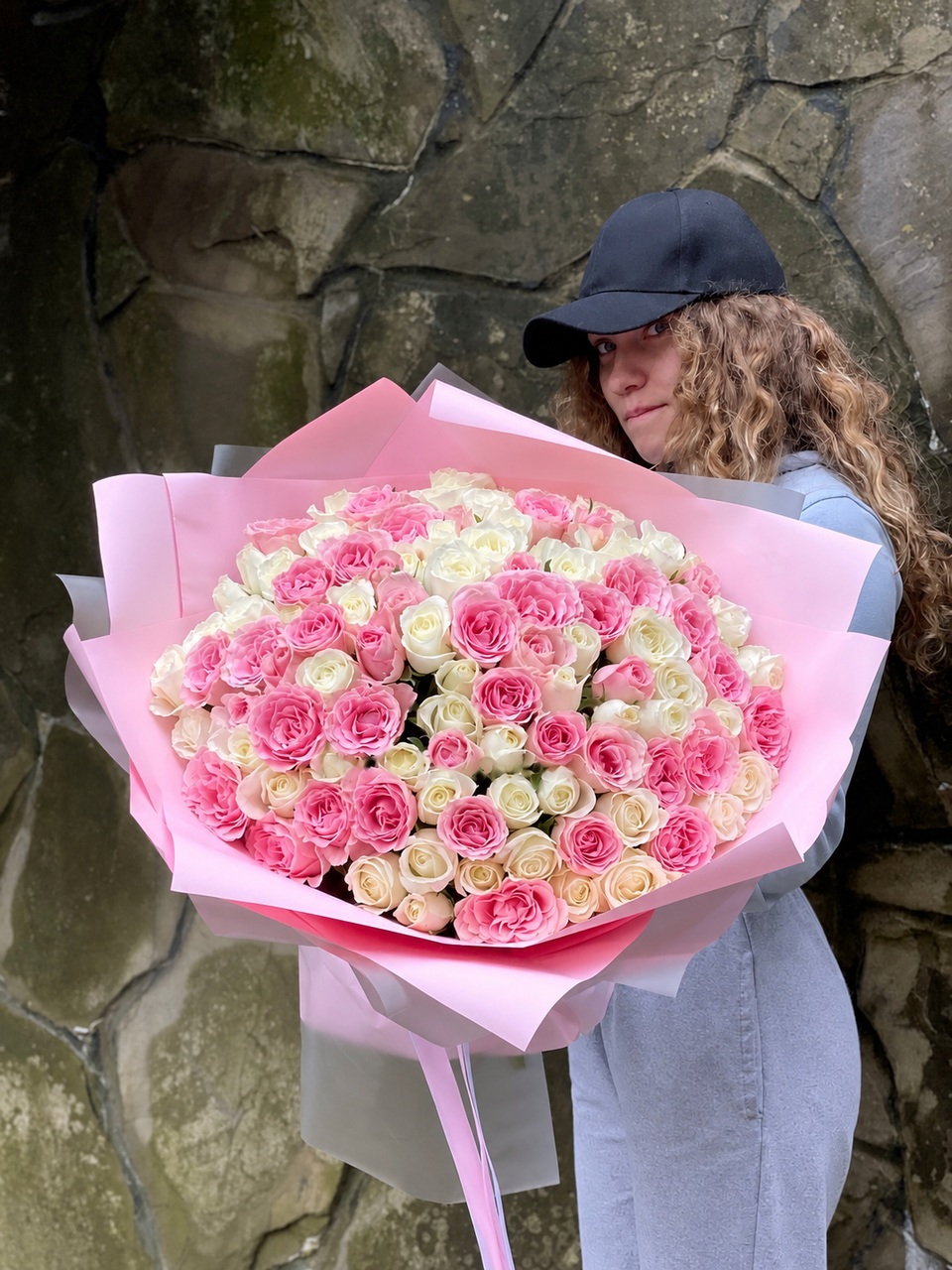
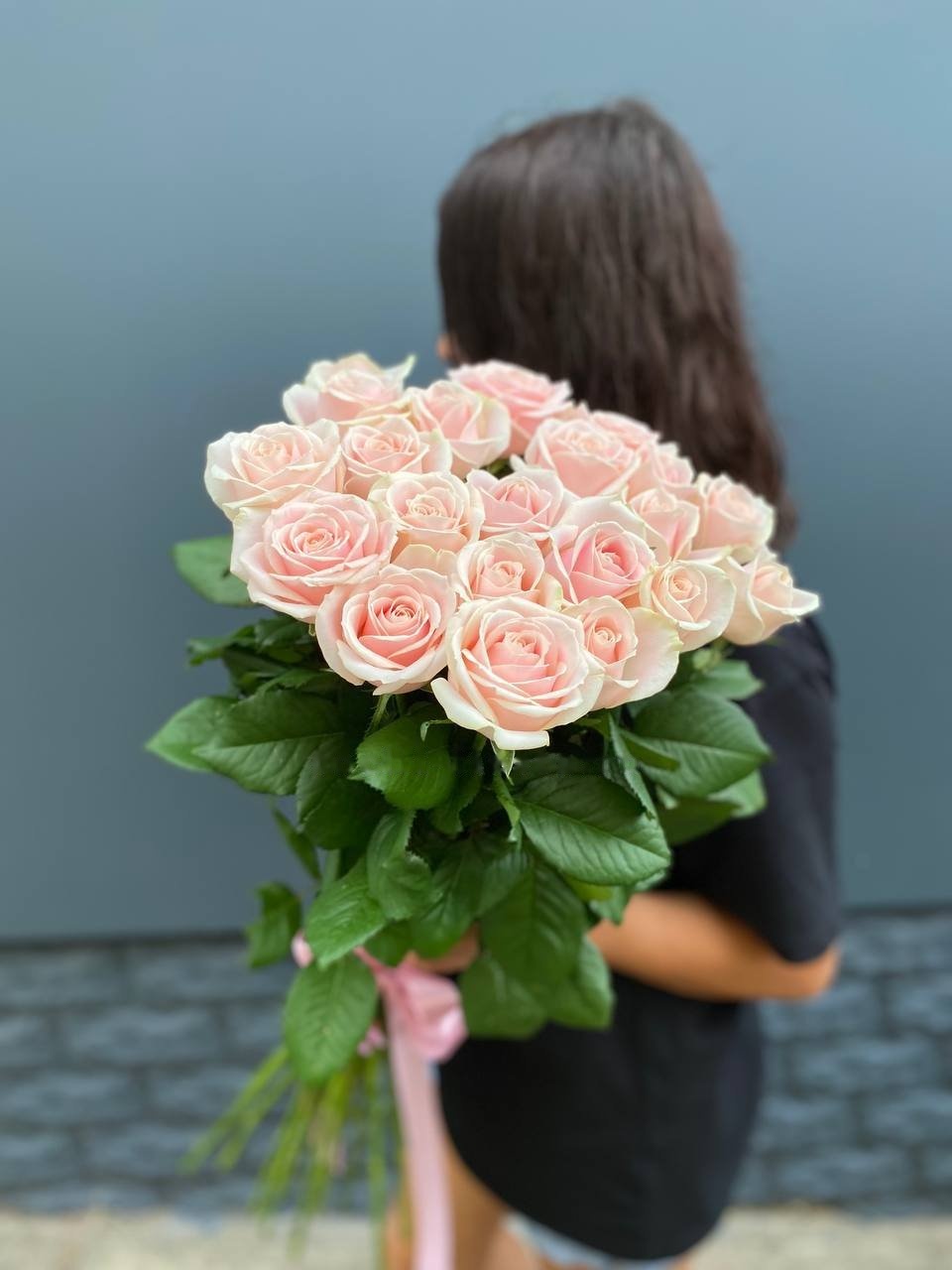
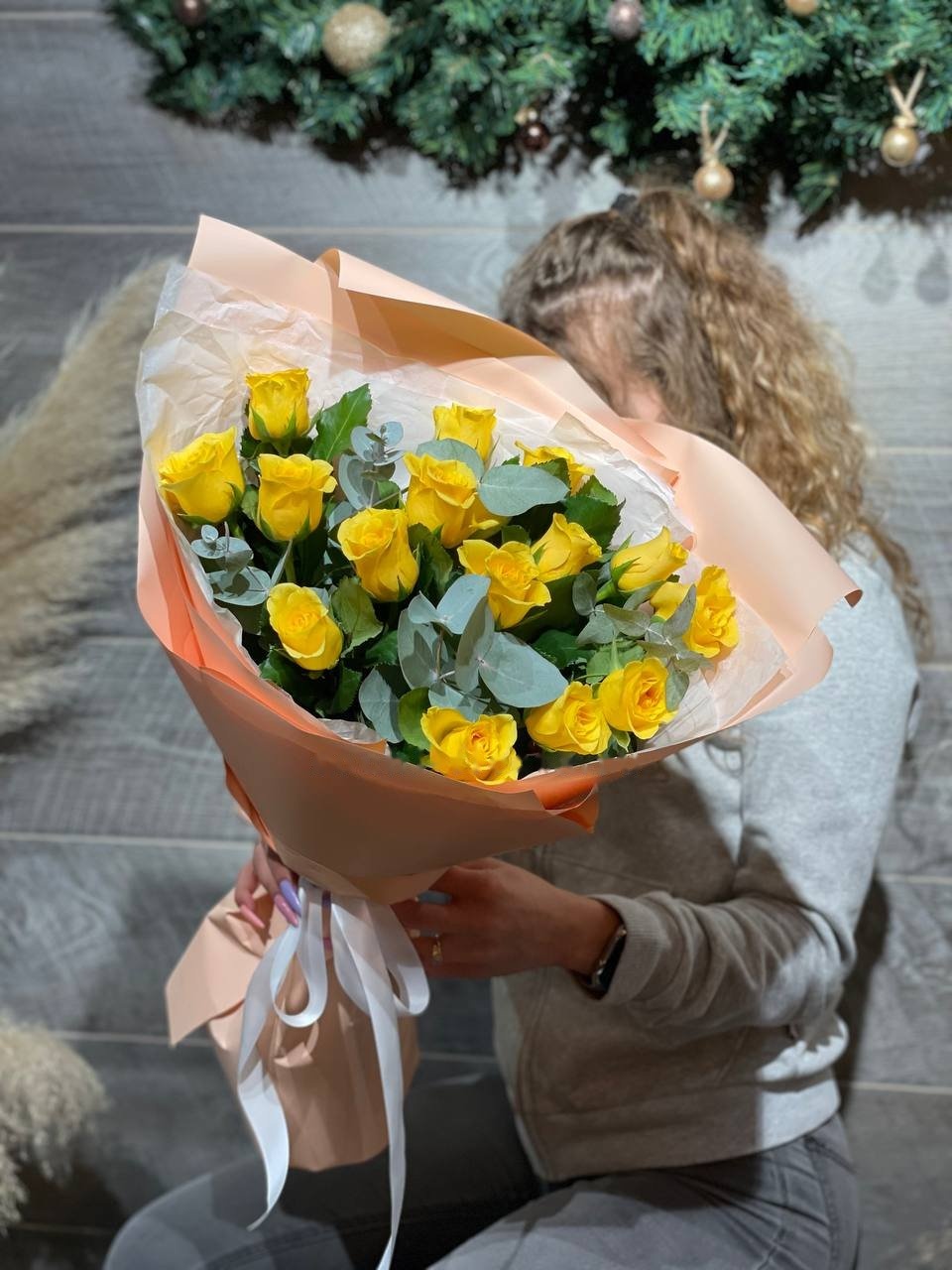
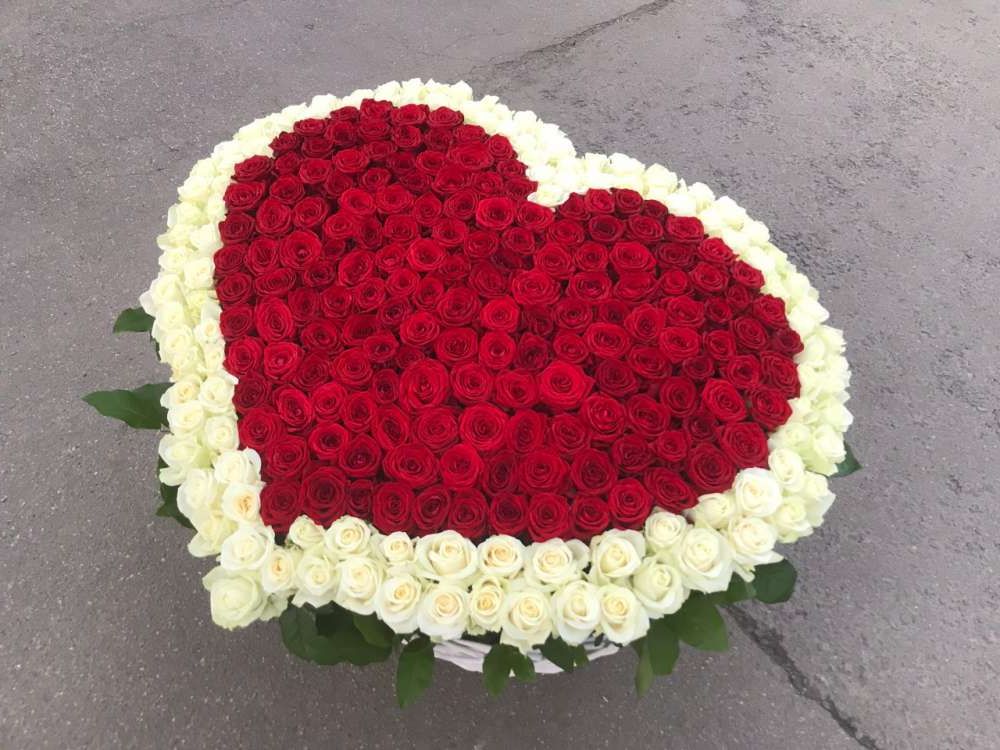
The category covers single-variety bouquets, mixed arrangements, and single stems for no occasion at all. It also includes boxes, baskets, and large armfuls of 25, 51, and 101 stems — a format that, for a gift, often matters as much as the variety.
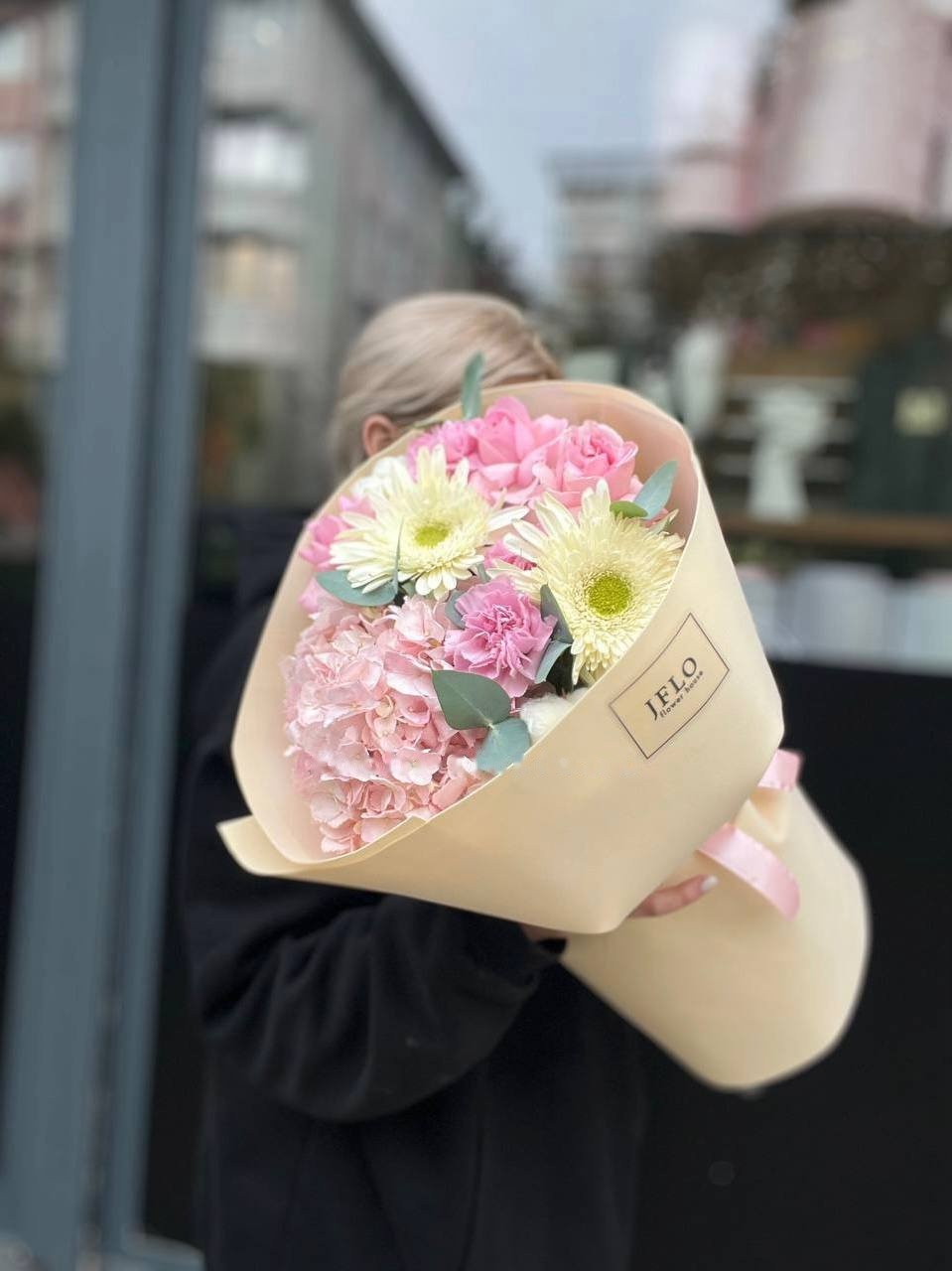
Which varieties to choose
We keep three working groups on the shelf: imported large-headed roses, local greenhouse roses, and English garden roses by David Austin. Each solves its own task — from an anniversary statement to an intimate date-night bouquet.
- Freedom, Explorer, Mondial — large-headed flagships from Ecuador and Colombia. Stem 70–90 cm, dense bud, a vase life of 10–14 days with proper care.
- Avalanche+, Red Naomi, Vendela — the classics, largely Dutch. Mid-sized bud of 5–7 cm, a rich palette, a reliable workhorse for any task.
- Juliet, Patience — David Austin English garden roses. Cup-shaped, densely petalled, with a myrrh and apricot fragrance. Ideal for the bridal bouquet.
- Local greenhouse roses — they come from the Ararat valley, the freshest in the catalogue, especially good in the warm season.
- Spray roses — several buds on a single stem. Suited to airy arrangements and smaller gifts.
Occasions and stem count
One flower is a gentle gesture of attention. Three: a friendly thank-you. Seven and nine: a romantic gift. Twenty-five reads as a major declaration; 51 and 101 are serious gestures for an anniversary, an engagement, or a milestone. By Armenian custom, joyful occasions call for an odd number of flowers, while an even number is kept for days of mourning — worth keeping in mind when you order.
Armenia's main floral peaks are 8 March, the Day of Motherhood and Beauty on 7 April, and Valentine's Day on 14 February. A distinct date is 1 September, the Day of Knowledge, when flowers are brought to teachers. Weddings and family celebrations rarely happen without roses either. For dates like these, place the order ahead of time.
Freshness and logistics
Local greenhouse roses take the shortest path: from the cut in the Ararat valley to a recipient in Kentron or Arabkir takes a day or two. This is the freshest rose in the catalogue, and in the warm season we bet on it.
The imported large-headed roses fly in from Ecuador, Colombia, and the Netherlands, clear customs at Zvartnots, and move through the flower wholesale trade. The path is longer — 4–7 days from the plantation — but with proper cold the bud holds the same 10–14 days in the vase. Bouquets are kept in cold storage at +4…+6°C until assembly.
"The Yerevan buyer increasingly asks whether the rose is local or imported. A fresh cut from the Ararat valley greenhouses beats a lot tired out by a week's transit. A firm bud and scent are the best test of quality — not the price."
— Ani Hakobyan, florist with 12 years of experience
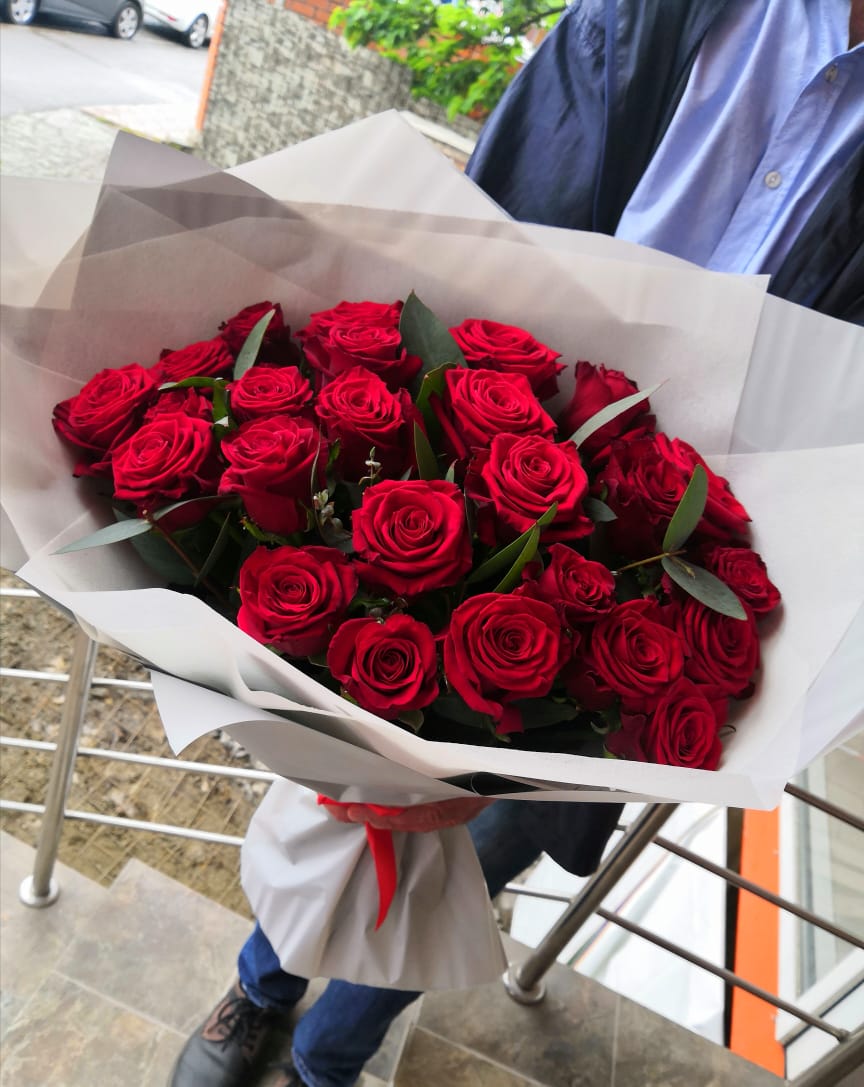
Delivery specifics
The climate of Yerevan is sharply continental. Summer is dry and hot, +33–40°C in July and August. Winter is cold, around 0 to −5°C, dropping to −10°C and below in cold snaps, with snow. There are marked temperature swings between day and night, as well as between seasons. In summer we move roses in insulated boxes and add moisture-retention gel at the stems; in winter we carry them in insulated bags so the bud isn't nipped by the frost.
We cover all the key districts: Kentron, Arabkir, Ajapnyak, Davtashen, Nor Nork, Shengavit, Malatia-Sebastia, Avan, and Erebuni. Prices in the catalogue are in Armenian drams (AMD, ֏), paid by card online. For 8 March, the Day of Motherhood and Beauty, and Valentine's Day we work at full stretch — order 3–5 days ahead, and a week ahead at the peak.
Care at home
After delivery, refresh the cut at a 45° angle, remove the leaves below the waterline, and place the roses in a clean vase with cool water. Change the water every two days and add a Chrysal sachet or a pinch of sugar. Keep them away from direct sun and ripening fruit — ethylene shortens vase life by a third.
In summer in Yerevan, the bouquet's main enemy is the dry heat: in the scorch, the petals wilt and dehydrate quickly. Keep the roses in the coolest room, away from the direct flow of the air conditioner. On days above +35°C, move the bouquet to the refrigerator overnight — that adds 3–5 days. In winter, don't set the vase right against a radiator.
Roses are a flexible category: they suit a colleague's birthday, a wedding anniversary, a bridal bouquet, or a gift for a hospital discharge. We match variety, colour, and format to the specific occasion — message our manager and we'll help build an arrangement that hits the mark.

