

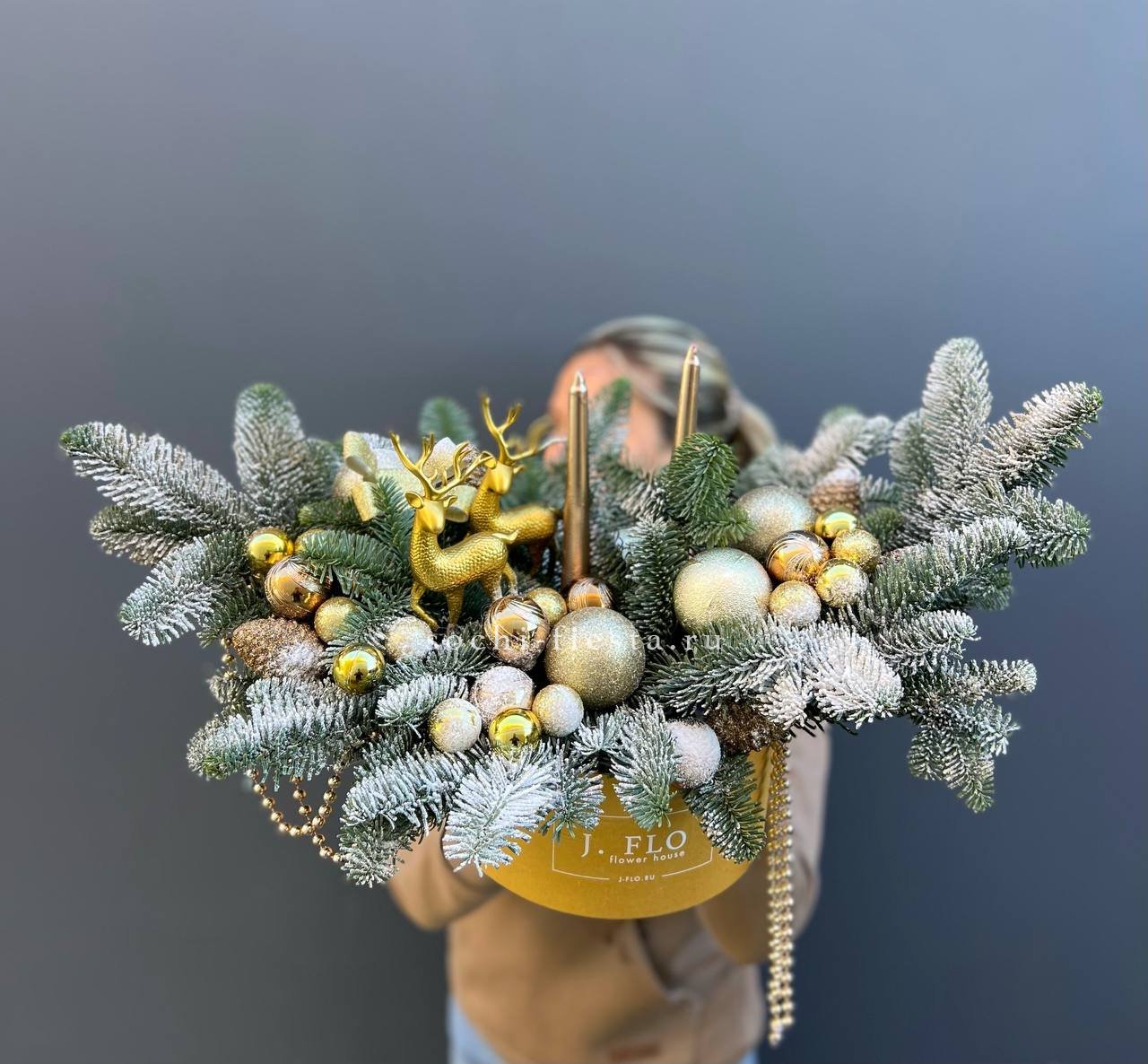
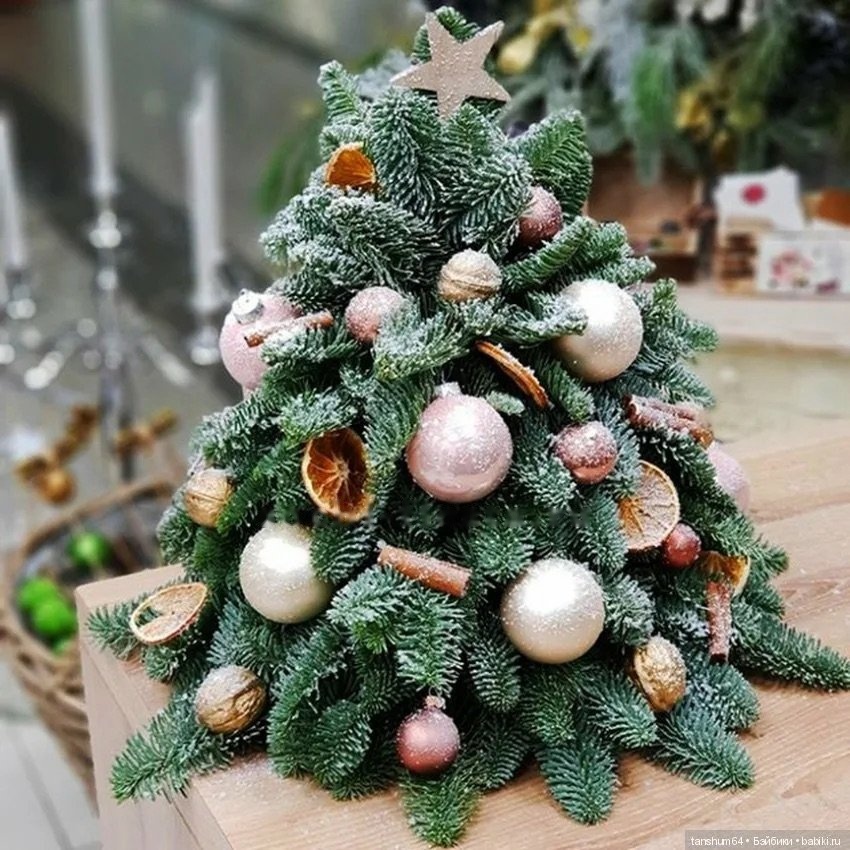




New Year arrangements in Dubai: two clocks in one pot

An arrangement is not a bouquet that somebody else has already put in water. It is built on a block of florist foam, cut to the pot and soaked through, and every element in it is anchored rather than balanced. That is why the piece travels upright in one hand and is set down finished.
The order of assembly is fixed. Firm branch material goes in first and does the structural work, holding the outline and covering the rim so the grey-green block never shows between the heads. Fresh stems go in last, into points where water can still reach them a week later. Dried elements are mounted on wire legs and pushed into the same foam, which is why they sit at an angle instead of lying on the surface.
Then two clocks start running at once.
The firm material and the dried part hold for weeks with almost no attention. Fresh flowers in the same block run on a much shorter schedule and drop their heads first, usually while everything around them still looks new. Nothing has gone wrong when that happens. Pull those stems out one at a time, close the gap with a branch, and the piece carries on without them. The dried part outlives all of it and goes into a box after the season, which is the quiet reason people keep the pot instead of throwing it out with the wrapping.
"People ring about the roses going over and expect us to argue. That is how the pot is designed. It is meant to be edited."
— JFLOO florist
What sits in the fresh layer depends on what the city actually receives. Dutch roses at 60 to 90 cm carry height when the pot has to read across a lobby, Ecuadorian roses up to 120 cm go into the tall builds, and greenhouse tulips and chrysanthemums from the UAE hold a firm head through a handover at a desk. Dutch peonies come in outside their own season and sit inside the mass, protected by everything around them on the drive.
Where these pots actually go
New Year arrangements in Dubai go where a vase is not going to appear. Hotels in Downtown, Marina and Palm Jumeirah take them at the counter, and so do the offices in DIFC and Business Bay, where a finished pot stands on a reception desk all day without asking anyone for a vase. Home addresses in JBR work the same way when the recipient is out. Delivery across the city takes 2 to 4 hours and we work from 9 AM to 10 PM.

Foam dries faster than it looks, so top it up slowly through the rim every day or two until it stops taking water.
Dubai has a hot desert climate, and the box is at its most exposed when it is standing still: at a gate, or on a loading bay while somebody upstairs works out which lift the courier should use. We keep it out of direct sun at every one of those stops. Through the summer, when the city runs to 40 °C with coastal humidity behind it, insulated packing goes in with the piece.
One more rule belongs to candles. Fresh material barely catches, but a dried element that has spent a week in a warm room takes a flame in seconds, so leave a clear hand's width around the wick with no material in it.
Orders start from 250 AED, with payment by Apple Pay or cash to the courier.
If the pot has to look the same on the last day of the holiday as it did on the first, say so in the order. We then leave the fresh layer out and build only on material that needs no water, and the piece can go out days ahead of the date instead of on the morning of it.

