
.jpg)
.jpg)


720x720_q85.jpg?v=1787130505)
720x720_q85.jpg?v=1787130505)


720x720_q85.jpg?v=1787136882)
720x720_q85.jpg?v=1787136882)
Seasonal bouquets: ordering something you have not seen yet

Most bouquets are chosen from a photograph. A seasonal order works the other way round, because you agree the mood and the budget first and the florist fills it from whatever came in fresh that week.
That reversal makes some people uneasy, and it is worth explaining what actually happens between the order and the door.
What the florist is working with
Deliveries arrive on fixed days. By the middle of the week a shop knows exactly what is standing in its buckets, what has opened too far to sell on Friday and what will be at its best in two days. A seasonal brief lets the florist build around the strongest stems in the room instead of hunting down a specific variety to match a picture taken months ago.
The difference shows in the flower itself, not in the wrapping.
A bouquet built from the current crop tends to hold longer as well. Those stems have spent less time in cold storage, they have not been chilled and warmed again in transit, and their foliage has not been stripped to fit more of them into a box. Flown-in stems are not poor quality, they simply arrive with part of their vase life already spent. You pay for the journey twice, once at the till and once on the fourth day.
How to brief it properly
Say the palette in plain words and give a limit rather than a list. Soft and pale, or deep and warm, or white with a lot of green. Add one thing you do not want, because that single line prevents more disappointment than any amount of positive description.
Then say where the bouquet is going.
A bouquet for a kitchen table wants a low, rounded shape that people can see over. A bouquet for a hallway console can be tall and one-sided. A hospital handover needs stems with no scent and no pollen shed, which rules out several obvious candidates whatever the month. A gift travelling on to a restaurant afterwards should be small enough to sit under a chair. Each of those constraints changes the flowers more than the colour does.
Three lines are usually enough for a florist to work from:
- The palette, plus one colour to avoid.
- The occasion, and whether the person is meant to guess who sent it.
- Where the bouquet will stand once it is unwrapped.
If none of that is given, a good shop will ring and ask. A bouquet assembled from an unanswered order form is the one that most often misses.
The trade-offs of buying this way

You give up exact control. If a wedding party needs one specific shade to sit against one specific fabric, a seasonal choice is the wrong instrument and an ordered variety is the right one. The same applies to a corporate palette that has to be matched to a logo.
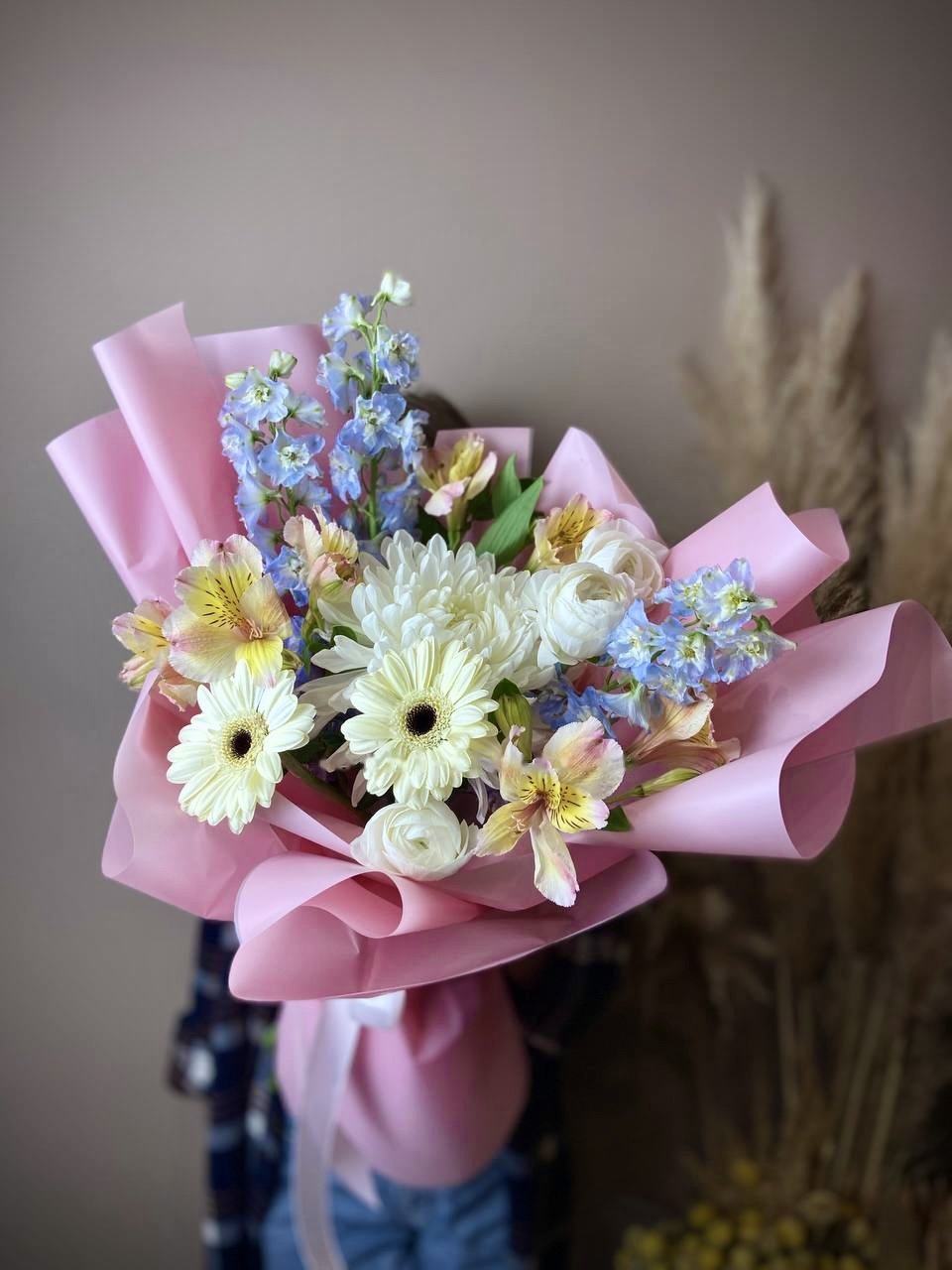
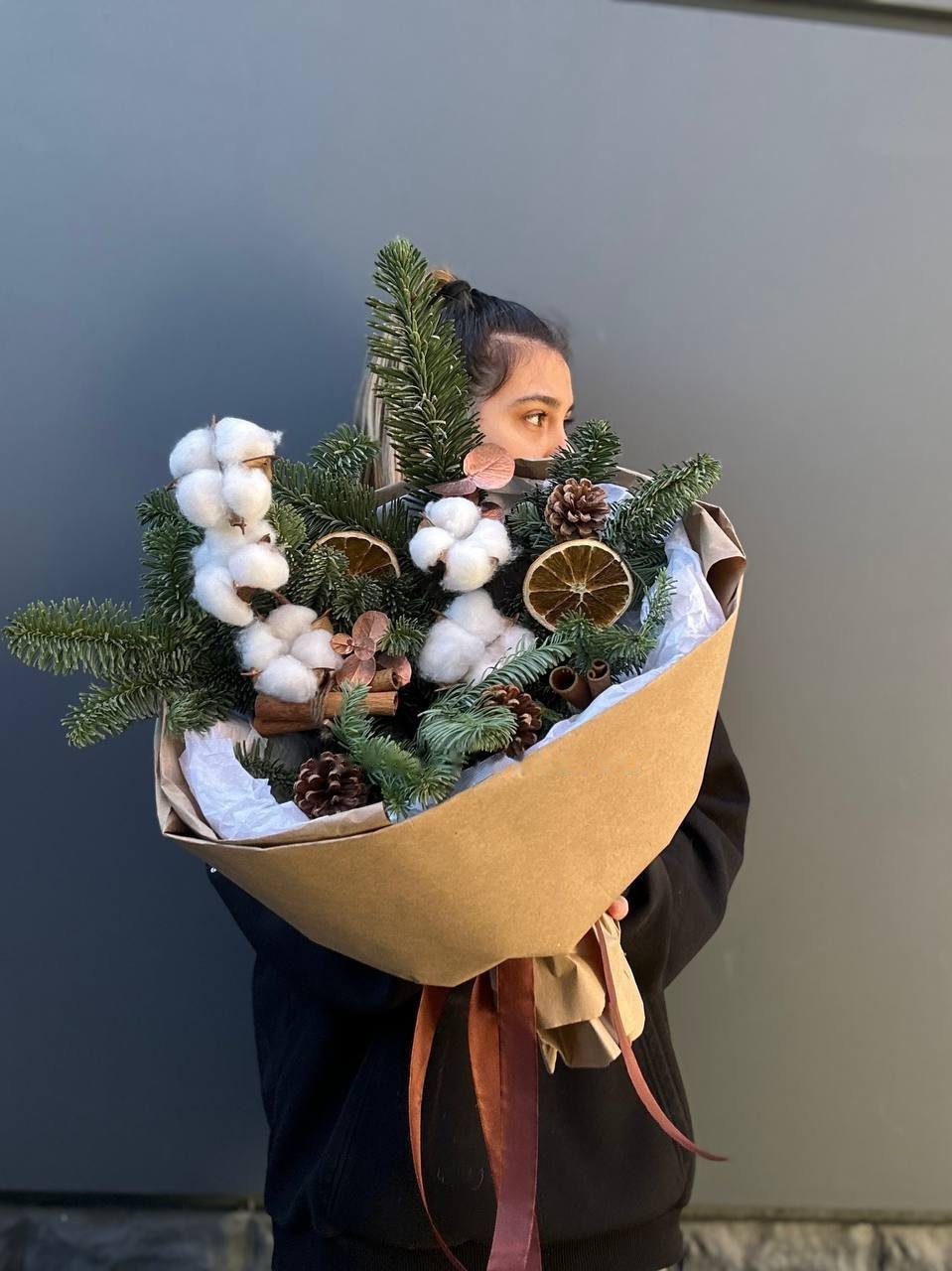
You also give up predictability of shape across the year. Early stems are soft, they lean and they refuse to be packed into a tight dome. High summer gives density and scent and opens fast in a warm room. The colder months hand over structure, berries and evergreen, which lasts for weeks but takes up a great deal of table. None of that is a fault of the bouquet, and all of it is easier to accept if somebody mentions it before the order is paid for.
What you gain is volume and freshness for the same money, and a bouquet that nobody else received that week.
Seasonal bouquets suit people who order flowers regularly and have run out of ideas, since the shop is effectively asked to keep the surprise going. For a recipient in Almaty the practical result is simple: the flowers on the table are the ones that were at their best on the day, and they behave accordingly.

