


Tulips delivered in London: groups, Dutch breeding, and spring bouquets
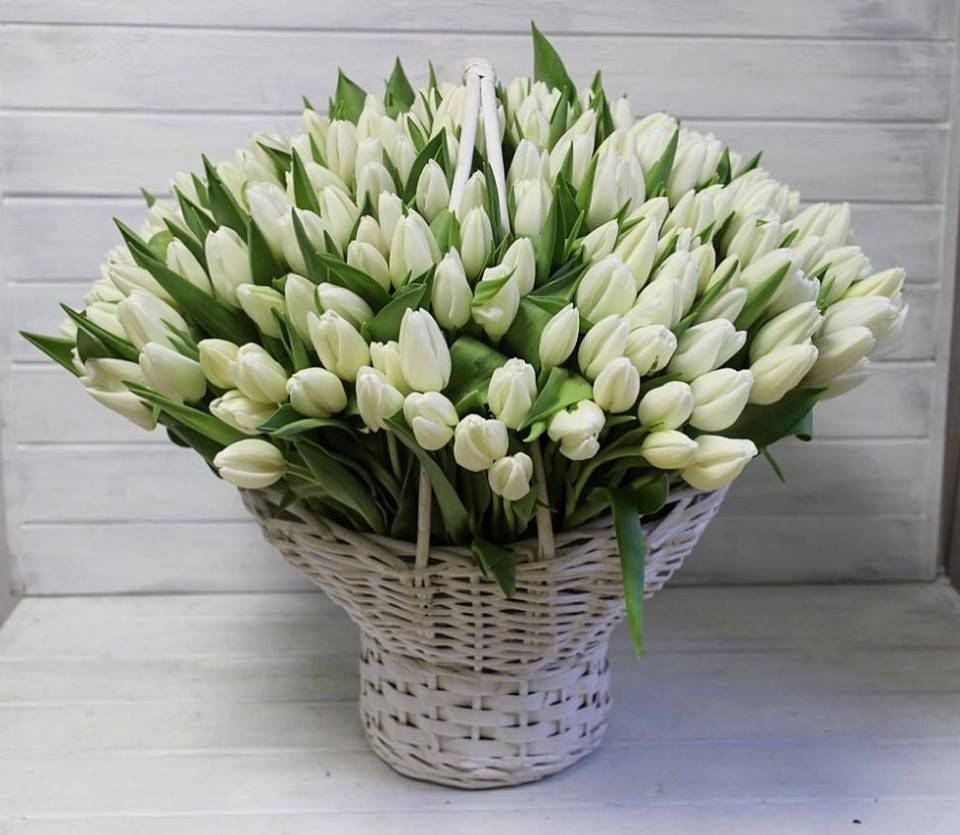
The tulip is the most "spring" flower in floristry and the second most-requested after the rose during London's winter-spring season. The clean goblet shape, the cool elegance, the thousands of varieties bred over four hundred years — the tulip works in a romantic gift, on a wedding arch in Kensington, and in a desk bouquet for Canary Wharf alike.
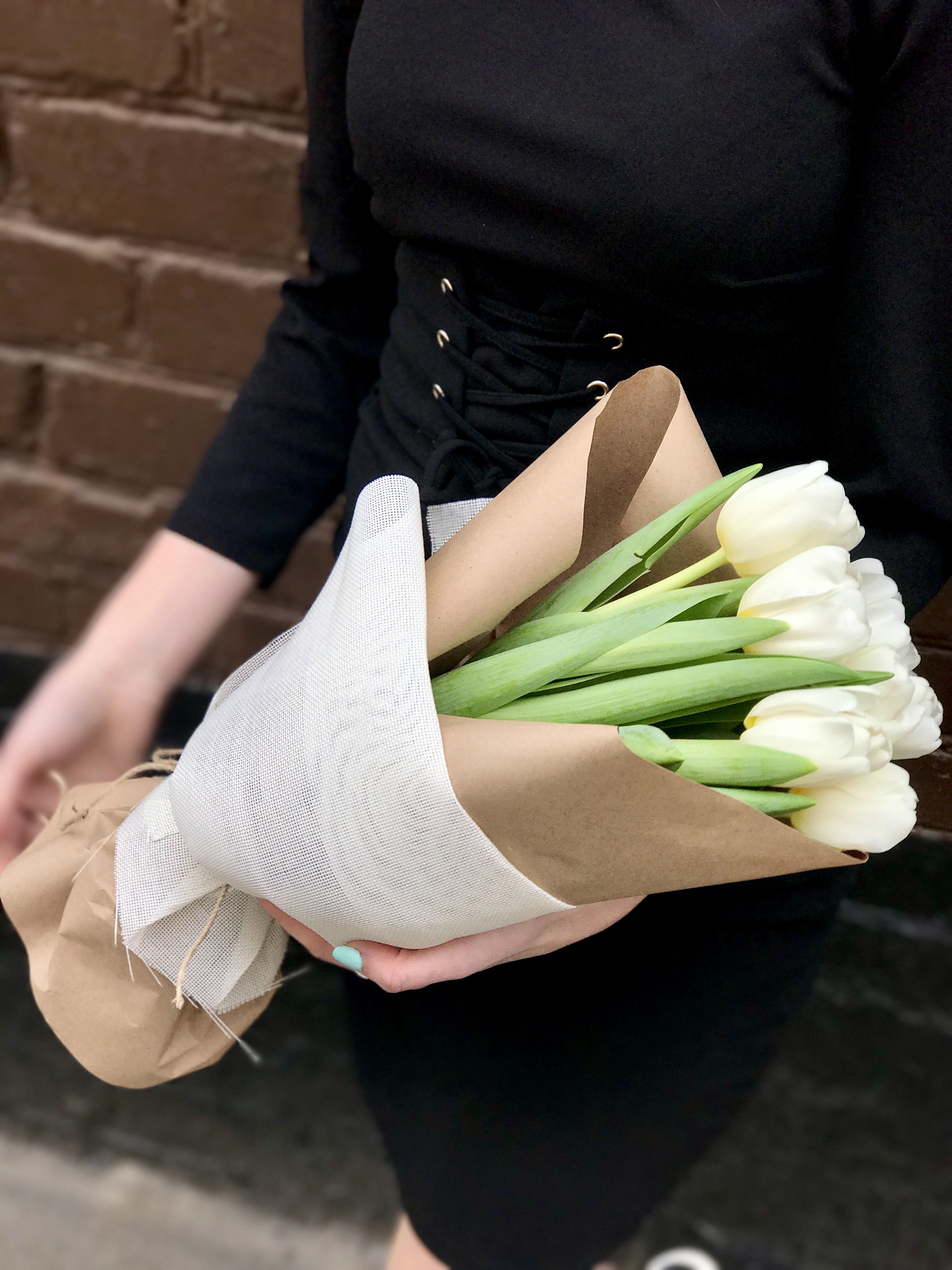
This category covers single-variety bouquets, kraft-wrapped bunches, box compositions, and mixes with eucalyptus, hyacinths, and ranunculus. Supply runs directly from Dutch greenhouses through the Aalsmeer auction and on to London's New Covent Garden Market — Britain's main flower market, open from 04:00 six days a week.

Groups and varieties in the catalogue
More than 3,000 tulip varieties are registered worldwide. Around 30–40 key cultivars reach the shelf, divided into groups by bud shape, stem length, and flowering season.
- Triumph — the classic cupped bud, 40–50 cm stems. The largest commercial group. Varieties: Strong Gold (yellow), Negrita (purple), Ile de France (red).
- Darwin Hybrids — large heads up to 12 cm across. Apeldoorn (scarlet), Ivory Floradale (cream). For larger bouquets.
- French Tulips — premium long-stemmed tulips up to 70 cm. Maureen (white), Menton (soft pink). For wedding floristry.
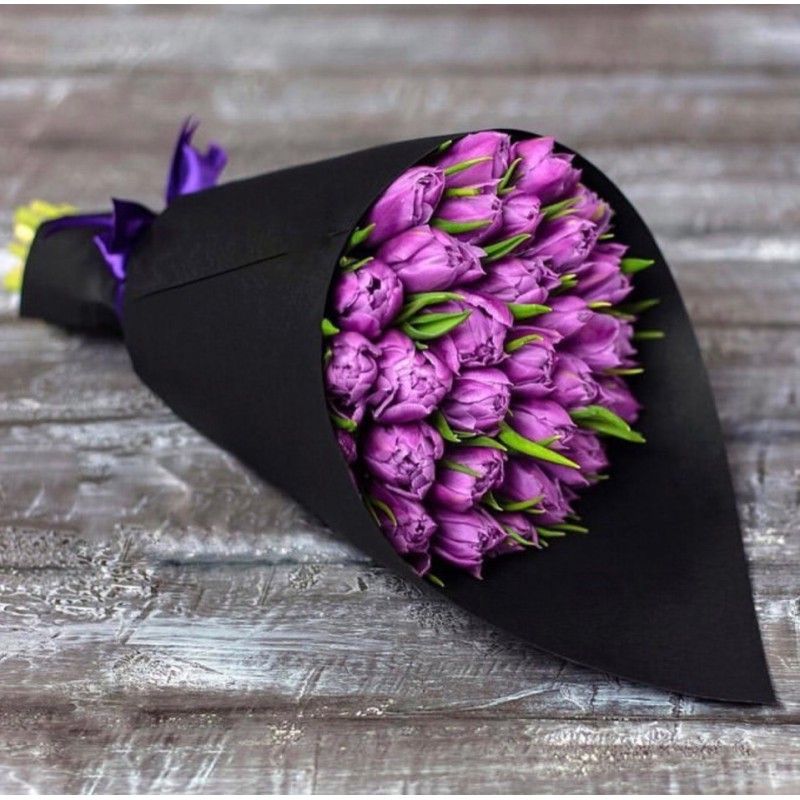
- Parrot — ruffled, fringed petals. Rococo (red), Blue Parrot (purple). For dramatic compositions.
- Double / Peony — ruffled "peony-form" tulips. Mount Tacoma (white), Foxtrot (pink). The winter alternative to peonies.
- Queen of Night — near-black purple, a single legendary variety. For gothic and vintage palettes.
Season and key occasions
The natural tulip flowering season is April–May. Dutch greenhouse forcing extends it from October through June, with peak volumes timed to St. Valentine's Day, Mother's Day (fourth Sunday of Lent), and Easter. These are the most in-demand tulips of the year in London, so we lock orders 7–10 days ahead for these dates.
London's climate is near-perfect for tulips almost year-round. Winter at +5…+12 °C is the tulip's natural living temperature. Summer at +15…+25 °C is also fine — bouquets hold up at home without special handling. This is the opposite of many international cities, where tulips are rarely shipped in summer.
The tulip detail: it keeps growing
A cut tulip is still a living plant — the stem continues to grow in the vase by 2–3 cm over the first 2–3 days. This is unique among cut flowers and must be allowed for when building a composition.
As a result, tulips change the shape of the bouquet every day. By the end of the week they curve towards the light — that is normal and beautiful, not a defect. To hold a more upright form, use a tall narrow vase that keeps the stems vertical.
"The tulip is the most honest flower on the shelf. It cannot fake freshness. If the stem feels soft and warm in your hand, the bouquet is at the end of its life. A fresh tulip is firm, cool, almost ringing to the touch."
— Victoria Malysheva, florist, 15 years in the trade

Freshness and presentation
A fresh tulip shows several signs: a firm stem, a tightly closed coloured bud, leaves without yellow patches, edges without wilt. We only keep tulips no more than four days from cut. With the overnight Aalsmeer–New Covent Garden chain (24 hours), a London recipient gets the full 5–7 day flowering cycle.
Tulips travel in cold hydroboxes. Stems stay in +6…+8 °C water until delivery, the bud holds its density. London's mild climate makes this even more effective — there is no temperature shock on arrival, unlike in continental heat.
Delivery specifics in London
The temperate oceanic climate in London works in favour of cut flowers most of the time. Winter at +5…+12 °C, summer at +15…+25 °C, humidity 70–85%, frequent rain. A waterproof cellophane layer under the kraft is standard from October through March — British rain arrives without warning.
We cover every central district: Mayfair, Chelsea, Kensington, Notting Hill, Shoreditch, Canary Wharf, Camden, Hampstead, Greenwich, City of London. Catalogue prices are in pounds sterling (£, GBP), payment by card online, Apple Pay, or cash on receipt. For Christmas, Easter, Mother's Day, St. Valentine's Day, and Bonfire Night we run an extended schedule — place orders 3–7 days ahead depending on the date.
Care at home
Tulip care is different from roses and peonies. Key rules: only cold water at +6…+10 °C, recut the stem with a straight (not angled) cut every two days, keep water level low (5–7 cm from the bottom of the vase). Tulips do not tolerate deep water — stems rot.
Do not place tulips beside daffodils or hyacinths — their sap accelerates tulip ageing by 30–40%. If you want a mixed arrangement, condition daffodils on their own for 24 hours, then rinse the stems and only then add them to the joint bouquet.
London Victorian flats with central heating can hit +23…+24 °C in winter — too warm for tulips. Keep the bouquet away from radiators and underfloor heating, ideally by a cool window. At night move it to an unheated hallway or porch — that gives the bouquet an extra 2–3 days.

