


Tulip Delivery in Hamburg: Dutch Varieties, Maritime Climate and the Spring Blooms of Planten un Blomen
Hamburg and the Netherlands share centuries of North Sea trade. The port of Hamburg was long the main gateway for Dutch goods into northern Germany, and the cut flower business is no exception. Refrigerated trucks from the Netherlands reach Hamburg in six to eight hours, which means tulips arrive at their destination within one to two days of leaving a Dutch greenhouse. Hamburg's maritime climate — cool and reliably humid — is a near-perfect match for tulips, which thrive in exactly these conditions and last considerably longer here than in warmer, drier cities further south.
Every spring, Planten un Blomen park in the heart of the city transforms into one of Hamburg's most photographed landscapes, with thousands of tulips in bloom along its paths and beds. For residents, tulips carry a particular resonance: they signal the end of the long grey months between November and February. The category includes single-variety bouquets of 11, 21 and 51 stems, mixed spring arrangements, baskets and gift boxes combining multiple varieties and colours.

Which Varieties to Choose
More than 3,500 tulip varieties are registered worldwide. On the Hamburg market, several groups perform consistently well, from classic single-colour cultivars to exotic fringed and parrot types.
- Strong Gold — rich, saturated yellow, one of the most popular varieties in Germany. Even stem, early-season availability, vase life of 10–14 days.
- Red Impression — classic red with a dark base, large bud that holds its shape well. A perennial favourite for International Women's Day and Muttertag.
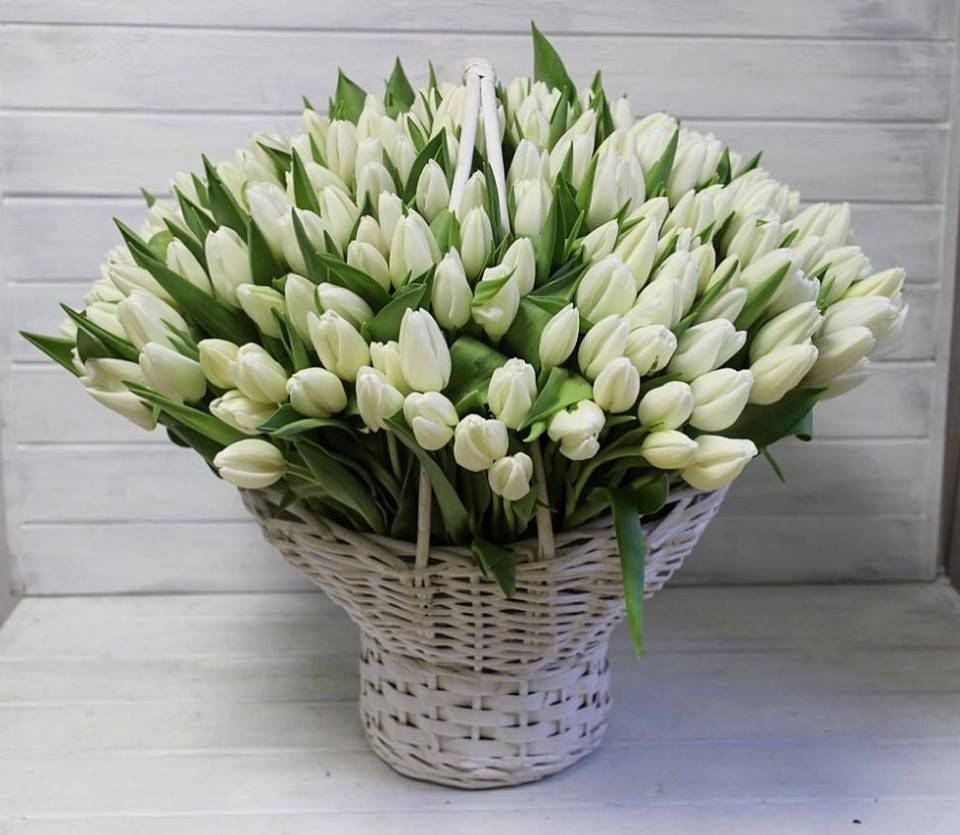
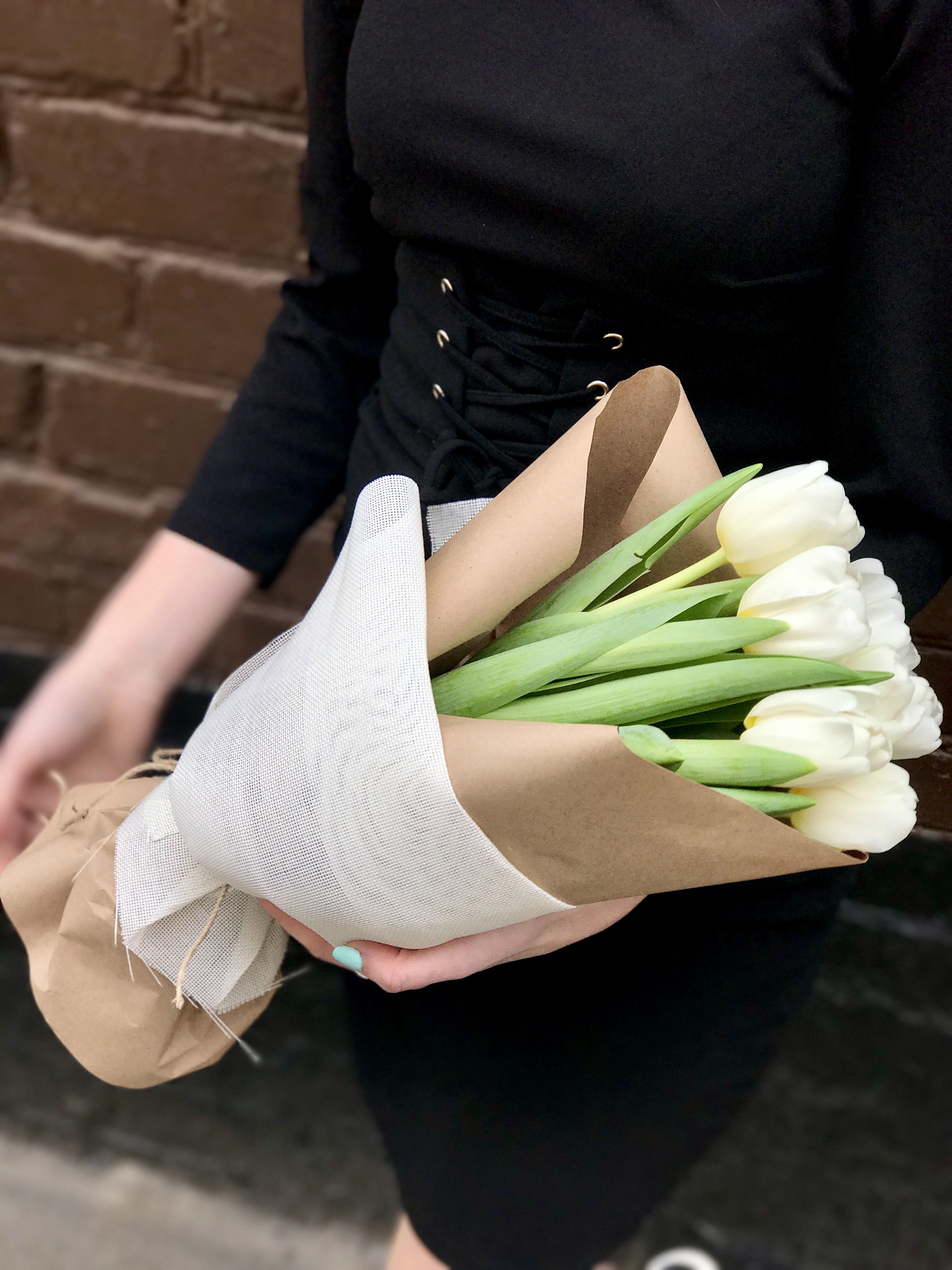
- White Dream — pure clean white, neutral enough for wedding, sympathy and corporate arrangements alike.
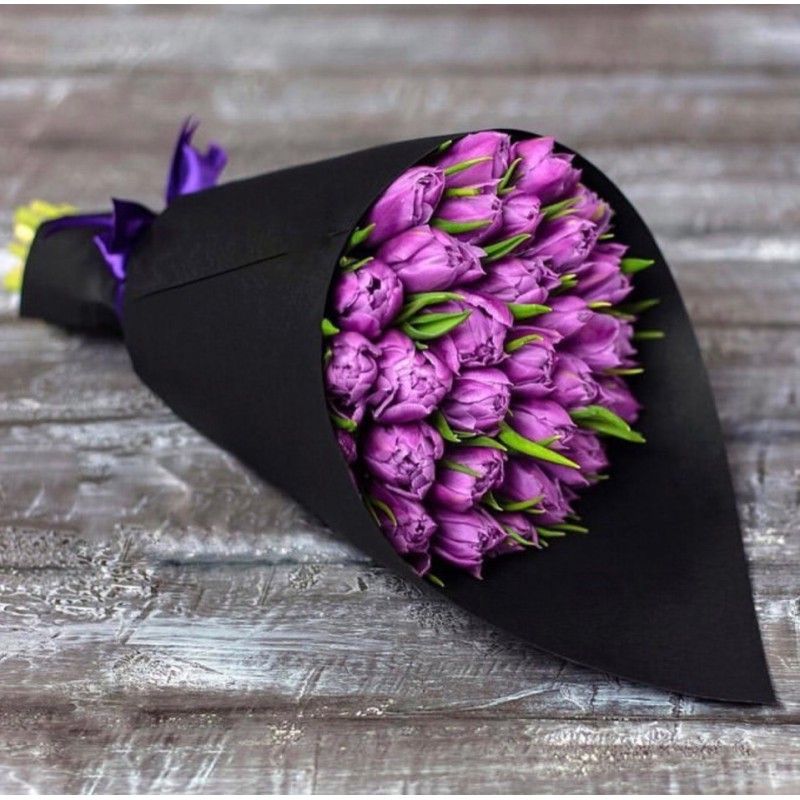
- Recreado — deep purple, almost black, dramatic and unusual. Works brilliantly in contrast with white or cream companion flowers.
- Louvre (parrot tulip) — ruffled, fringed petals in orange and yellow. Strong visual character; the variety people choose when they want something genuinely different.
- Pink Impression — soft pastel pink, highly popular in feminine gift bouquets. Stem length up to 55 cm.
Occasions and Season
Tulips are the most eloquently seasonal flower, and in Hamburg that quality is felt acutely. After months of fog and grey skies, a bouquet of tulips in late February feels genuinely significant. Peak season runs from February through May, though Dutch greenhouses make tulips available year-round for those who want them in August or December.
Common occasions: International Women's Day (8 March), Muttertag (second Sunday in May), birthdays, graduation ceremonies, first dates and the kind of spontaneous early-spring gift that needs no occasion at all. Tulips are one of the few flowers you can give without the risk of misreading the moment — formal enough for a considered gift, informal enough for a friendly gesture.
Freshness and Logistics
Dutch tulips arrive in Hamburg in the "closed bud" stage — the state in which they retain the longest potential vase life. They travel at +2 to +5 °C, the optimal temperature for tulips in transit. On arrival our florists trim the stems and condition the flowers in temperature-controlled water for four to six hours before packing. This resting period after transport stress matters: a tulip that has been properly conditioned before delivery reliably lasts three to four days longer in the vase.
Within Hamburg, standard delivery takes two to four hours from order. For outlying areas — Blankenese, Wandsbek, Bergedorf — allow three to five hours or place the order in advance.
"Tulips are sensitive to temperature in transit. If they ride in a warm vehicle for more than an hour, the bud starts opening en route. That's why we use insulated bags even in summer. The recipient should receive a closed bud and decide for themselves when they want it to bloom."
— Marc Hauser, procurement manager, Hamburg wholesale flower market, 8 years in the industry

Delivery Specifics in Hamburg
Hamburg's climate is maritime-continental, heavily shaped by the North Sea. Winters are mild and damp — temperatures run between −2 and +5 °C from December through March, with frequent fog and drizzle rolling in from the coast. Summers are moderate: +18 to +22 °C, with rain arriving unpredictably even in July and August. Spring — April and May — alternates warm sunny days with cool gusts off the Elbe. For tulips, this is ideal: cool, humid, no extreme heat. In summer we use insulated delivery bags; in winter we switch to thermally padded packaging.
We deliver across all districts: HafenCity, Altona, Eimsbüttel, Eppendorf, Blankenese, Winterhude, Barmbek, Harburg, St. Pauli and Rotherbaum. Payment in euros (€, EUR). For Muttertag and International Women's Day demand is high — order two to three days ahead. The Hamburger Dom festival (spring, summer and autumn editions) and Weihnachten also see elevated order volumes; we scale capacity accordingly.
Home Care
Tulips continue growing after they are cut — the stem can lengthen by five to seven centimetres in the vase. This is entirely normal. Place them in a low vase with cold water, and re-cut the stems at an angle. Change the water daily or every other day: tulips are more susceptible to bacterial build-up than most flowers. Keep them away from radiators and sunny windowsills; warmth accelerates opening and shortens their life. A cool hallway or bedroom is the best location.
If the buds open faster than you would like, place the vase in the refrigerator overnight at +4 to +7 °C — the petals will partially close again and the flower will last one to two days longer. An old gardening trick that still holds up: a small copper or silver coin on the bottom of the vase slows bacterial growth in the water and can extend vase life noticeably.

