






720x720_q85.jpg?v=1787130793)

Flower baskets by contents: what the mix does at a distance

A basket is looked at from further away than a bouquet. Nobody holds it up to their face, nobody turns it round, and most of the time it is seen from across a table or a room. That single fact governs how contents should be chosen, and it explains why arrangements that photograph beautifully close up can look muddled once they are standing on a floor.
Colour is the first thing to go wrong.
Reading a mix from across a room
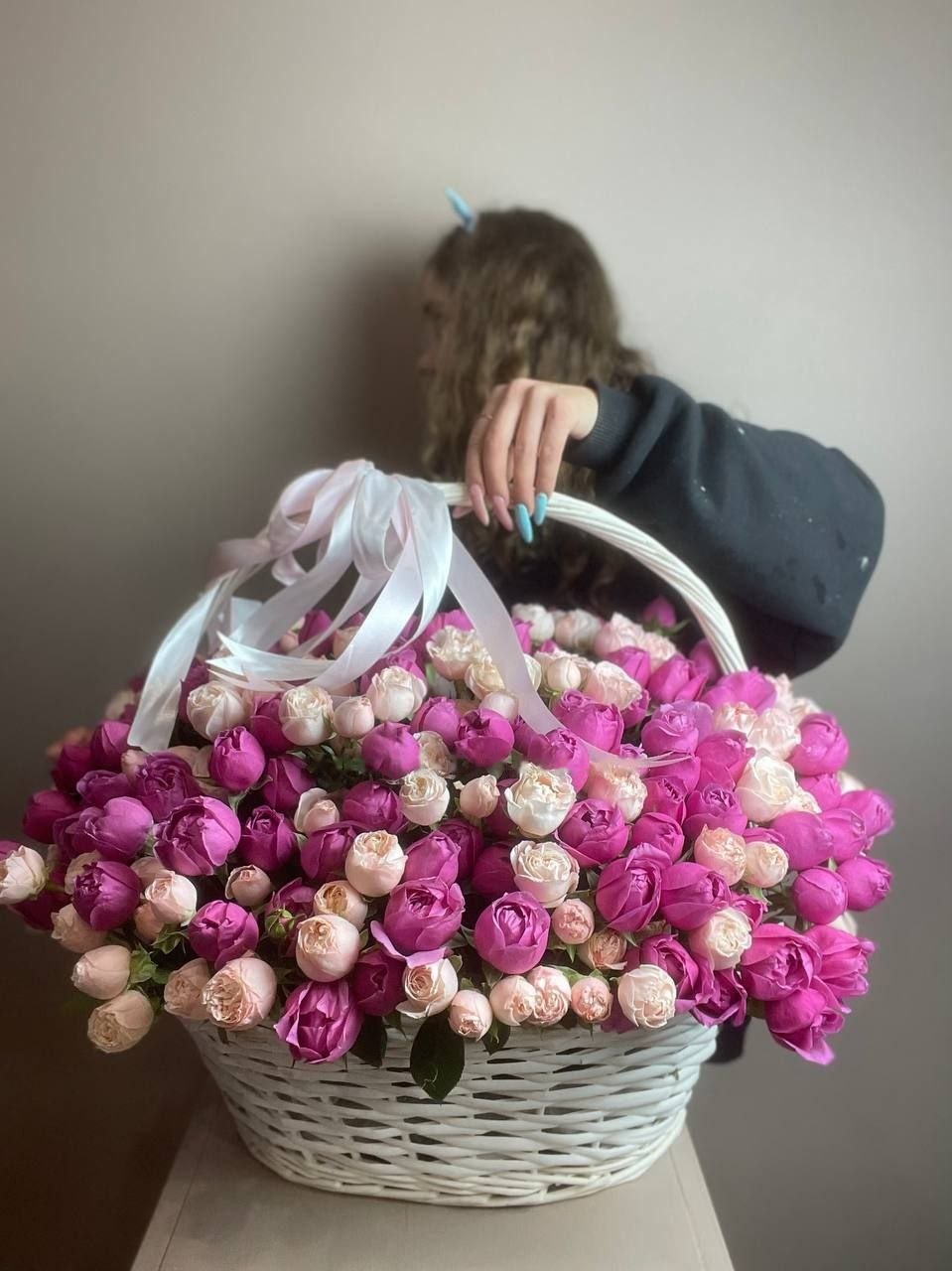
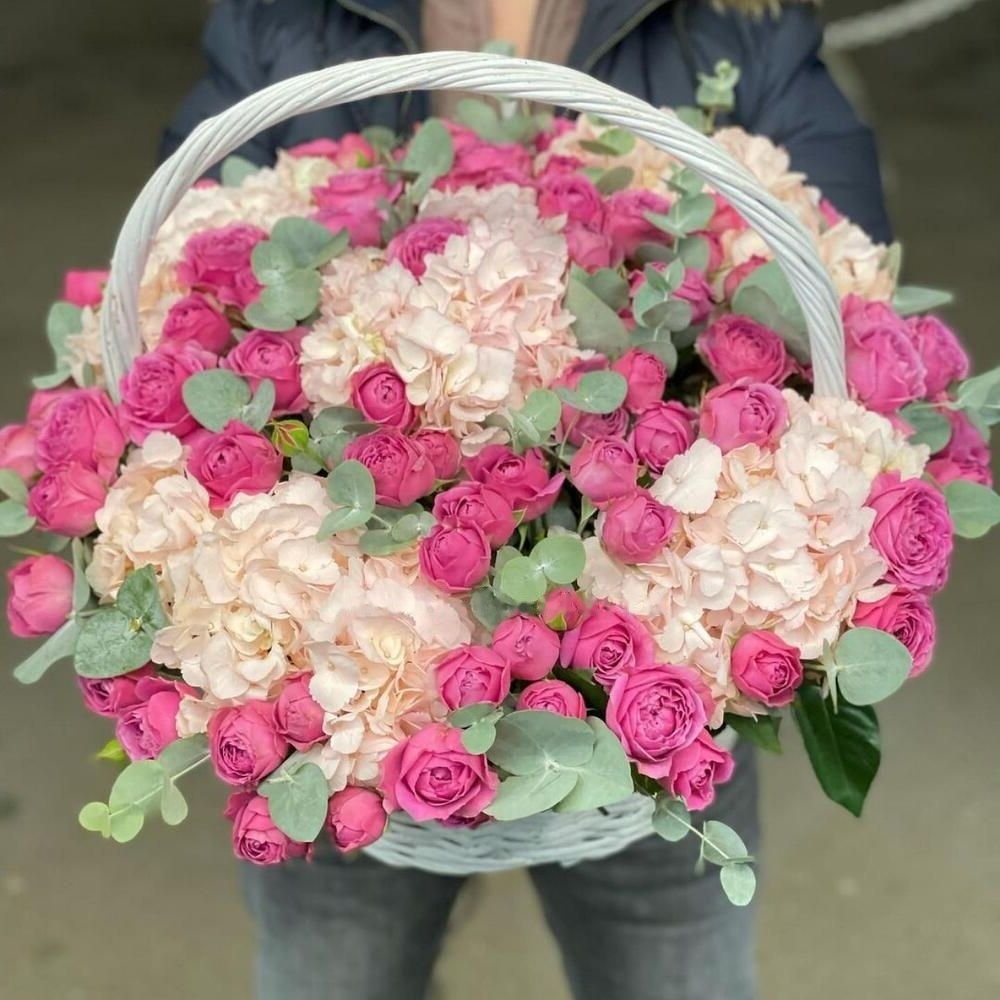
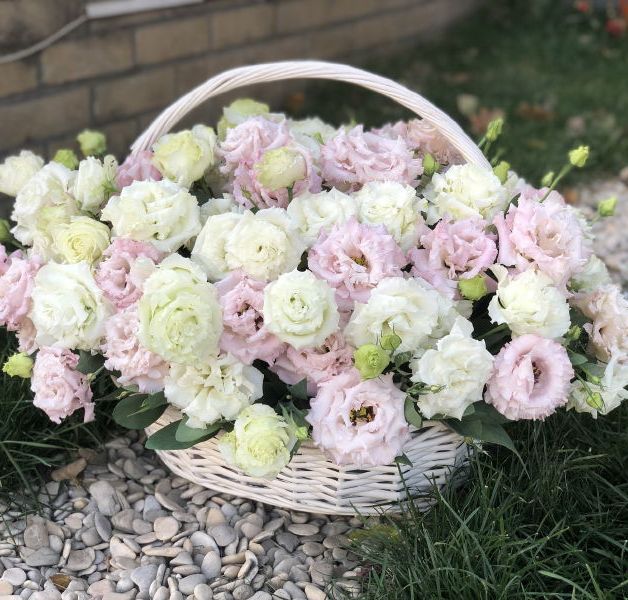
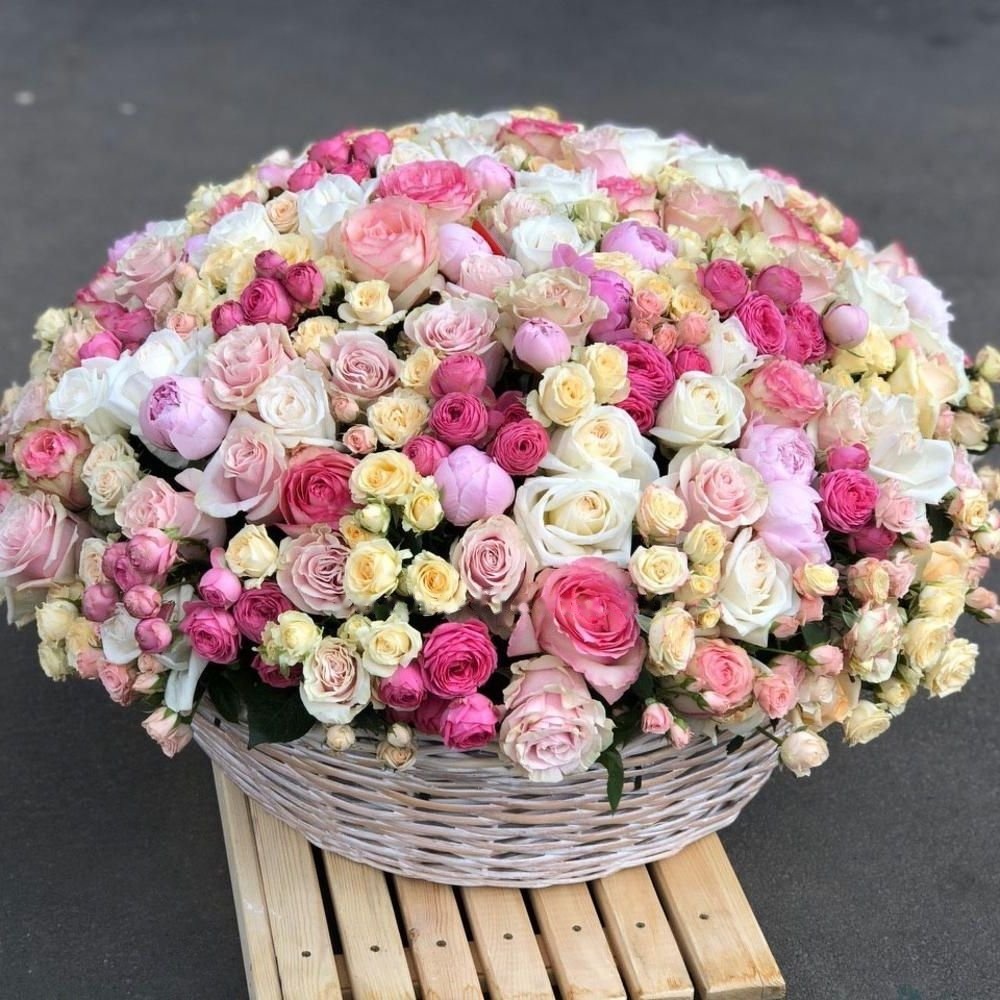
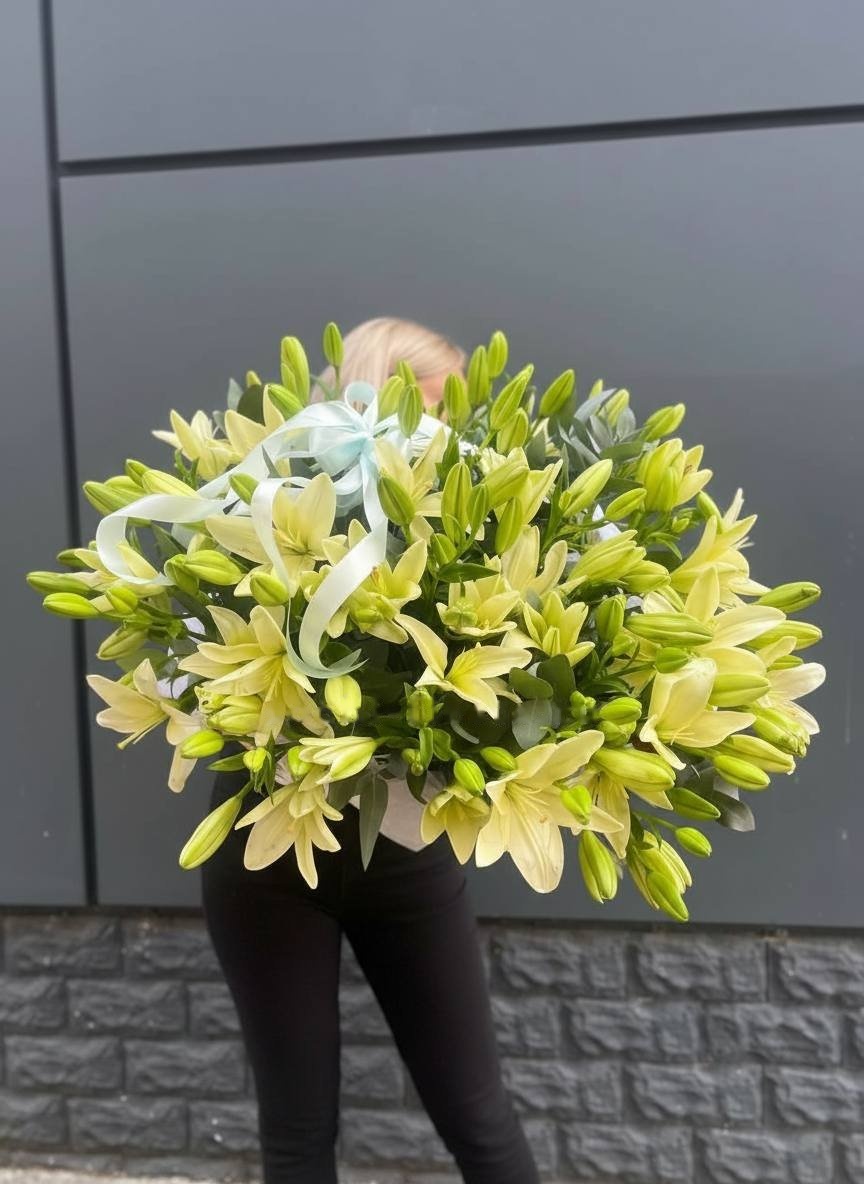
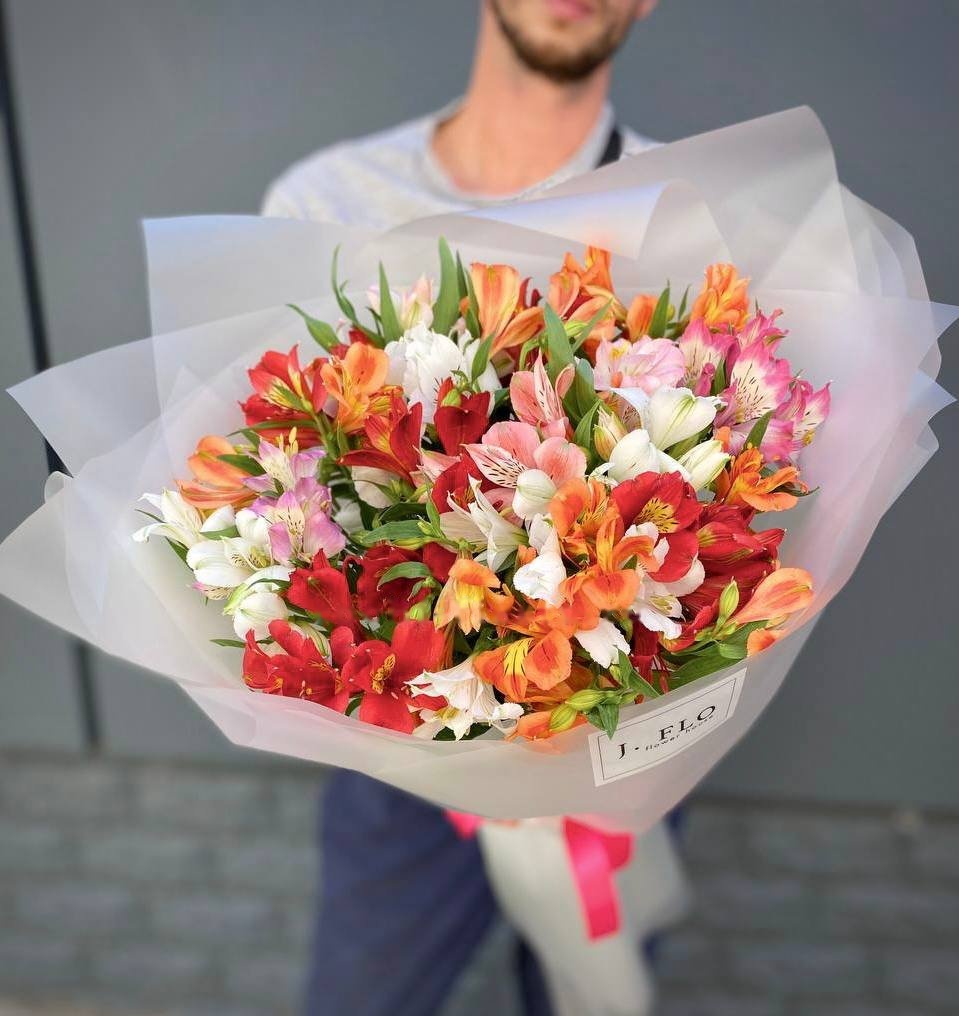
At a distance the eye stops seeing individual flowers and starts seeing masses. Shades that sit near each other in tone merge into one block, so a mix of pink, coral and soft red reads as a single pink shape from the doorway however varied it looks in the hand. Contrast is what survives the distance: pale heads against dark greenery, or one strong colour with everything else subordinate to it.
Dark shades behave particularly badly in a deep basket. Burgundy and deep purple fall into the shadow between the stems and read as gaps rather than as flowers, which is why they are usually placed at the outer edge where light reaches them.
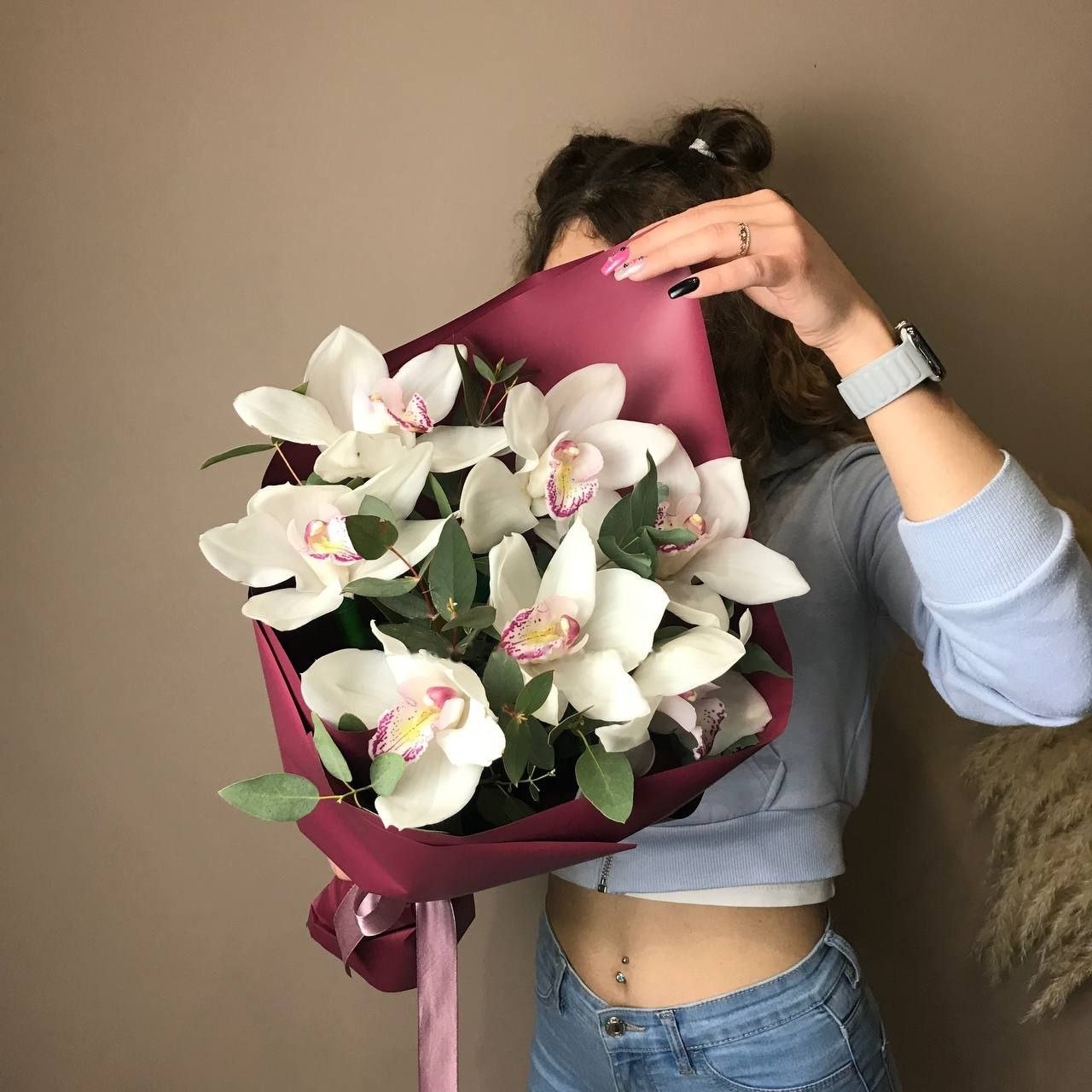
White does the opposite and carries further than anything else.
Texture is what a mixed basket is actually for
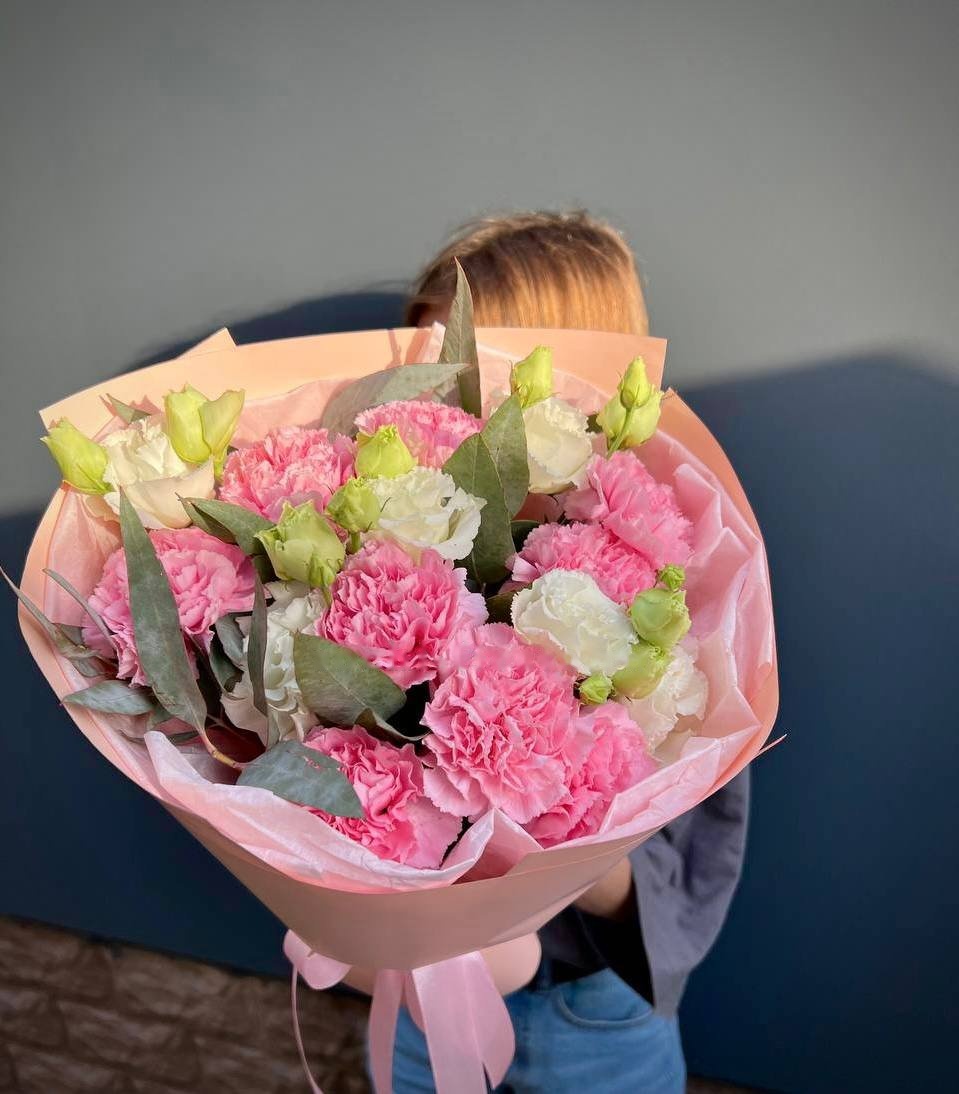
If every head in an arrangement is the same shape, size adds nothing beyond repetition. The reason to combine varieties is difference in form: round heads beside spikes, flat clusters beside single blooms, something that stands above the dome and something that spills over the rim.
That difference is also what makes a basket look considered rather than merely full. A florist builds the outline with the sturdy material first, fills the body, and keeps a handful of lighter stems for the top so the silhouette does not end in a flat line.
Grasses, branches and seed heads earn their place here for the same reason. They are cheap in visual weight and expensive in effect, and they last far longer than the fresh part of the arrangement.
One variety, or several
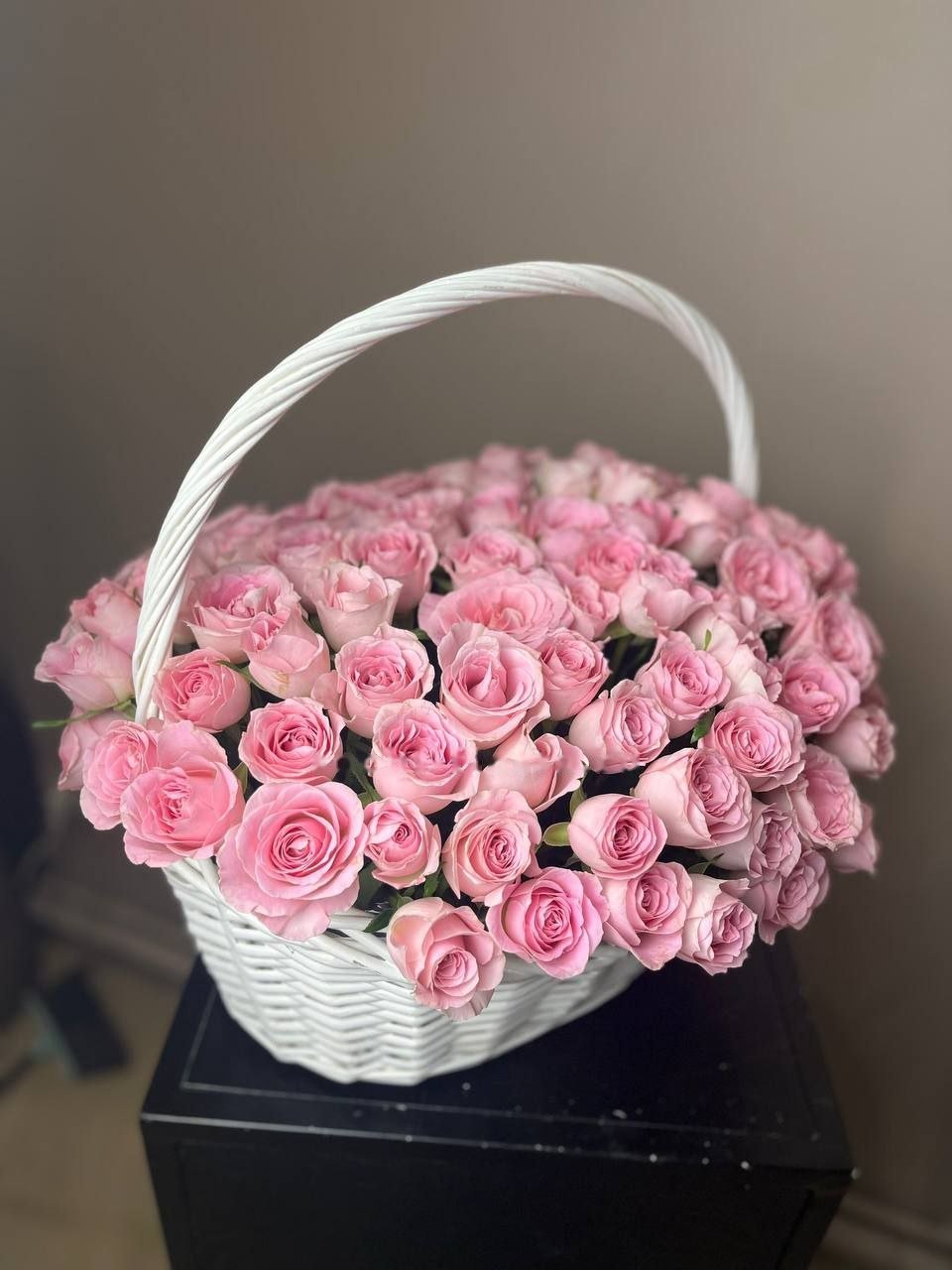
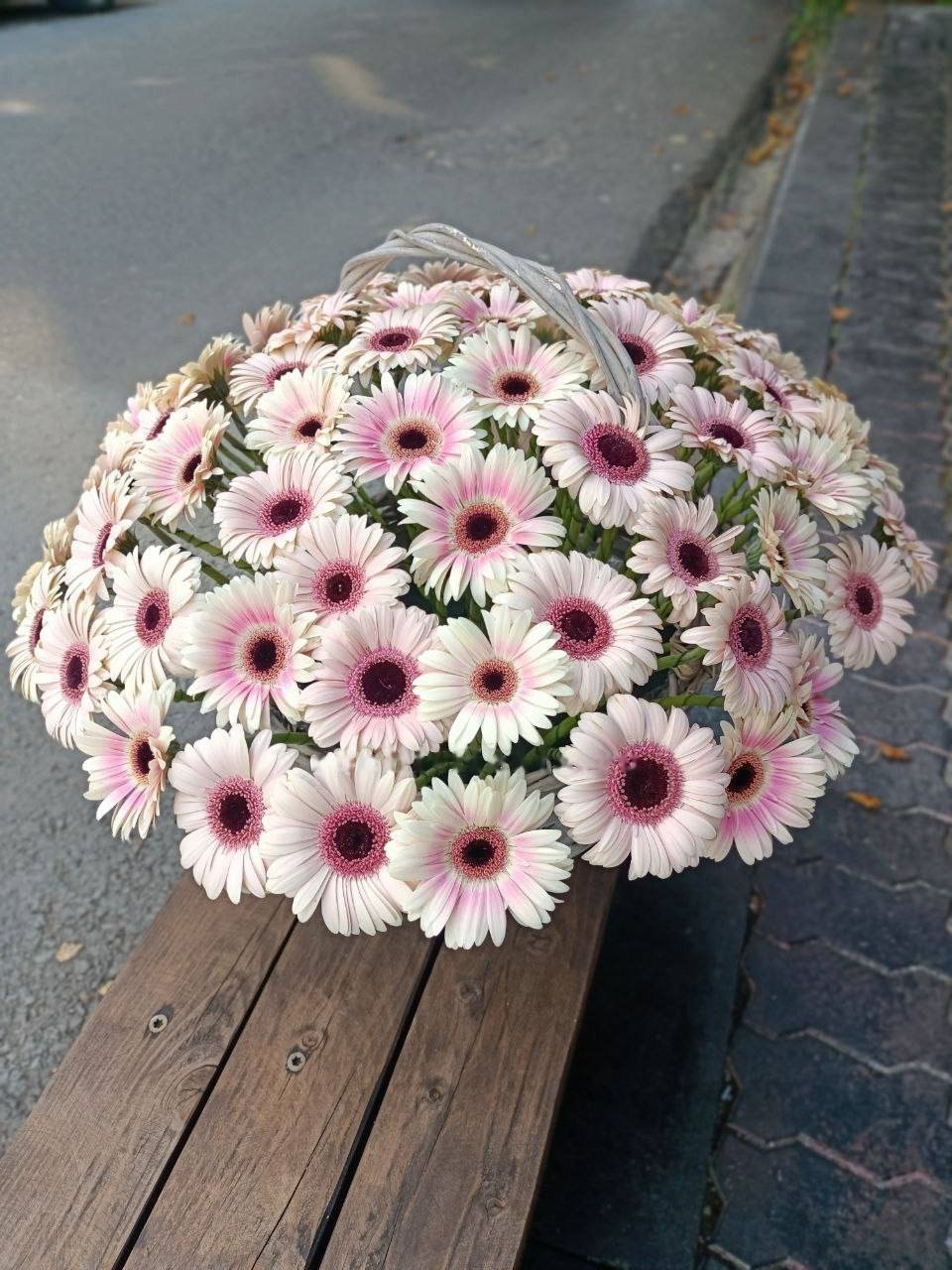
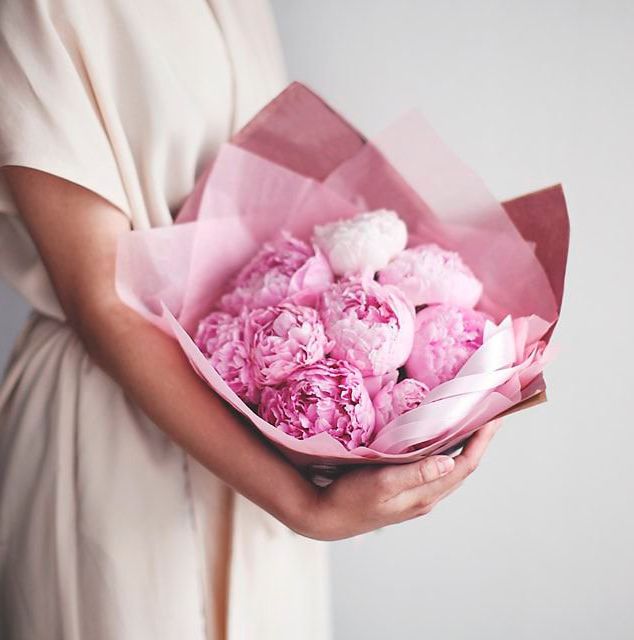
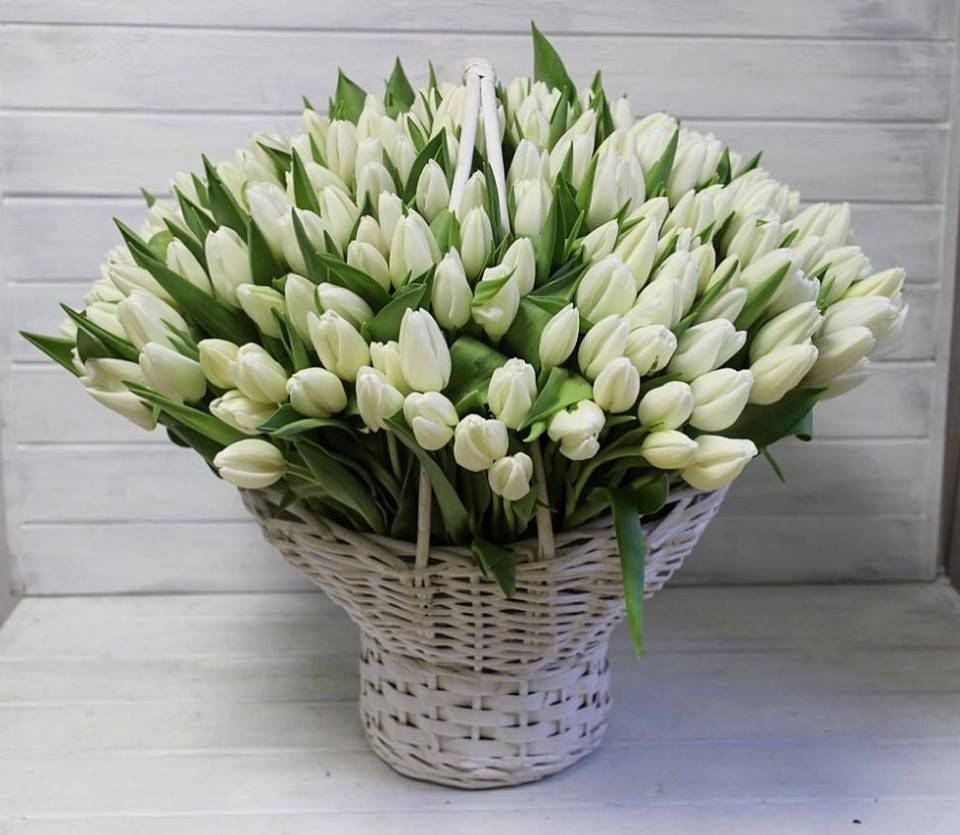
A single-variety basket makes one clear statement and ages evenly. Everything opens at a similar pace and finishes at a similar time, so the arrangement holds its shape almost to the end and then goes over as a whole.

A mixed basket is more generous at the start and less tidy at the finish, since the softer material tires first and thins the composition out unevenly. Whether that matters depends on the setting: for a reception desk or a formal handover the even ending of a single variety is worth more, while at home the gradual change is rarely noticed.
Choose accordingly rather than by price.
Matching contents to the person
Scent is the constraint people forget. A ward, a small office or a meeting room is the wrong place for heavily perfumed stems, and in those settings unscented material is the safer request.
Season is the second. Flower baskets by contents follow what is actually being cut, so an arrangement built around whatever is in season will be fresher and better formed than one assembled from whatever had to be flown in to satisfy a picture.
The third is simply what the recipient will do with it. If somebody in Barcelona is likely to keep the frame and enjoy the dried element long after the fresh stems have finished, a mix with branches and seed heads gives them something to keep, whereas a pure single-variety basket gives one clean week and then ends.

