Spray rose is not a specific variety but a cut-flower type: 3–9 blooms per stem instead of one. Buds are smaller (3–5 cm) but one stem replaces three single-flower roses in a bouquet. Great for weddings, corporate compositions, and as a "density booster" in mixed bouquets. This guide covers varieties, differences from garden and Austin roses, bouquet techniques, and care.
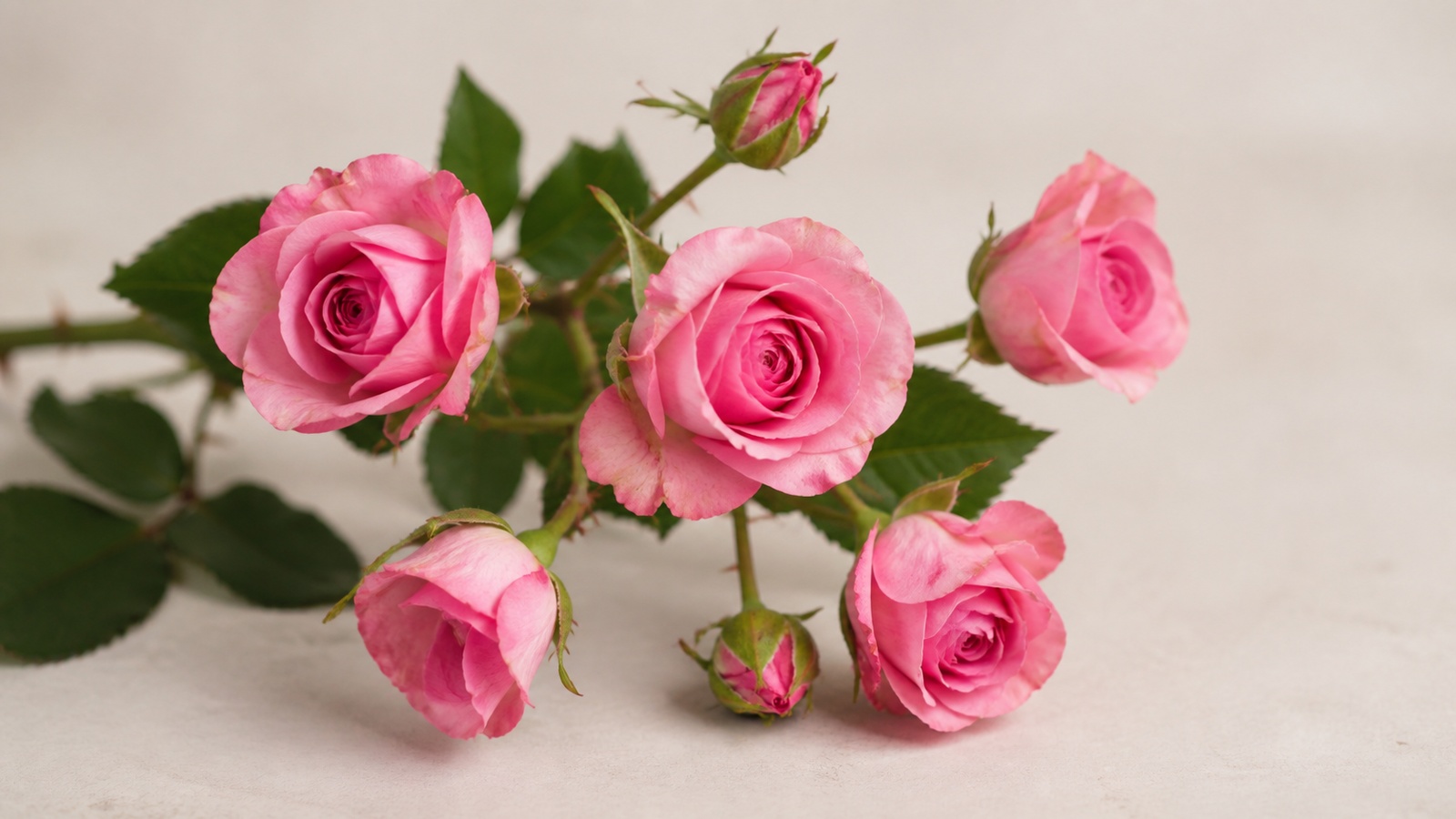
Table of contents
- What a spray rose is
- Spray rose, garden rose, and David Austin — differences
- Best varieties by color
- Use in bouquets
- Cut-flower care
- Facts and FAQ
What a spray rose is
The spray rose (Rosa × hybrida, "spray" type) is a cut hybrid tea rose with a branched stem carrying 3–9 buds 3–5 cm across. Breeding pushed toward "more blooms per stem, each smaller." One stem in a bouquet replaces 3 single-flower roses at comparable cost.
Commercial supply comes from Ecuador, Kenya, Colombia, and the Netherlands. Price $1.50–4 per stem. Year-round availability.
Spray rose (Rosa × hybrida, spray) A cut rose type with 3–9 flowers 3–5 cm on one 50–70 cm stem. Vase life 7–10 days. 50+ commercial varieties from white to dark burgundy. Wholesale $0.60–1.50 per stem; retail $1.50–4.
History and development
Spray rose is a relatively young cut-flower type in commercial floristry. The first varieties appeared in the mid-20th century as a byproduct of miniature garden rose breeding. By the 1980s "spray roses" formed their own commercial category.
Main breeding centers: Netherlands (De Ruiter, Meilland nurseries), USA (Jackson & Perkins), Japan (Keisei Rose Nurseries). 20–40 new spray varieties release each year. This is the most rapidly growing category of cut roses.
Advantages for florists
- Economy. One spray-rose stem ($1.50–3.20) gives 3–7 blooms — equivalent to 3 single-flower roses ($4–10). Material cost savings in mixed bouquets: 30–40%.
- "Natural" look. Multi-bud branches at different opening stages create a live-bush feel, not a "factory composition."
- Compositional density. A spray-rose branch looks fuller than a single-flower stem of the same visual volume. The bouquet doesn't "sag" even at low stem counts.
Spray rose, garden rose, and David Austin — differences
Three often-confused rose types. Key differences:
| Parameter |
Spray rose |
Garden rose |
David Austin |
| Flowers per stem |
3–9 |
1 |
1 |
| Flower size |
3–5 cm |
8–12 cm |
6–10 cm |
| Petal count |
20–30 |
30–50 |
50–120 |
| Scent |
weak/none |
weak/medium |
strong |
| Price per stem |
$1.50–4 |
$2.50–7 |
$6.30–14.50 |
| Vase life |
7–10 days |
8–12 days |
5–8 days |
| Wedding use |
as accent/filler |
as focal |
as focal + heirloom |
| Shape |
small "roses on branches" |
classic goblet |
old English cabbage rose |
- Spray rose = economical filler and mass color
- Garden rose (classic) = the focal flower in most bouquets
- David Austin = premium heirloom look with strong scent
Best varieties by color
White
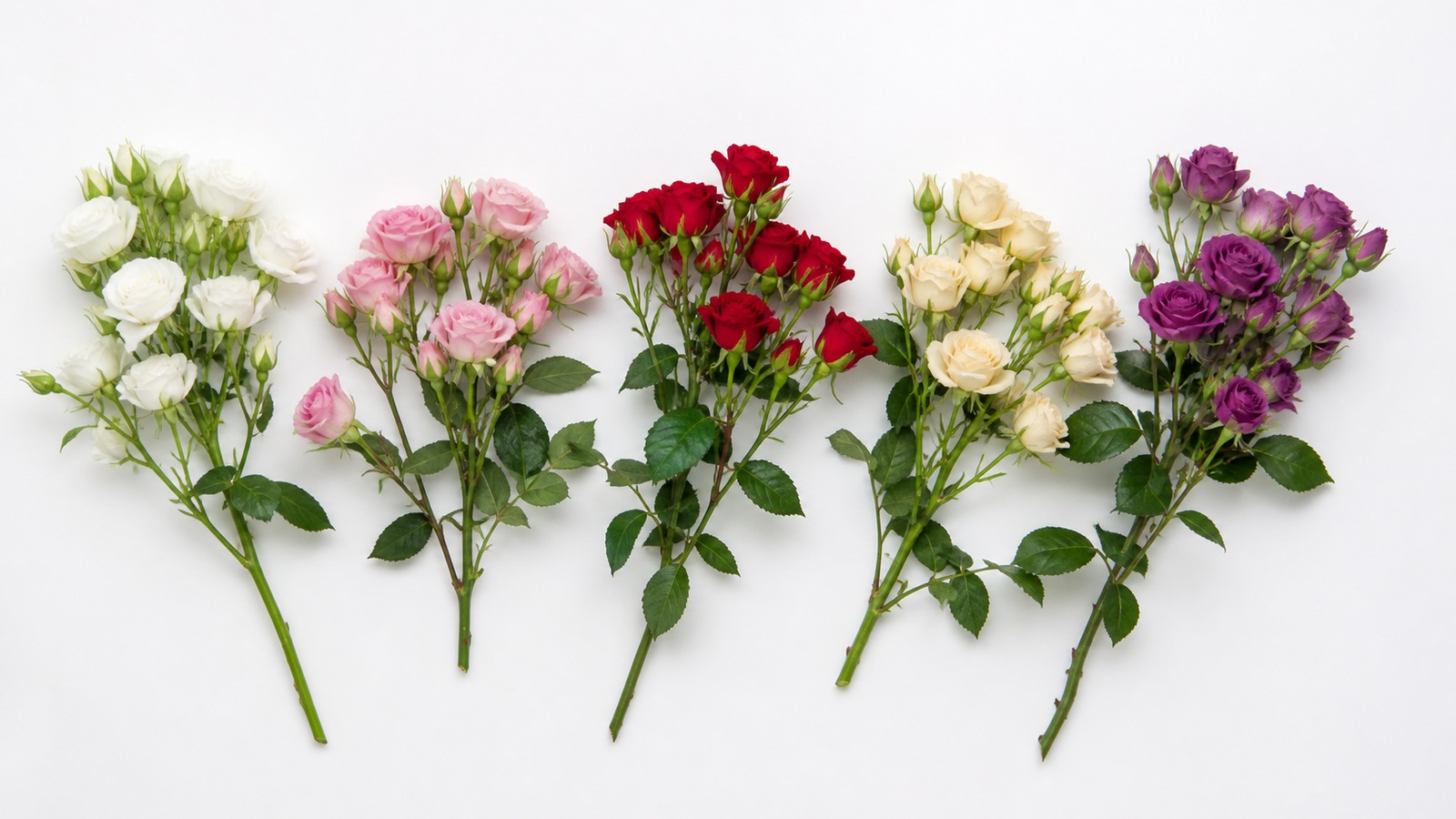
- White Majolica — 5–7 small buds per stem, subtly cream-tinted. Wedding standard.
- Bombastic — pure white, 7–9 buds, "cabbage"-shaped florets.
- Snowflake — the whitest of whites, 5–7 buds, slight vanilla scent.
Pink
- Yumi — dusty pink, 5–7 buds. 2026 palette hit.
- Bombastic Pink — sweet pink, "cabbage" florets, 7–9 buds per stem.
- Mimi Eden — bicolor pink/cream, 5–7 buds. Photogenic on Instagram.
Red
- Red Sensation — bright red, 5–7 buds, universal.
- Hearts — dark red, 3–5 larger buds per stem.
- Fire King — orange-red, 5–7 buds. Autumn palette.
Cream / peach
- Sahara Sensation — cream-peach, 5–7 buds, opens beautifully.
- Cappuccino — coffee-cream, 5–7 buds. Rare tone.
Purple
- Deep Purple — dark purple, 5–7 buds. Unusual.
- Silverstone — silver-lavender, 3–5 buds. Very rare.
Use in bouquets
Bridal bouquets
Spray rose is a wedding workhorse. Composition variants:
- 5 sprays + 3 large peonies + eucalyptus = full bridal bouquet at $80–130
- 7 white spray roses + gypsophila + ranunculus = bohemian wedding
- 3 spray Austins + 5 lisianthus + silver eucalyptus = elegant urban bouquet
Mixed bouquets
The main tip: don't take only spray roses. Combine with big flowers (peonies, hydrangeas) or lisianthus. A "solo" spray bouquet reads as "budget," while spray + peony reads as "designer."
Working combinations:
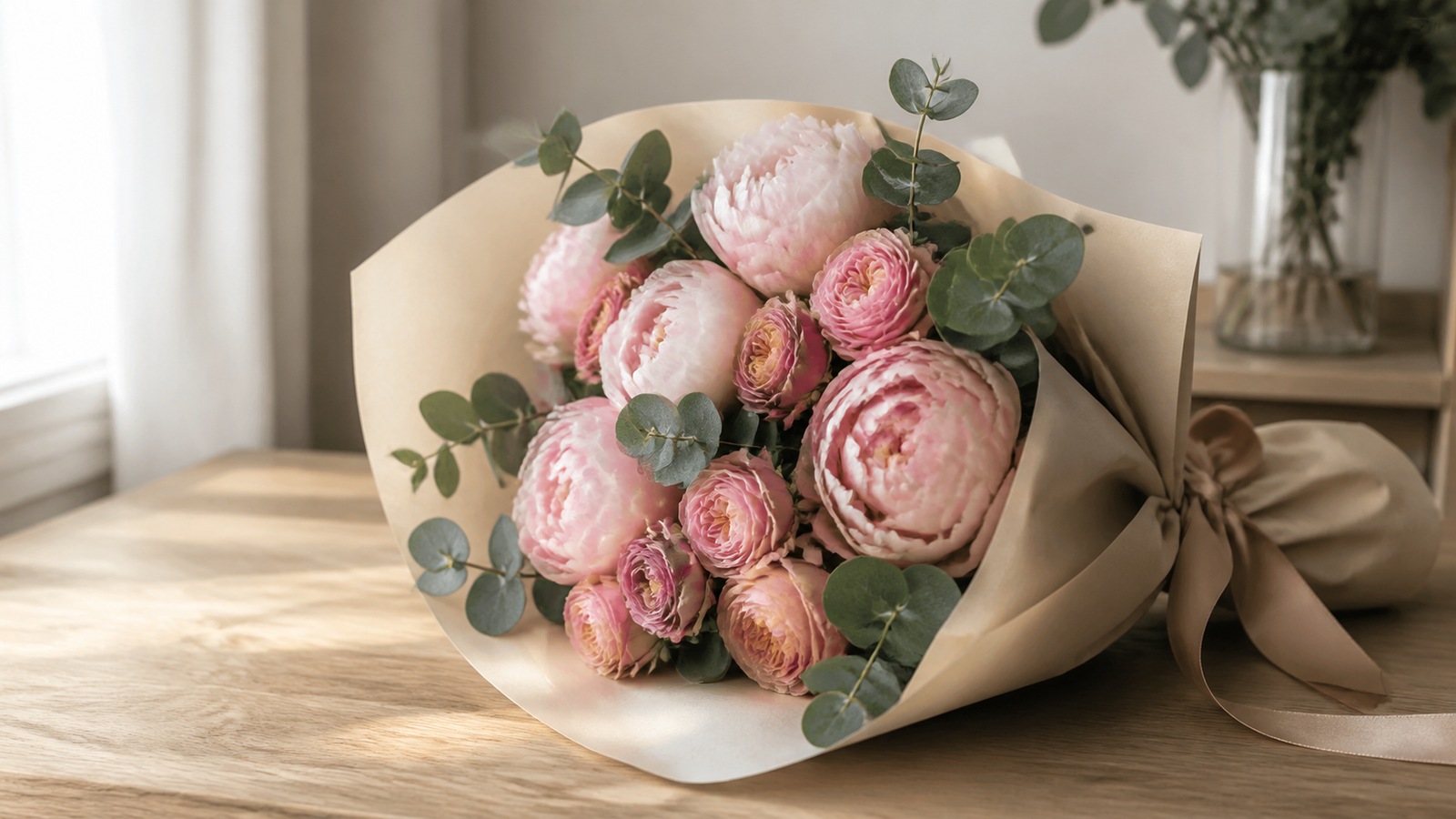
- Spray + peony + eucalyptus (2026 classic)
- Spray + lisianthus + ranunculus (spring-summer palette)
- Spray + spray Austin + ruscus (English style)
- Spray + hydrangea + berries (autumn composition)
Table decor and mass floristry
Spray rose is a corporate and event floristry staple: table centerpieces, arch fills, photo backdrops. Cost per m² of coverage is 30–40% below single-flower roses.
Cut-flower care
- Cut at 45° at the intake, under water
- Strip lower leaves
- Cool water with flower food
- Vase 22 cm tall or higher — a spray branch is heavier at the top than a single-flower rose
- Refresh cut every 2 days
Feature: mixed opening
On a spray-rose branch, buds sit at different opening stages. Some open first, others last. This gives 7–10 days of the "bouquet keeps blooming" effect — one of spray rose's main advantages.
Facts and FAQ
Is a spray rose the same as a garden rose? No, "spray" is a type of cut rose with multiple blooms per stem. Garden rose is a single-bloom rose. Both are Rosa × hybrida.
Is a spray Austin possible? Yes, some David Austin varieties (Beatrice, Charity) are bred as spray. Very expensive — $8–16 per stem.
Do sprays have scent? Usually weakly or none. Only a few varieties (Bombastic, Snowflake) have subtle fragrance.
How long do sprays last? 7–10 days at correct care. If buds are still tight at purchase, up to 12 days.
Which color to choose? Depends on occasion. White/cream — for weddings; pink — universal; red — passionate; coffee — modern.
Are spray + single-flower rose compatible? Yes, one of the best combinations. A single-flower rose as the focal + 3–5 spray branches as background gives a lush "designer" composition.
Want a bouquet with spray roses? Browse the catalogue — over 50 varieties, year-round supply.
Summary: spray rose is an underrated florist tool. Compact buds, multiple blooms per stem, economical, "natural" look. Not for solo mono-bouquets, but excellent in mixes with peonies, hydrangeas, and lisianthus.
— Sofia Bell
Author
Sofia Bell
Florist and blog editor