Every day in the shop we have at least two versions of this conversation:
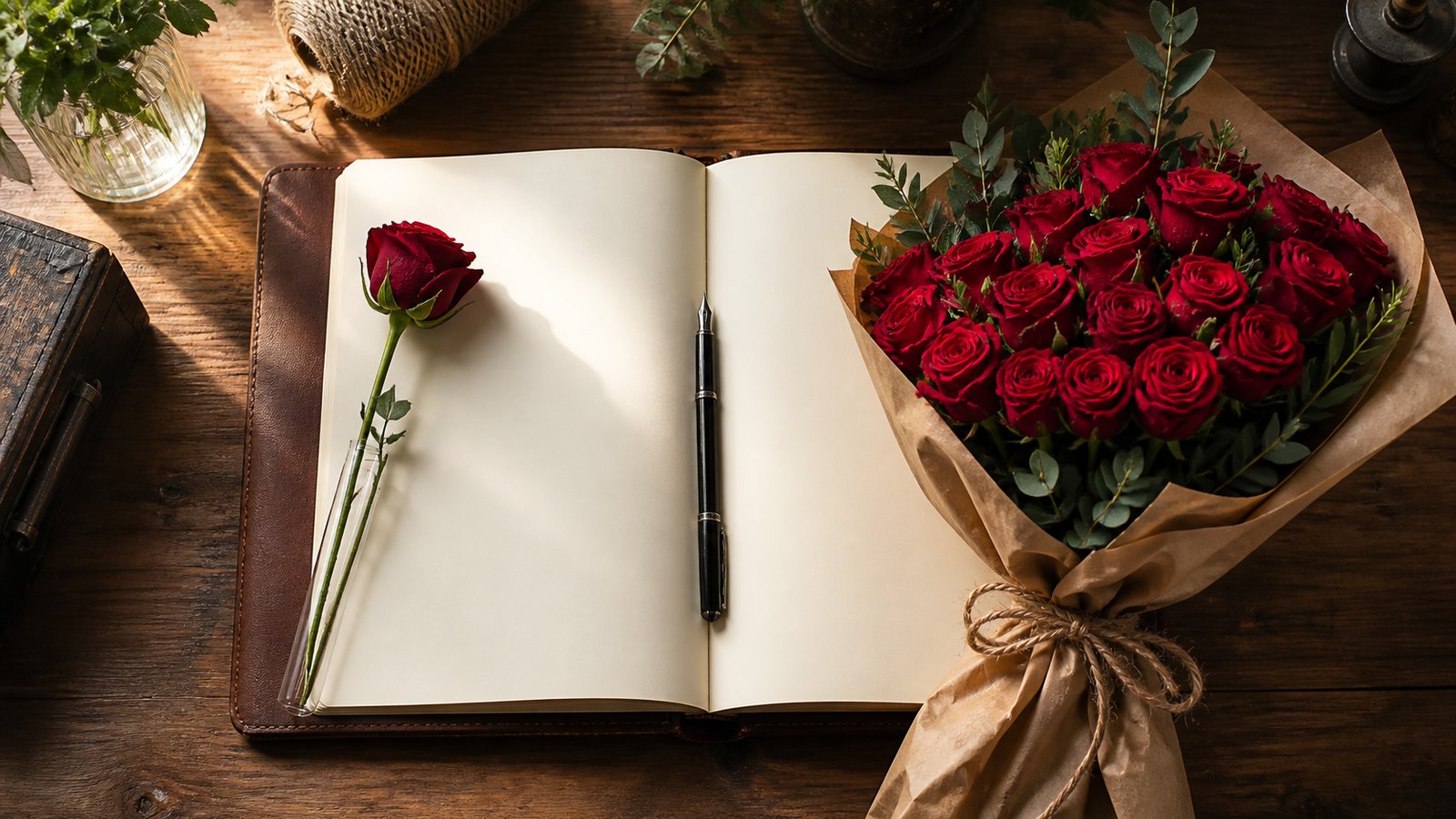
"How many flowers should I take? I heard an even number is for funerals..."
"I want 12 roses — it's our 12-year anniversary, symbolic..."
And every time we start with the same line: "Let me tell you what that rule actually means — it's not as strict as everyone thinks."
This is a full breakdown of flower counts — through the lens of Eastern European tradition, Western floristry, and common sense. No dogma, no internet myths.
The main question — odd or even?
Let's start with the most common one. "An even number of flowers means funerals" — nearly everyone has heard it, and almost no one knows why.
Where the rule comes from
The roots are in Slavic tradition, pre-revolutionary. Cut flowers symbolized life. An even number "closed the pair" — symbolically meaning "life is completed," pairing as the "living-dead" duality. So for funerals and memorials people brought an even count — two, four, six.
For living, celebratory, romantic bouquets, always odd — three, five, seven, nine. "Odd" meant "life continues."
This rule is very Eastern European / Russian. In Western Europe, North America and Asia, no such division exists — bouquets of any count are bought without a thought about parity.
How it works today
The rule still holds in Eastern Europe, but softly:
- For funerals and memorials — yes, always even (2, 4, 6, 8) in those cultures
- For living, celebratory, romantic bouquets — prefer odd if gifting in the region
- Everywhere else in the world — either count is fine, no cultural code
Exception 1: if there are more than 10 stems, parity almost stops being read. No one recounts 24 or 25 roses — they just see "a lot."
Exception 2: single-variety bouquets of large-headed flowers (peonies, hydrangeas) are often bought as 5 or 7 stems, and no one calls 6 peonies "funeral."
What each number means — cultural codes
1 flower
"You are the only one."
One stem is a minimalist, gentle, refined gesture. Ideal for:
- A first date (one beautiful rose in kraft looks more elegant than an armful)
- A love declaration (without theatrics)
- A "just because" — meeting a friend at the airport, congratulating a colleague
The working single-stem varieties: long-stem rose, cymbidium orchid, open lisianthus. Packaging must be quality (kraft + a dense ribbon), otherwise it reads cheap.
3 flowers
"Love, loyalty, gratitude."
Three is the softest "non-minimalist" number. Reads as considered, without pomp.
Suits:
- A young woman on a date (3 roses in kraft outperforms 11 in plastic)
- Daughter's birthday
- Friend without occasion
- "Thank you" to a colleague
5 flowers
"Affection, warm friendly feelings."
Five is a universal gift number. Warm without a serious hint.
Suits:
- Friend, colleague, mom without occasion
- A small occasion (congratulating on an internship)
- A man (5 chrysanthemums or 5 gerberas — perfectly fine)
7 flowers
"Infatuation, strong affection."
Seven is the most "romantic" odd number under 10, especially for dates.
In many cultures 7 is a lucky number. So seven roses on a second or third date read as "I am seriously interested."
9 flowers
"Admiration, sincere respect."
Nine is a formal gesture of respect. Reads as "I value you" without romantic undertone.
Suits:
- A teacher (in pastel, not classic red)
- A senior colleague, a mentor
- A mother-in-law on first meeting
11 flowers
"Love, serious intentions."
Eleven is the classic romantic number. "Not round," slightly "extra," but not pompous.
Best for:
- 1–5-year anniversary
- Wife or partner's birthday
- Valentine's Day
15 flowers
"Recognition, gratitude for everything."
Fifteen is already a large bouquet. Reads seriously, thoughtfully.
Suits:
- 10+ year anniversary
- Milestone birthday (50, 60)
- Mom on a round date
21 flowers
"Full recognition, no reservations."
Twenty-one is the most serious "regular" bouquet. Beyond 21 you enter "showpiece" numbers (25, 51).
Suits:
- Marriage proposal
- Major anniversary
- A team gesture (for a boss's 50th)
25 flowers
"Milestone gesture."
Twenty-five is the first "large" number that stops being a "normal bouquet" and becomes a status gesture. Expensive, noticeable, read as intentional.
In peak summer, 25 imported premium roses cost $80–130. Think twice before taking "any armful."
51 flowers
"Grand gesture."
Fifty-one is the classic "a lot of roses" for weddings and milestone anniversaries. Read as "expensive, extreme, for a major occasion."
The catch: for it not to look absurd, the recipient needs a large vase at home and air-conditioning. In a normal apartment, 51 roses often end up in the bathtub overnight because there's no vase that size.
101 flowers
"You are my one."
One hundred and one is the symbolic proposal number, read as "unconditional commitment." The modern "Instagram gesture" — photogenic and expensive.
Real story: in eight years we've sold 101-rose bouquets for a marriage proposal many times. Twice the wife came back a year later to complain that the bouquet "took up half the apartment," "wilted horribly," and "I wish he'd taken 21 and saved money on the ring."
Odd vs even — when to ignore the rule
Some florists follow tradition strictly. We follow it flexibly — the rule matters where it works. And it works in three cases:
- Funeral / memorial bouquets in Eastern Europe — always even, no exceptions
- Bouquets of 9 or fewer stems in Eastern Europe — always odd (unless funeral)
- Very traditional older women 60+ — go odd, because they count
Everywhere else — no one recounts 12 or 14 flowers. Especially among people under 40. If you want 12 roses — take 12.
Special scenarios
Bridal bouquet
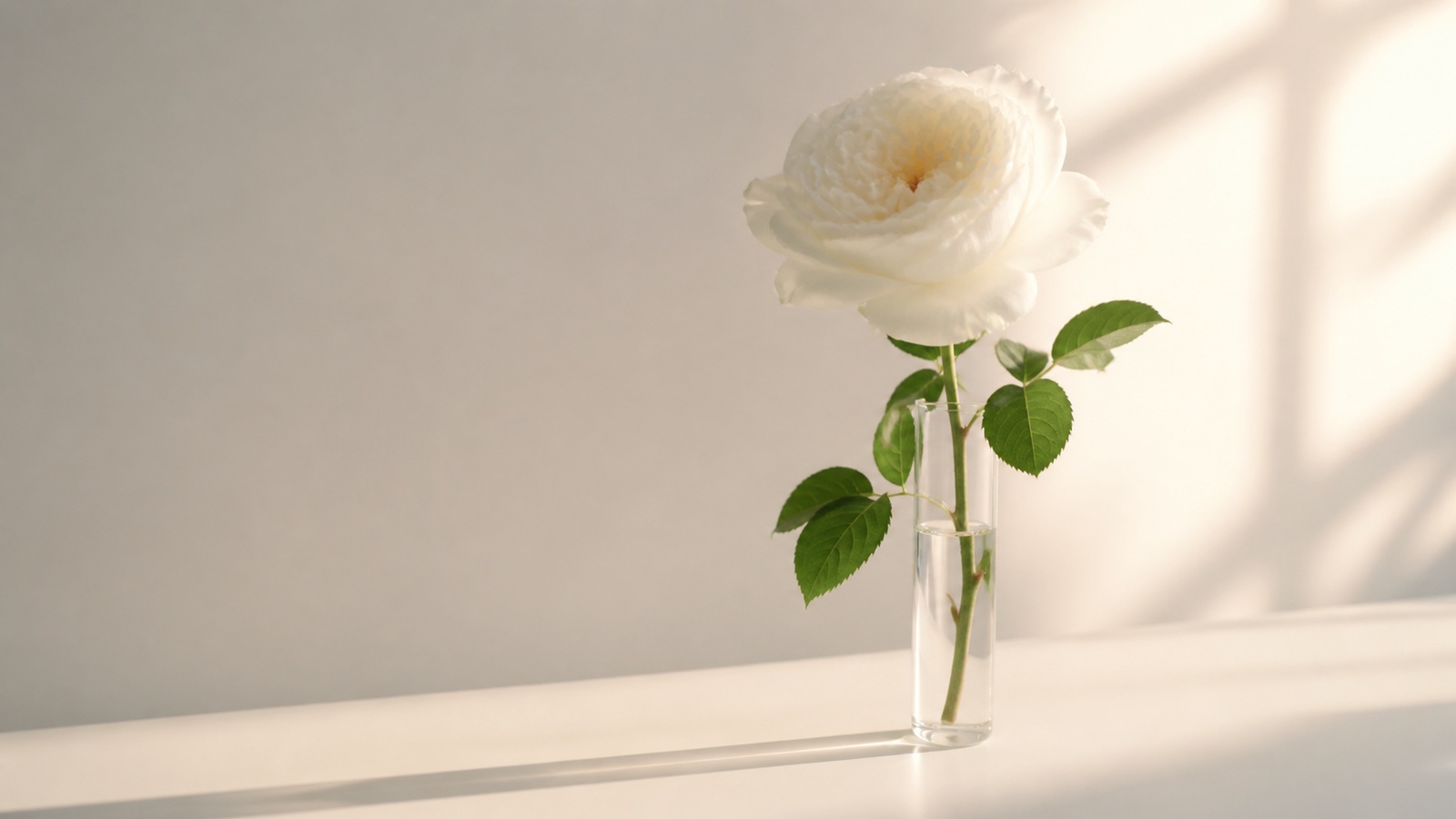
Count is not the point — shape, balance, and size matter. A bridal bouquet typically holds 11–21 stems (including small fillers), but nobody counts.
A bouquet for a man
Modern etiquette: yes, you can give flowers to a man, and count doesn't matter. One large sunflower or seven chrysanthemums — both work.
A bouquet for a child
For a child, go with a compact bouquet with bright accents — 5–7 medium-sized flowers so the bouquet isn't heavier than the child. Odd/even doesn't read here.
Cheat-sheet: how many to take
| Occasion |
Recommended |
| First date |
1 flower |
| Friend, mom without occasion |
3–5 |
| Date (mutual interest) |
7 |
| Teacher, mentor |
9 |
| 1–5 year anniversary |
11 |
| Wife's birthday |
11 or 21 |
| Milestone birthday (50, 60) |
15 or 21 |
| Marriage proposal |
21 (smart) or 101 (dramatic) |
| Funeral (Eastern European tradition) |
2, 4, 6 |
| Corporate / team gift |
25 |
If you need a bouquet now
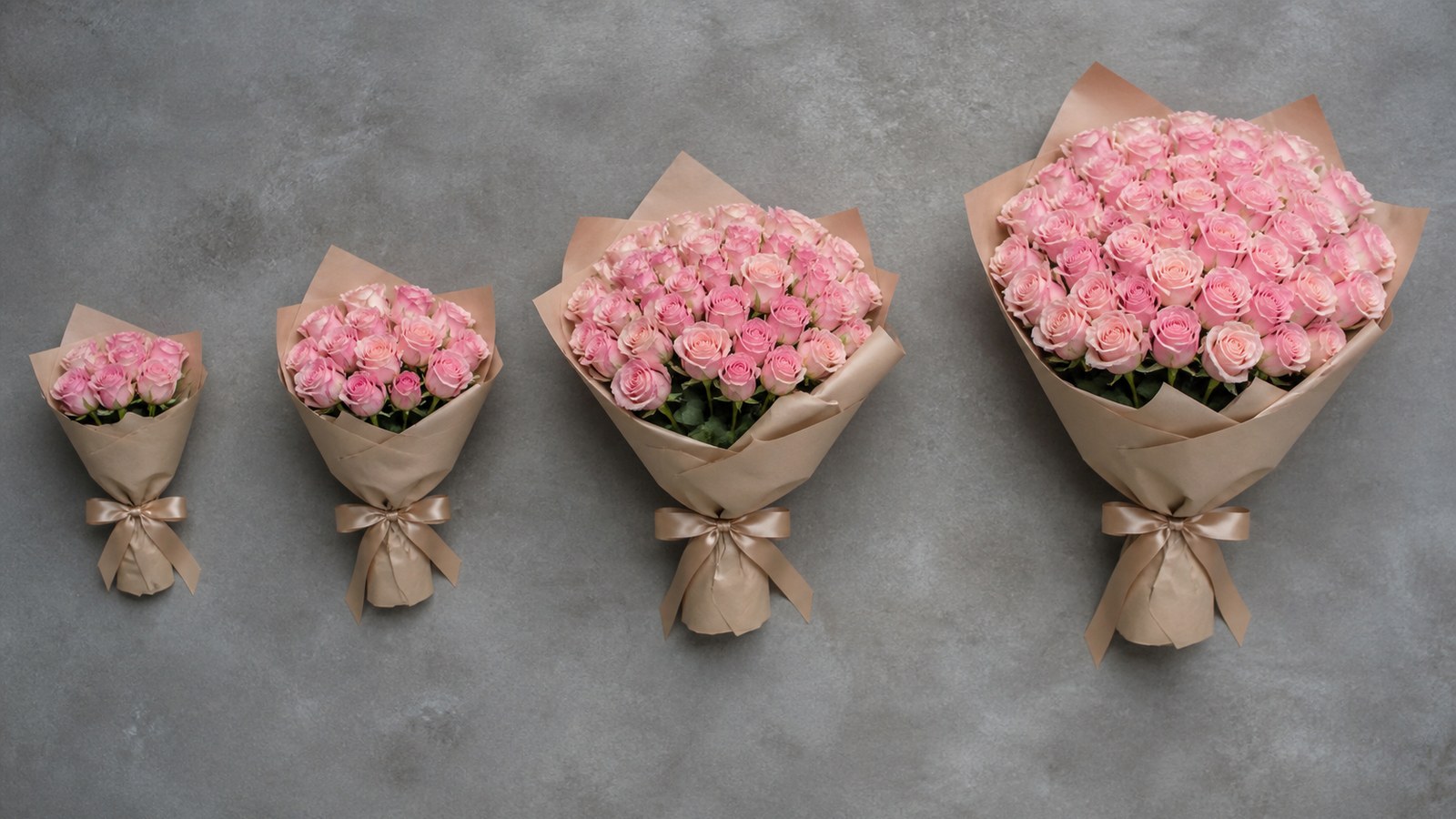
Bouquets with delivery — the catalogue has ready arrangements of 3, 5, 7, 11, 15 and 21 stems with a care card included. For non-standard counts — message us and we'll build to occasion.
The main point: the bouquet has to fit the person and the occasion. Count is secondary; form and meaning come first. Don't recount 12 roses in fear of what your mother-in-law will think — she only counts if there's already a war in the family, and then it isn't about the bouquet.
— Sofia Bell