Behind the counter you see the same scene hundreds of times a year. Someone walks up, looks over the case, and says: "Just… something beautiful." Then, a minute later: "And what do these mean?"
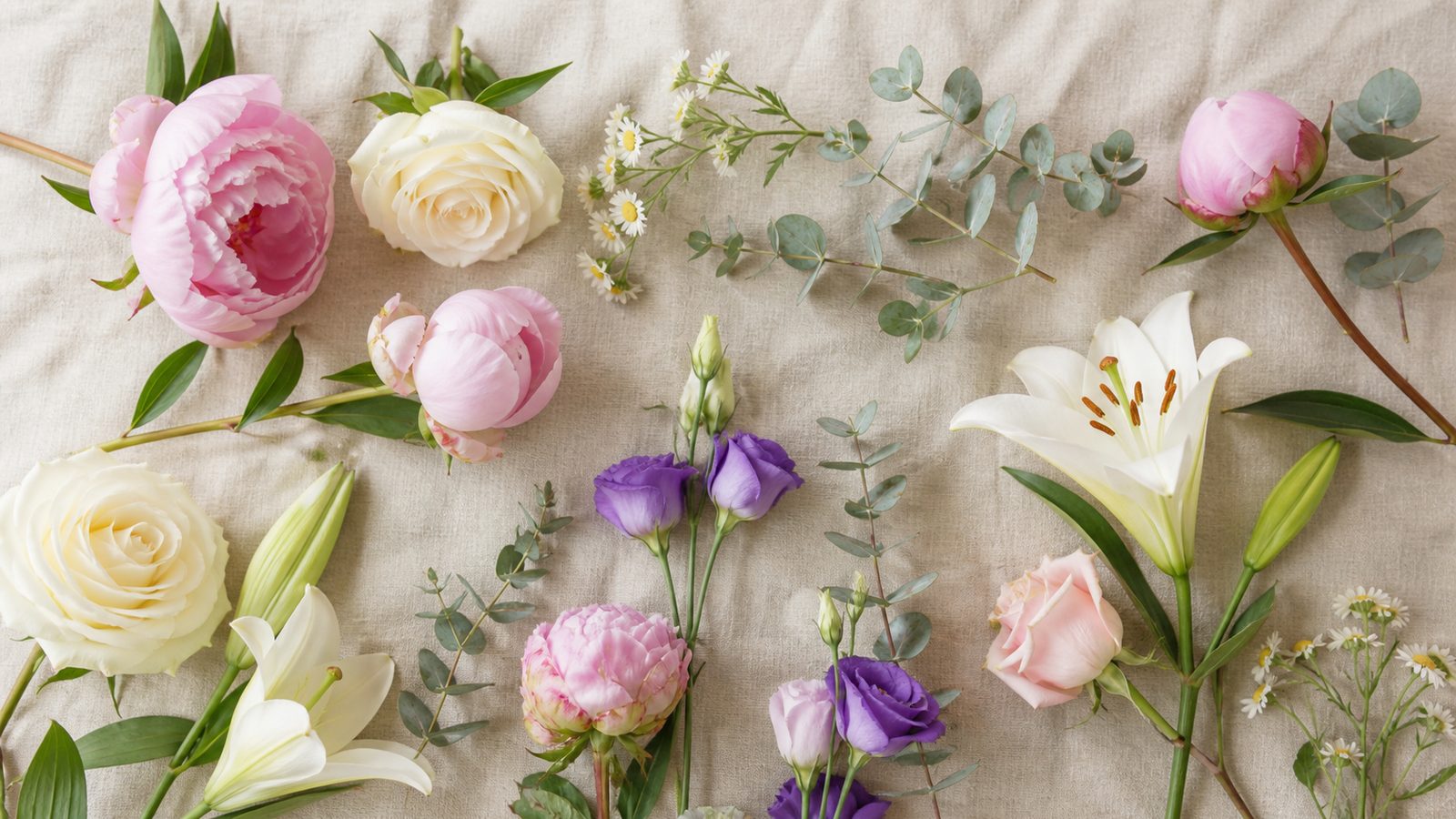
Flowers are an old and fairly specific language. Every species, every color, and even the number of stems in a bouquet are words. And it happens often that we give a bouquet meaning one thing and the recipient reads something entirely different. Not because they "didn't understand," but because the cultural code of flowers runs on its own, independent of your intention.
This is a short cheat-sheet on the main flowers — not a dictionary, a guide. What they say, in what contexts they work, and where you shouldn't give them. No esoterica or Victorian trivia — just what a modern person actually reads.
A short history of the "language of flowers"
Before we get to specific varieties — a quick detour.
What we call "the language of flowers" (floriography) formalized in the 19th century, in Victorian England. Speaking about feelings directly was forbidden — so the bouquet became a coded message. Every flower had its meaning, and there were whole dictionaries a young woman could use to "read" a declaration or a refusal.
Most of those meanings no longer work. Nobody today knows that a Casablanca lily meant "ambition" or that phlox meant "unanimity." That layer of knowledge died with the era.
But the base layer survived. Red rose = love. White = purity. Yellow = friendship. These meanings persisted because they're simpler, more emotional, and reinforced by mass culture: film, books, advertising.
This guide is about that living layer — what actually reads in 2026, not what was buried in some forgotten Victorian handbook.
Roses — the loudest language
Roses are the most "expressive" flower. Every color has its own meaning, and the differences are serious.
Red roses — romance
The main and only meaning of red roses is romantic love with an erotic undertone. Not friendship, not gratitude, not "just pretty." Specifically — love between partners.
They work strongly in three scenarios: a declaration of love, long anniversaries, recovery after a serious romantic conflict. In every other context — mom, colleague, teacher — red roses create awkwardness. We've written a full guide to red roses.
White roses — purity, respect, new beginnings
The most underrated color. People take them for weddings, for teacher appreciation, for funerals — and that's why many assume "white is a funeral thing." The truth is the opposite: a white rose says "I approach this with respect and without subtext."
They work well at the start of a relationship (when red is too much), for christenings, house-warmings, for colleagues, mentors, and people you genuinely respect. Detailed breakdown here: what white roses mean.
Pink roses — tenderness and gratitude
The most universal, soft choice. Pink says "I appreciate you, and I feel warm around you." Suits almost everyone: mom, sister, friend, colleague, partner. The lighter the shade, the softer the signal; the closer to fuchsia, the more romantic undertone.
If you don't know what to choose — soft pink roses almost never miss. Full breakdown: what pink roses mean.
Yellow roses — friendship and joy
There's a persistent Slavic-region myth that "yellow roses mean parting." That comes from a specific Soviet-era pop song and spread from there. Globally, it's just a myth. In most cultures worldwide, yellow roses mean friendship, sunshine, joy.
Just know that in some Eastern European contexts the myth is still strong — if you're gifting to someone who grew up on that song, yellow roses might read differently. For younger audiences worldwide, they're safe.
Cream and peach — coziness and mature love
The modern in-demand choice. Cream says "we're warm together, we've been through things." Often chosen for wedding anniversaries (especially 5–15 years), for long-term partners. An alternative to the obvious red.
Peonies — pure beauty without undertones
If red roses are the loudest flower, peonies are the most "pleasing." They have no rigid symbolism. They're simply beautiful — and that is their strength.

The base meaning is happiness, prosperity, feminine beauty, ease. In China, the peony symbolizes prosperity; in Japan, nobility. In the West — simply "one of the most beautiful flowers in the world."
Peonies work well for:
- Mom, especially in spring (season April–June in the northern hemisphere)
- A wife or partner without any special occasion — "just because it's beautiful"
- A young woman's birthday
- Anniversary of meeting, first date, or after a fight
- Yourself — this is one of the categories worth buying just because
The downside — seasonality and price. From October to March they're either very expensive (imports) or unavailable. And peonies last only 3–5 days in a vase. They're not "eternal" flowers, they're a burst.
Lilies — nobility and ceremony
Lilies are the flower of the "grand gesture." Strong scent, large bloom, and they dominate any arrangement. A single lily stem can turn a modest bouquet into a ceremonial one.
Base symbolism:
- White lilies — purity, nobility (in Christian iconography, the Virgin Mary is depicted with a white lily)
- Yellow / orange — gratitude, recognition of merit
- Pink — admiration, tenderness
- Tiger — passion, temperament (a rare and divisive choice)
Lilies work well for formal events: graduation, milestone birthday, award ceremony, a serious anniversary. They work poorly for close, everyday moments — they're too much for "just stopped by to say hi."
Important nuance: the scent is very strong. In a small apartment, a lily bouquet fills the air. If your recipient is sensitive to fragrance, choose a scentless variety (Asiatic hybrids) or a different flower altogether.
Chrysanthemums — longevity and memory
Chrysanthemums are the most underrated flower of autumn. In parts of Eastern Europe they carry problematic baggage: often used at funerals, so many people assume you shouldn't give them.
Globally, that's a regional distortion — you can and should give them. In Japan, the chrysanthemum is the imperial flower, symbol of longevity and nobility. Across most of Europe, it's just a normal autumn bouquet.
What they say:
- Yellow — sunshine, friendship, gratitude
- White — sincerity, truth
- Red / burgundy — long-standing love
- Pink / lilac — tenderness, admiration
Their main strength — staying power. They live 2–3 weeks in a vase. That's three times longer than roses. So chrysanthemums are a great choice for people who value a bouquet that lasts, rather than "flashes and fades."
Tulips — spring and simplicity
Tulips are the flagship spring flower. Their main meaning is spring, renewal, simple clean joy. No complex undertones.
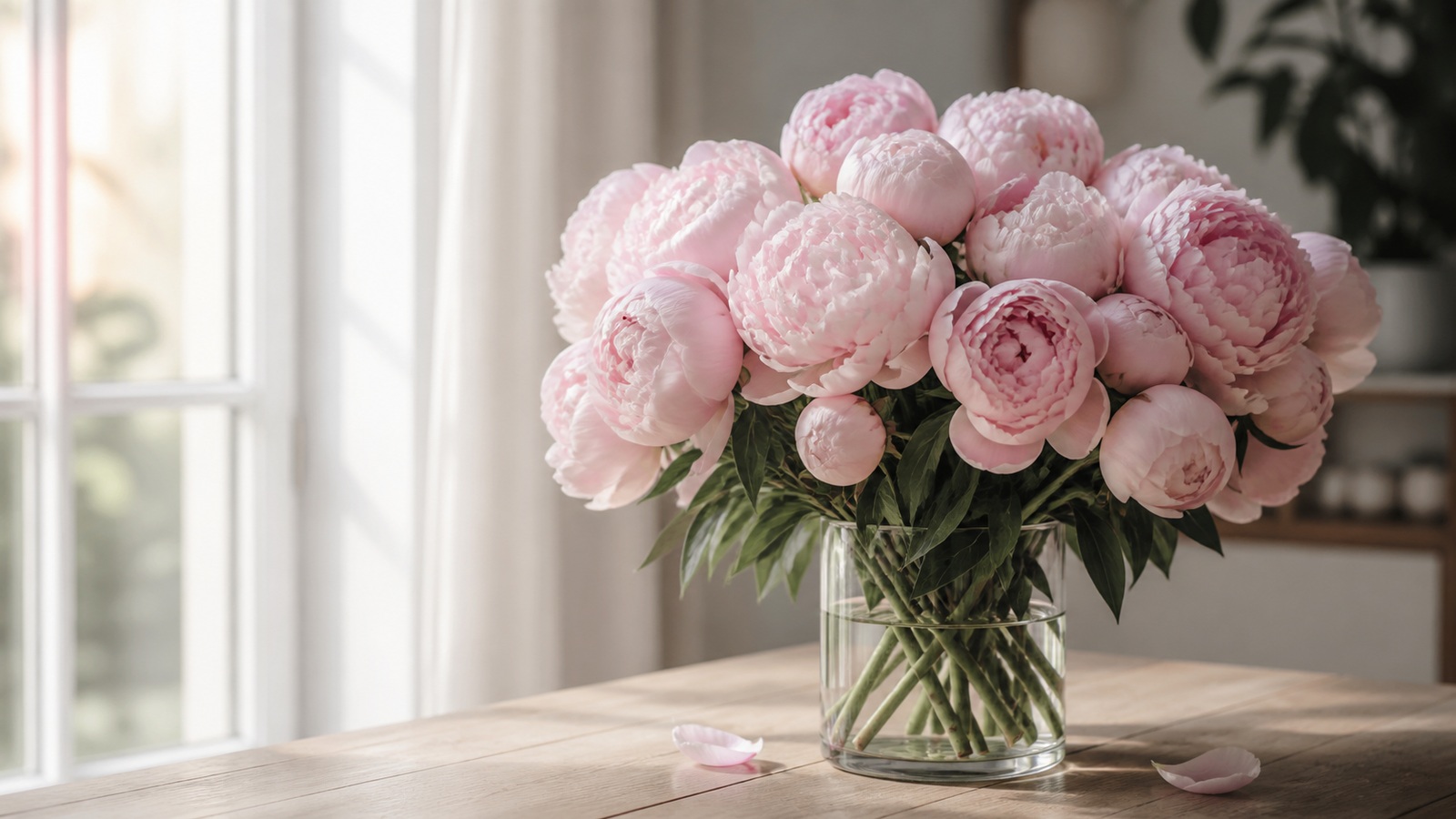
They work well for:
- International Women's Day (March 8) — a European classic
- Mom, grandmother in spring
- Teachers
- A partner in the early stages of a relationship (soft, without the pressure of red roses)
Tulip colors read softer than roses:
- Red — love, but "spring love," none of the intensity of red roses
- Yellow — sun, joy
- White — purity, forgiveness
- Pink — tenderness
- Purple / lilac — nobility, regal quality
Downside — short life. Tulips last 4–7 days, and they keep growing in the vase — reaching toward light, bending. Part of their beauty, but it annoys some people.
Wildflowers — simplicity and sincerity
This includes daisies, cornflowers, lavender, poppies. Shared meaning — simplicity, sincerity, gentle nostalgia for childhood, for the countryside.
A wildflower bouquet says "I chose this instead of default roses." It always reads as a considered gesture.
Who they suit:
- A partner in the early stages of a relationship (when red is too much)
- A mom or grandmother who kept a garden
- A close friend you feel warmly about
- A picnic, a country visit, a nature outing
Downside — very short life. Daisies last 2–3 days, cornflowers even less. A good florist will add lisianthus or gypsophila to give the bouquet staying power.
Orchids, gerberas, lisianthus — modern "neutral" flowers
This is a group with no rigid historical symbolism. They entered mainstream floristry relatively recently and read as "a modern beautiful bouquet" without a specific message.
- Orchid — exotic, refined. Often given as a potted long-lived gift.
- Gerbera — sunshine, simple joy, informal. Great for colleagues, friends.
- Lisianthus (eustoma) — nobility, tenderness. Rose-like but softer and less aggressive.
These are the right choice when you need a beautiful bouquet without a clear message: "just pretty, no particular subtext."
Quantity — a language of its own
An important nuance many people miss.
Regional note. In Eastern European and post-Soviet cultures, odd numbers are for living joyful moments and even numbers are associated with funerals — never give 2, 4, or 12 stems to a living person in Russia, Ukraine, or Belarus. In most of Western Europe, North America and Asia, either count works. When in doubt, stick with odd numbers — safe globally.
Semantics of specific counts (mainly for roses):
- 1 — "you are the only one"
- 3 — "I love you" (a compact declaration)
- 5 — a neutral small bouquet
- 7 — "I want to be with you"
- 9 — long friendship, grandmother
- 11 — "you are the other half of my life" (the most popular working count)
- 15 — gratitude
- 21 — deep attachment
- 25, 51 — major anniversaries
- 101 — marriage proposal
More flowers = a stronger gesture. But "more" isn't automatically "better." Three roses in the right wrap look more elegant than 51 in a plastic sleeve.
Reading a bouquet you received — a three-step test
When someone gives you a bouquet and you want to understand what they said with it, ask three questions:
- Color — what dominates? Red → romance. White → respect. Pink → tenderness. Yellow → friendship.
- Species — what's at the core? Roses → traditional gesture. Peonies → "you're beautiful." Lilies → ceremonial. Wildflowers → "I thought about you personally, not a default gift."
- Quantity — many or few? One flower → poetry. 3–11 → normal token. 25+ → event-scale gesture.
Combine those three parameters and you'll read the message better than any esoteric dictionary.
A florist's checklist — how not to miss with a bouquet
Short version — the working checklist a florist runs through with every client:
- For whom? Partner / mom / colleague / friend / teacher — each has its own set of appropriate flowers.
- What occasion? Date / anniversary / holiday / no occasion / apology — different notes.
- What relationship? Close / respectful / formal — sets the intensity of the gesture.
- What does the recipient love? If you know — take their favorites. Personal always beats "universally beautiful."
- Season? Spring — tulips, peonies. Summer — hardy roses, chrysanthemums. Autumn — chrysanthemums, dahlias. Winter — imported roses, lisianthus.
If you're unsure on two of the five — ask a florist. A good one doesn't "upsell" — they ask clarifying questions to hit the person, not the sale.
Short takeaway
Flowers are a language, not a dictionary. You don't need to memorize the meaning of every species. Keep the base notes in mind:
- Red — love
- White — purity and respect
- Pink — tenderness
- Yellow — friendship
- Peonies — beauty without subtext
- Lilies — ceremony
- Chrysanthemums — longevity
- Tulips — spring
- Wildflowers — sincerity
That's enough to make the bouquet precise, not just "default pretty."
We have fresh bouquets with delivery — arranged with all these nuances in mind. If you don't know what to choose, message us and we'll match the flowers to the occasion and the person.
Coming up in the series — deep dives into individual species: roses by shade, peonies by variety, the symbolism of quantity.
— Sofia Bell