You buy 25 red roses as a gift — and three days later the bouquet is drooping. Meanwhile your neighbor's identical bouquet lasted two weeks. What's the difference? Not water, not care. The country of origin.
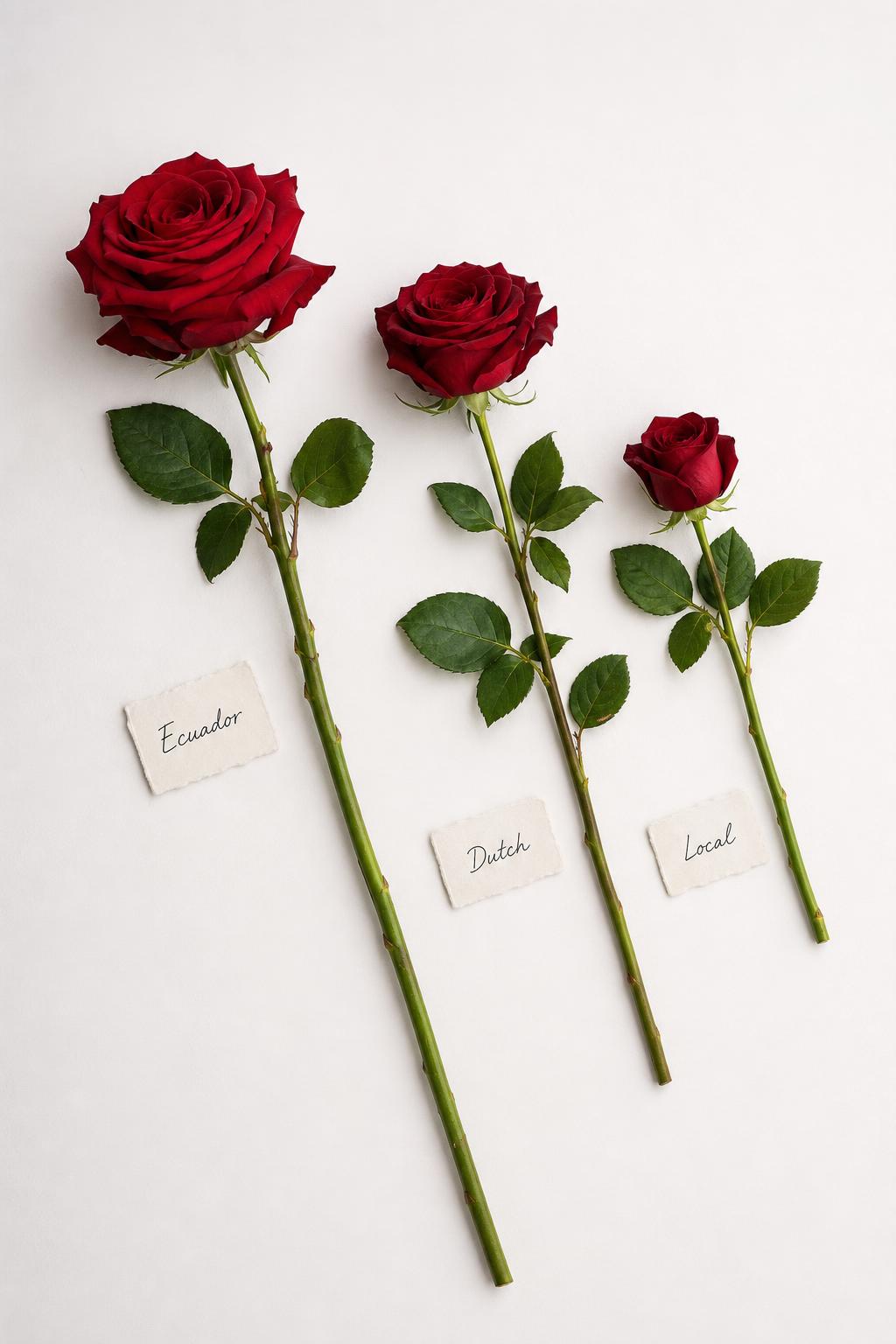 Here's what separates the three main "national schools" of the cut rose, and when to pay more for which.
Ecuador — the "kings of vase life"
Ecuadorian roses are the famous large-headed blooms on long strong stems. Length 60–110 cm. Bud up to 8 cm across. Thick stem, glossy leaves. Properly conditioned, they hold 10–14 days in a vase.
The secret is geography. Ecuadorian farms sit at 2,500–3,000 m elevation, on the equator. 12-hour daylight year-round, night temperatures +10 to +15 °C, cool mountain winds. The rose grows slowly, banks sugars in the stem, forms a dense bud. Essentially a "fitness regime" for the plant: less rapid growth, more density.
Main varieties: Freedom (classic red), Explorer (cherry red), Mondial (white), Vendela (cream), High and Magic (orange with yellow edge), Quicksand (dusty pink).
Retail price: $4.50–9 per stem depending on variety and season. Around Valentine's Day and Mother's Day, prices rise 1.5–2×.
When to buy: premium bouquets, anniversaries, engagements, milestone gifts. If you want it to "last long and impress" — Ecuador.
Netherlands — variety and selection
The Netherlands is less a producer than the world's rose-breeding center. Most "Dutch roses" in shops are Dutch varieties grown either in the Netherlands itself or in Kenya and Ethiopia under a Dutch brand.
Parameters: medium bud, 5–7 cm. Stem 50–70 cm, thinner than Ecuadorian. Vase life 5–7 days.
Main varieties: Red Naomi (dark red), Avalanche (white), Sweet Avalanche (soft pink), Aqua (pink), Pearl Avalanche (cream), David Austin garden roses (Patience, Juliet, Keira, Mayra).
Price: $3–5.50 per standard stem, premium Austins $6.50–9.
When to buy: designer bouquets built around a specific variety (garden-style Austins, spray roses), modern palettes (dusty pink, Cool Water purple, coffee).
Local greenhouse — seasonal freshness
Local greenhouse roses (regional growers close to your city) are typically 1–3 days from cutting to shop, which gives maximum freshness.
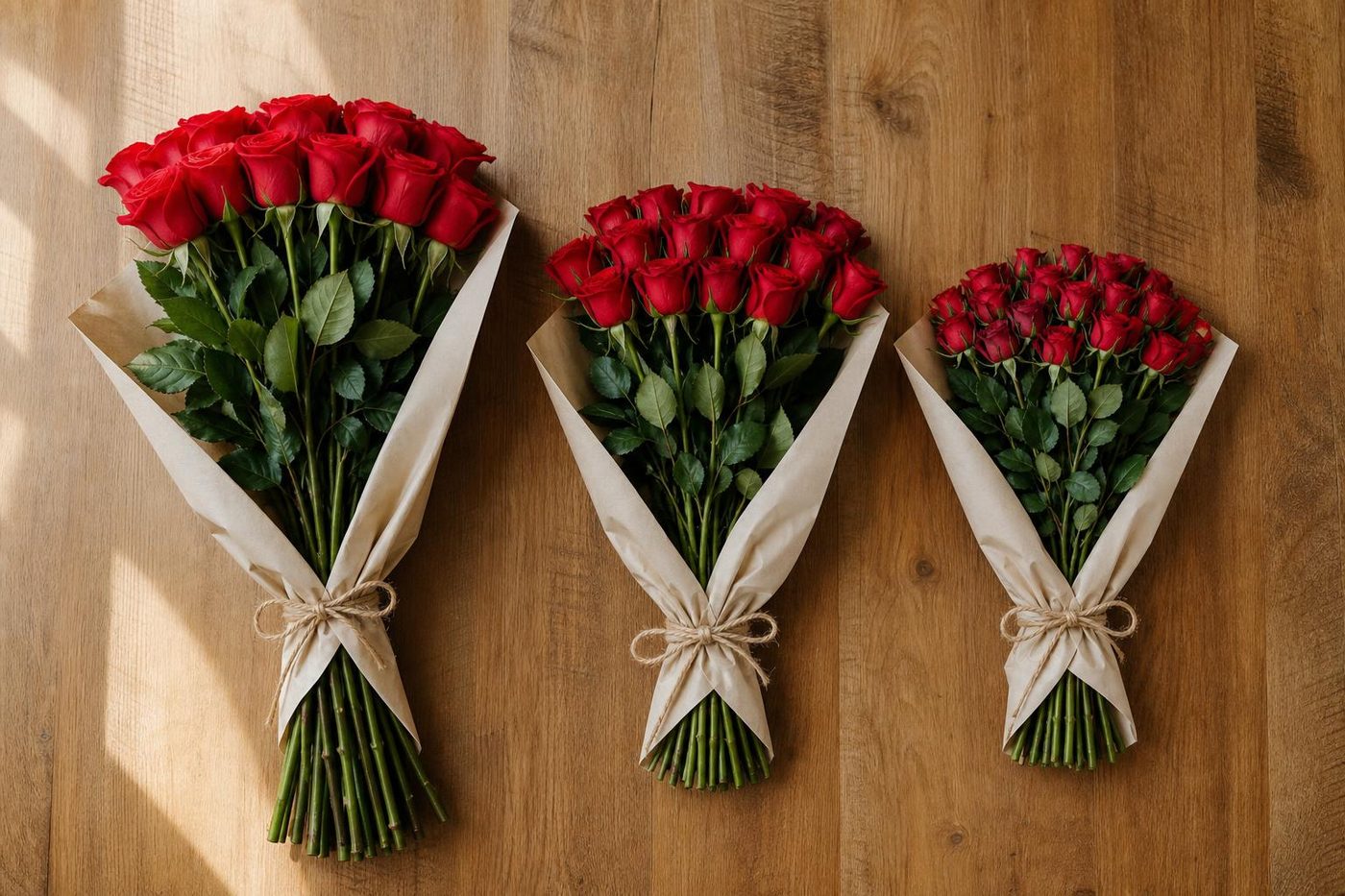 Parameters: bud 5–7 cm. Stem 40–60 cm. Vase life 5–8 days.
Main varieties: mostly workhorse reds and creams.
Price: $2–3.50 per stem. The best value for volume bouquets.
When to buy: mass corporate gifting on holidays, budget bouquets, everyday gifts. Not the longest in the vase, but the freshest "from the greenhouse."
Kenya and Ethiopia — the volume value segment
The African supply chain deserves its own line. Big volume, low price, quality slightly below.
Parameters: stem 40–60 cm, bud 4–6 cm, vase life 4–6 days.
Price: $1.50–3 per stem.
When to buy: student gifts, compliment bouquets, budget corporate gifting.
What to choose in practice
Simple logic:
- Big gesture with long vase life — Ecuador. 25 roses × $6 = $150, but you get a bouquet that lasts two weeks.
- A specific variety or palette — Netherlands. Pay for a specific Patience, Misty Bubbles, or Cool Water.
- Freshness at value price — local greenhouse. Cheaper "from the greenhouse," but only a week in the vase.
- Volume budget — Kenya, Ethiopia. Good for mass corporate gifts.
The main tip
Don't hesitate to ask the florist where the rose is from. A reputable shop answers without hedging and doesn't hide the origin. If the answer to "is this Ecuadorian?" turns into vague language, it's probably Kenyan or Ethiopian priced as Ecuadorian.
Our bouquets use Ecuadorian long-stem and Dutch premium varieties. Catalogue: roses with delivery.
— Sofia Bell
Author
Sofia Bell
Florist and blog editor