Chrysanthemum is one of the oldest decorative flowers in the world. Cultivated in China as early as 1,500 BC. Traveled to Japan in the 8th century and became the imperial flower. Reached Europe only in the 17th century through Dutch traders. Modern commercial chrysanthemum is the result of thousands of years of breeding on the base of Chrysanthemum morifolium. Here's classes, varieties, care, and bouquet uses.
Botany and history
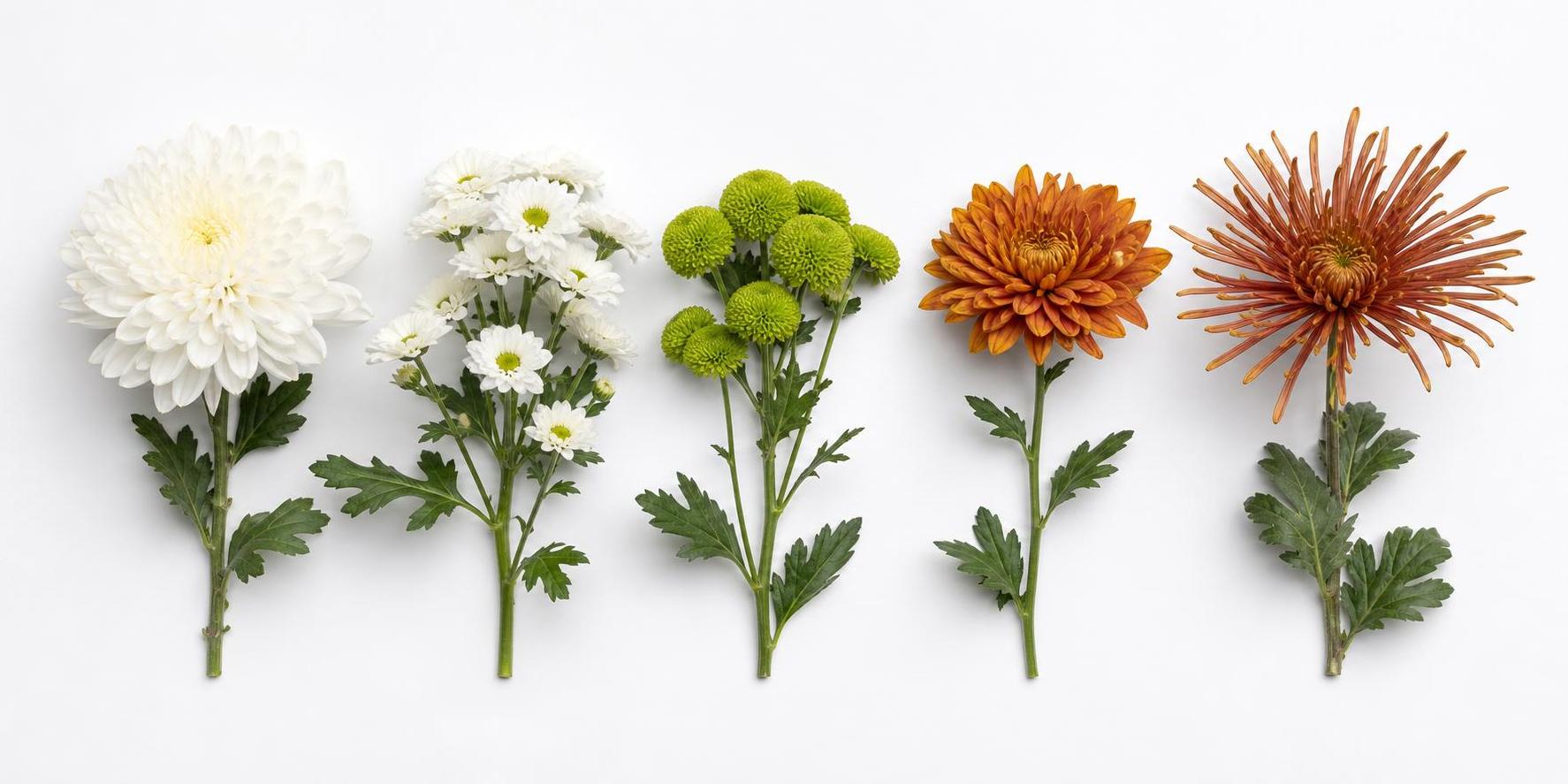
Chrysanthemum is a genus in the Asteraceae family. Native to East Asia — China, Japan, Korea. About 40 species; commercial floristry works with Chrysanthemum × morifolium, a complex hybrid.
The name comes from Greek chrysos (gold) + anthemon (flower) = "golden flower." Original wild forms were yellow; the palette expanded through breeding.
In China, the chrysanthemum is one of the "Four Gentlemen" of Chinese art (with orchid, bamboo, plum blossom). In Japan, the flower is on the imperial seal (16-petal chrysanthemum) and appears on the Japanese passport. October 9 is Chrysanthemum Day (Choyo no Sekku) in Japanese culture.
Classes
Commercial floristry recognizes three main classes:
Large-headed (disbudded / single-stem)
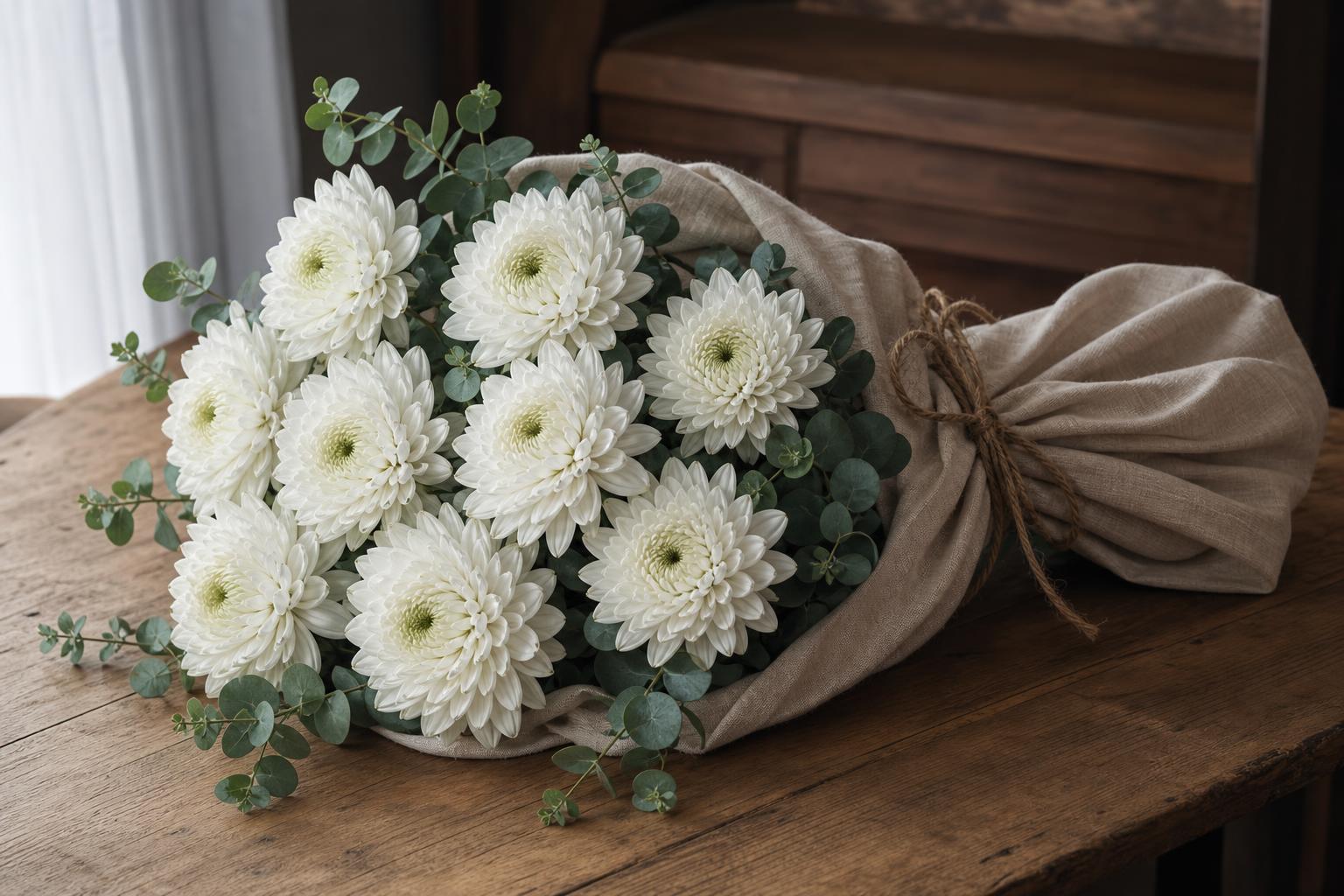
One large flower head per stem, 12–20 cm across. Achieved by removing side buds during growth. Stem 70–90 cm.
Main varieties:
- Anastasia — white with a green center, 12–15 cm, the wedding standard
- Magnum — pure white, large
- Antonov — cream-white with dense petals
- Bigoudi — greenish
- Tom Pearce — bronze
- Spider Bronze — spider form, bronze
Spray (multi-head)
Multiple flowers per stem, each 3–5 cm. Stem 60–80 cm. Most versatile florist class.
Main varieties:
- Stallion — white with a green center, dense doubled pom-poms, 7–11 flowers per stem
- Bacardi — white spray
- Saba — pink spray
- Prestige — burgundy spray
- Zembla — yellow spray
Santini (miniature spray)
Miniature spray form, 2–3 cm flowers, 15–20 per stem. Stem 50–70 cm.
Main varieties:
- Green Lizard — bright green pom-poms
- Filin Green — light green
- Kennedy — cream
- Yoko Ono — pale yellow
- Vienna — white
Growing chrysanthemums
Commercial chrysanthemums are grown in greenhouses year-round. In gardens, chrysanthemums are grown as autumn perennials.
- Position: sun, drained soil
- Planting: spring (April–May) or autumn (September)
- Depth: rhizome division; plant at existing depth
- Feeding: at growth start — nitrogen; at bud stage — potassium magnesium
- Watering: moderate; overwatering rots rhizomes
- Cold-hardiness: medium — cover with mulch and pine branches for winter
- Pinch back young shoots at 15 cm to increase branching
- Diseases: aphids, powdery mildew, gray mold
Chrysanthemum in bouquets
The chrysanthemum is a florist's autumn tool. Vase life 14–20 days — one of the longest of any cut flower.
Working combinations
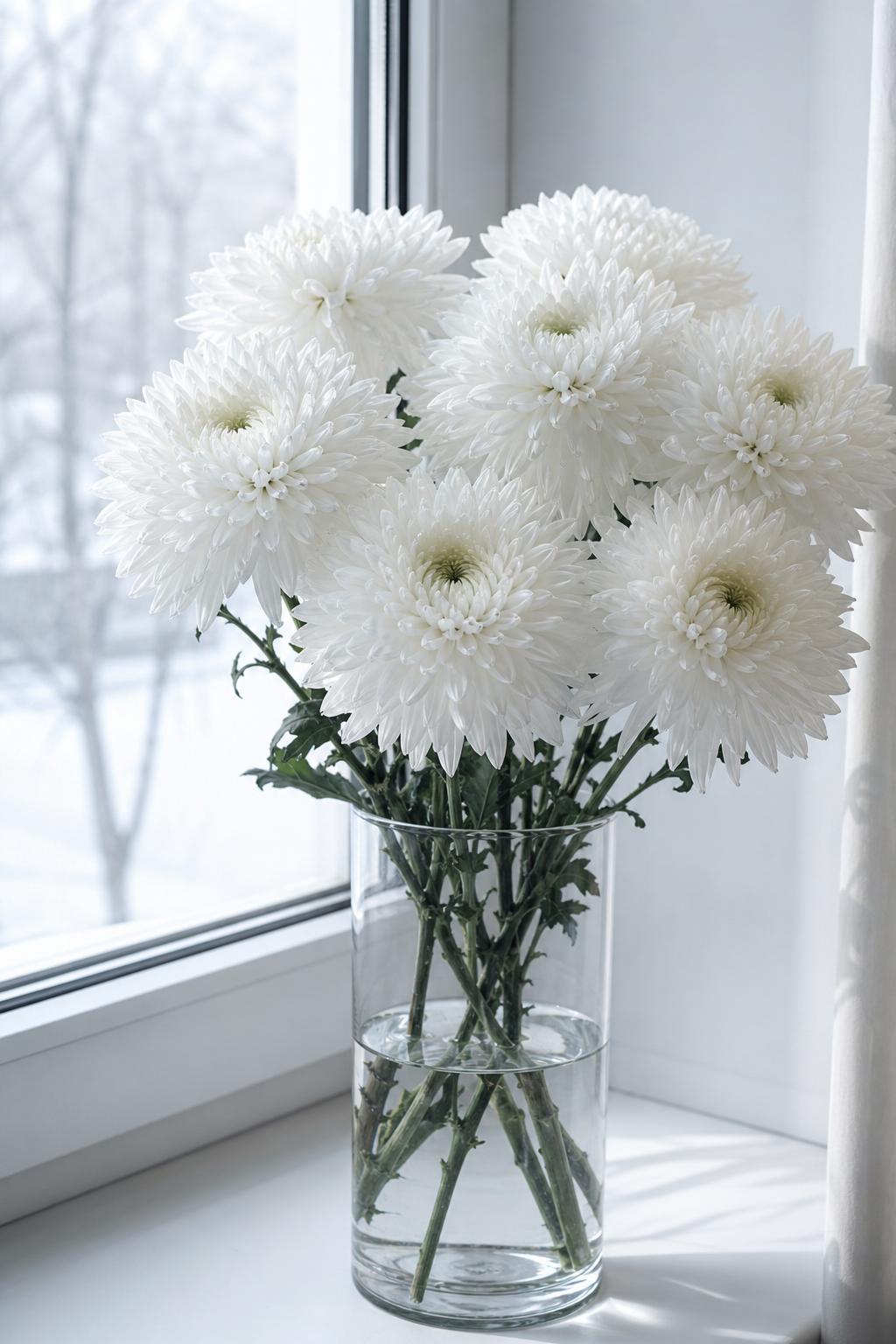
- Anastasia + eucalyptus + amaryllis (Capricorn winter bouquet)
- Stallion spray + rose + hypericum berries (autumn bouquet)
- Green Lizard santini + white peony + ranunculus (modern wedding)
- Bronze Tom Pearce + dahlia + wheat (rustic autumn)
- Prestige burgundy spray + Black Baccara rose + calla (Scorpio composition)
Combinations that don't work
- Chrysanthemum + peony in equal proportions (peony overwhelms visually)
- Chrysanthemum + gerbera (competing visual density)
Cut care
- Cut at 45° at intake, refresh every 2 days
- Split lower stem 2 cm up for better water uptake
- Cool water, medium vase, change every 2 days
- Add flower food
- Strip lower leaves — they rot fast
Vase life: 14–20 days at proper care.
Symbolism and cultural notes
Chrysanthemum meaning varies dramatically by region.
In East Asia:
- Japan — imperial symbol, longevity, honor. The Japanese passport bears a chrysanthemum on its cover.
- China — a "Four Gentleman" of art, symbol of nobility and autumn scholar-retreat
- Vietnam — a symbol of longevity
In Europe (especially southern Europe):
- Traditional funeral flower — chrysanthemums are laid at graves, especially on All Saints' Day (November 1)
- Rarely gifted as birthday flowers
In North America and Northern Europe:
- Autumn celebration flower
- Traditional November birth-flower
In parts of Eastern Europe (including some Slavic cultures):
- Ambiguous — mostly funeral association from Southern European influence, but recent trends toward Western usage
Color meanings (universal):
- Yellow — friendship, sun, gratitude
- White — sincerity, truth (funeral in Southern Europe)
- Red / burgundy — long-lasting love
- Pink / lilac — tender affection, admiration
- Green (Green Lizard) — modern, fresh, "designer choice"
Tip: if gifting outside your cultural context, ask the recipient's preference. In cultures with strong funeral association, chrysanthemums as a birthday gift can offend.
Facts and FAQ
- Imperial Japan. The 16-petal chrysanthemum is on the seal of Japan; the country has a "Chrysanthemum Throne."
- China's ancient plant. Chrysanthemum tea is one of the oldest herbal teas; drunk in China for 3,000+ years.
- NASA air-cleaner. NASA lists chrysanthemum among the top 5 air-cleaning houseplants — absorbs benzene, xylene, and ammonia.
- Longest vase life. Chrysanthemums outlast almost all other cut flowers.
- World's largest producer. Colombia produces 60% of world cut chrysanthemums; the Netherlands — 25%.
FAQ
Can I gift chrysanthemums for a birthday? Yes, everywhere except regions where they're strictly funeral. When in doubt, choose bright colors (yellow, red, pink) — these read as celebratory.
How long does a chrysanthemum last in a vase? 14–20 days with proper care. In heat — 10–12 days.
Which class is right for a bridal bouquet? Anastasia (large-headed white) — the wedding classic. Green Lizard santini — the modern designer choice.
Can I plant supermarket chrysanthemums? Sometimes yes. Move to a garden in spring after the pot bloom finishes; some cultivars root and become perennial.
Budget? Cut chrysanthemum stem: $1.50–4. Bouquet of 9 Anastasia: $30–50. Wedding composition with Green Lizard santini: $150–320.
Are chrysanthemums safe for pets? No, all parts are mildly toxic to cats and dogs. Keep out of reach.
Want a bouquet with chrysanthemums? Browse the catalogue — three main classes, year-round supply.
Summary: chrysanthemum is a florist's long-lasting tool. 14–20 days in the vase, huge palette, three classes for different purposes. Best in autumn compositions, Japanese-style minimalism, and Capricorn/Scorpio bouquets. Key rule: check the regional funeral connotation before gifting.
— Sofia Bell